Author: Denis Avetisyan
A novel theoretical framework suggests that quantum entanglement between hidden gravitational sectors could amplify primordial gravitational waves, offering a potential solution to longstanding constraints on early universe cosmology.
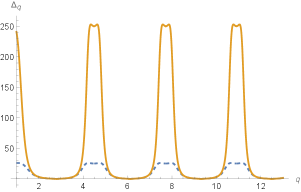
This review explores how bypassing the Lyth bound with entangled gravitons could reveal quantum effects in the cosmic microwave background and generate detectable late-time noise.
The established Lyth bound presents a challenge to inflationary cosmology by constraining the amplitude of primordial density perturbations. In the paper ‘Bypassing the Lyth Bound with Entangled Gravitons: Primordial Signatures and Late-Time Noise’, we demonstrate that quantum entanglement between dynamically decoupled gravitational sectors can parametrically enhance the tensor power spectrum, offering a pathway beyond this limit. This mechanism, originating from a reduced density matrix describing the observable universe, predicts distinctive oscillatory features in the primordial power spectrum and a scale-dependent enhancement of the squeezed-limit bispectrum. Could these signatures, alongside potential late-time stochastic noise detectable by gravitational wave interferometers, provide a novel window into the quantum nature of spacetime itself?
The Echo of Creation: Inflation’s Fragile Footprint
Current cosmological models attempting to explain the universe’s rapid expansion in its earliest moments, known as standard inflationary models, face significant challenges when reconciling theoretical predictions with observational data regarding primordial gravitational waves. These models often require an improbable degree of fine-tuning – adjusting parameters to incredibly specific values – to align with the observed amplitude and characteristics of these waves, ripples in spacetime created during inflation. The observed strength of the signal, as detected in the cosmic microwave background, consistently pushes the boundaries of what these standard models can naturally accommodate, necessitating increasingly complex and artificial adjustments. This reliance on fine-tuning not only diminishes the predictive power of these models but also raises questions about their fundamental naturalness, prompting exploration into alternative mechanisms for generating primordial fluctuations.
A compelling alternative to standard inflationary models centers on the premise of quantum entanglement between observed gravitons and a previously unconsidered, hidden gravitational sector. This innovative mechanism proposes that primordial fluctuations aren’t solely generated by inflationary dynamics, but also by the correlations established through this entanglement. Calculations indicate that as the entanglement parameter nears 0.499, the resulting enhancement of the Tensor Power Spectrum can reach several orders of magnitude, potentially resolving discrepancies observed in existing models. This heightened signal offers a novel pathway for detecting primordial gravitational waves and provides a theoretical basis for a universe whose earliest moments were shaped by the fundamental link between quantum correlation and gravitational phenomena.
Calculations suggest a compelling solution to the Lyth bound – a significant constraint on inflationary models stemming from the requirement that the inflaton field cannot undergo excursions larger than the Planck scale – through the mechanism of graviton entanglement with a hidden gravitational sector. Traditionally, exceeding this bound necessitates complex and often unnatural modifications to inflationary theory; however, this novel approach circumvents this issue by effectively altering the relationship between primordial fluctuations and the inflaton field. By introducing entanglement, the effective ‘slow-roll’ parameters are modified, allowing for a sufficient amplitude of primordial gravitational waves without requiring the inflaton to venture into the super-Planckian regime. This effectively relaxes the constraints imposed by the Lyth bound, offering a more natural and potentially verifiable pathway for understanding the very early universe and the origin of cosmic structure.
The theoretical framework underpinning this model draws heavily from the intriguing ER=EPR conjecture, a proposal suggesting a deep connection between seemingly disparate concepts in physics: Einstein-Rosen bridges – often visualized as wormholes – and quantum entanglement. This conjecture posits that entangled particles are not simply correlated but are actually connected via microscopic wormholes, fundamentally linking spacetime geometry with the quantum realm. By embracing this connection, the research suggests that primordial fluctuations – the seeds of structure in the universe – could arise not solely from quantum fluctuations in a single sector, but from the complex interplay of entanglement across these hypothesized wormhole connections. This perspective shifts the understanding of spacetime from a smooth, classical entity to a dynamic, quantum network where entanglement isn’t merely a property within spacetime, but a constituent of spacetime itself, potentially resolving challenges within standard cosmological models and offering a novel pathway to explain the origins of the universe.
Weaving the Quantum Fabric: Constructing the Entangled State
The entangled state of gravitons is mathematically constructed via a Two-Mode Bogoliubov Transformation, a standard technique within quantum field theory used to relate creation and annihilation operators between different modes. This transformation, when applied to the graviton field, mixes the vacuum states of two modes, generating correlated gravitons. Specifically, it involves a linear combination of creation and annihilation operators for each mode, expressed as a_k = \alpha a_k + \beta a^\dagger_{-k}, where a_k represents the annihilation operator for a graviton with wavevector k, and α and β are Bogoliubov coefficients determining the strength of the mixing and ultimately defining the entanglement properties of the resulting state. The coefficients are chosen to satisfy commutation relations consistent with the underlying quantum field theory, ensuring a physically valid entangled state.
The Two-Mode Bogoliubov Transformation establishes a mathematical relationship that links the creation and annihilation operators for observable gravitons with those describing gravitons in the hidden gravitational sector. Specifically, the transformation generates terms in the Hamiltonian that mix these modes, resulting in a state where the number of gravitons in the observable sector is correlated with the number in the hidden sector. This correlation isn’t a classical one; rather, it’s a quantum entanglement where measurements on observable gravitons instantaneously influence the state of the hidden gravitons, and vice-versa. The strength of this correlation is determined by the parameters within the Bogoliubov transformation, dictating the degree of entanglement between the two sectors. b_{obs}^{\dagger} + b_{hidden}^{\dagger} represents a simplified example of how observable and hidden modes are coupled via the transformation.
The resultant entangled state is fully described by its Reduced Density Matrix \rho_{obs}. This matrix is obtained through a partial trace operation, mathematically denoted as Tr_{hidden}, applied to the full density matrix of the combined observable and hidden sectors. The partial trace effectively eliminates the degrees of freedom associated with the hidden gravitational sector, yielding a density matrix that represents the quantum state of only the observable gravitons. Consequently, \rho_{obs} contains all statistically relevant information regarding measurable quantities of the observable gravitational waves, allowing for the prediction of experimental outcomes and characterization of the entanglement properties without direct access to the hidden sector.
The hidden gravitational sector, though inaccessible to direct measurement, fundamentally contributes to the entanglement observed in gravitational waves. This sector consists of degrees of freedom that do not couple directly to observable modes, yet through the application of the Two-Mode Bogoliubov Transformation, correlations are established. These correlations manifest as entanglement, influencing the quantum state of the observable gravitons. Specifically, the properties of the Reduced Density Matrix, which describes the observable sector after accounting for the hidden sector’s degrees of freedom, are directly modified by the entanglement originating within the hidden sector; this impacts measurable quantities associated with gravitational wave propagation and detection.
Echoes of a Quantum Universe: Observable Signatures and Predictions
The deviation from a single-field inflationary paradigm arises because the entangled state modifies the predicted Tensor Power Spectrum. Standard single-field inflation predicts a specific spectral index and amplitude for tensor perturbations, typically parameterized by a scalar spectral index n_t. The entangled state introduces corrections to this spectrum, altering the amplitude and potentially the spectral index itself. This manifests as a departure from the predictions based on a simple, minimally coupled scalar field during inflation. Specifically, the entanglement introduces additional contributions to the power spectrum, shifting the predicted tensor amplitude and spectral index away from the values expected in the standard model, offering a potential avenue for observational falsification of single-field inflation.
Enhanced Non-Gaussianity in primordial fluctuations is a key prediction of this model, offering a distinctive observational signature within Cosmic Microwave Background (CMB) data. Specifically, the degree of Non-Gaussianity is parametrically enhanced by a factor of {1−4[λk(s)]2}−3 due to the entanglement between quantum fields during inflation. This enhancement deviates from the Gaussian predictions of single-field inflation and provides a potential method for detecting the presence of this entangled state. The parameter λk(s) encapsulates the scale and form of the entanglement, influencing the magnitude of the Non-Gaussianity signal detectable in CMB observations.
Standard single-field inflationary models predict specific Consistency Relations between the primordial scalar power spectrum, P_ζ, and the tensor power spectrum, P_t, typically expressed as a ratio r = P_t / P_ζ. Entanglement between the inflaton and its entangled partner modifies these relations; specifically, the predicted value of r deviates from the standard prediction. This deviation arises because entanglement alters the dynamics during inflation, impacting the generation of both scalar and tensor perturbations differently. Consequently, precise measurements of r – and other Consistency Relations – provide a critical test of the entanglement hypothesis, potentially falsifying standard inflationary models if discrepancies are observed.
The proposed model predicts the introduction of detectable quantum noise in primordial gravitational waves, stemming from the entanglement between the inflaton and its entangled partner. This noise manifests as an enhancement to the Noise Power Spectral Density (NPSD) quantified by a factor of 1/[1−𝒪(λ^2)], where λ represents the entanglement parameter. This enhancement implies that future gravitational wave observatories, designed to detect primordial gravitational waves, may also be sensitive to this quantum noise signature. The magnitude of the noise is directly related to the strength of the entanglement, providing a potential means to constrain the entanglement parameter and test the underlying theoretical framework.
Listening for the Universe’s Whispers: Future Observational Prospects
Future gravitational wave detectors, notably the Laser Interferometer Space Antenna (LISA) and the Einstein Telescope, represent a leap in sensitivity capable of probing the quantum realm of gravity. These instruments aren’t simply seeking gravitational waves as ripples in spacetime, but also the faint, inherent ‘noise’ arising from the quantum nature of gravity itself. Specifically, they are designed to detect the subtle correlations indicative of entangled gravitons – hypothetical particles mediating the gravitational force, linked in a quantum state. This requires measuring fluctuations at an unprecedented level of precision, distinguishing genuine signals from the instrument’s own limitations. By meticulously characterizing this Quantum Noise, scientists anticipate uncovering evidence supporting – or refuting – theoretical predictions about the fundamental quantum structure of spacetime, potentially opening a new window onto the universe’s earliest moments and the elusive theory of quantum gravity.
Precise measurements of quantum noise by future gravitational wave observatories offer a unique opportunity to probe the statistical properties of primordial gravitational waves, specifically searching for evidence of Non-Gaussianity and deviations from established Consistency Relations. Current cosmological models predict a nearly scale-invariant and Gaussian distribution of these waves; however, quantum gravity effects or alternative inflationary scenarios could introduce measurable non-Gaussian features. Detecting such deviations – subtle correlations beyond those expected in a purely Gaussian field – would represent a significant breakthrough, providing crucial insights into the physics of the very early universe. Consistency Relations, which link different statistical measures of primordial fluctuations, offer stringent tests of these predictions; any observed violation would necessitate a reevaluation of fundamental assumptions about the inflationary epoch and potentially unveil the underlying quantum nature of gravity itself, pushing beyond the limitations of classical general relativity.
Confirmation of graviton entanglement and its associated quantum noise signatures promises a paradigm shift in cosmology and fundamental physics. Currently, the earliest moments of the universe – the inflationary epoch – remain largely theoretical, inferred from the cosmic microwave background. Detecting entangled gravitons would provide a direct probe of quantum gravity at energies inaccessible by any other means, effectively allowing physicists to ‘look back’ to the universe’s quantum birth. This isn’t merely refining existing models; it offers the potential to resolve long-standing questions about the origin of spacetime, the nature of dark energy, and the validity of established theories at extreme scales. Such findings could necessitate a complete re-evaluation of general relativity and quantum mechanics, potentially unifying them into a consistent quantum theory of gravity and revealing previously unknown connections between the quantum realm and the large-scale structure of the cosmos.
The proposition of a Hidden Gravitational Sector extends beyond simply adding another force to the standard model; it hints at a far more expansive reality – a multiverse. This sector, interacting with our own through gravity but largely unseen, could represent one of many universes, each potentially governed by slightly different physical laws. Crucially, this framework finds resonance with the Hartle-Hawking No-Boundary Proposal, a model in quantum cosmology that suggests the universe has no initial singularity – no defined ‘beginning’ – but instead emerges from a smooth, self-contained past. Within this model, different universes could ‘bud off’ from one another, arising from quantum fluctuations in a timeless, boundary-less reality, and potentially explaining the origin of these hidden gravitational sectors as distinct, yet interconnected, universes within a larger multiverse landscape. Detecting evidence of this hidden sector wouldn’t just confirm new physics, but could offer a pathway to understanding the very architecture of existence and the conditions that gave rise to our own universe.
Beyond Entanglement: Addressing Alternatives
Bimetric gravity proposes a fascinating departure from explanations rooted in quantum entanglement by directly addressing the force of gravity itself. Rather than positing non-local connections between particles, this theoretical framework suggests gravity isn’t a fundamental force described by Einstein’s general relativity, but rather emerges from the interaction of two different metrics – essentially, two different ways of measuring distance and time. By modifying the gravitational interaction at a fundamental level, bimetric gravity aims to replicate the observed correlations without invoking the complexities of entanglement. This approach postulates the existence of additional gravitational degrees of freedom, potentially explaining phenomena currently attributed to dark matter or dark energy, though it requires navigating significant theoretical hurdles to maintain internal consistency and avoid problematic instabilities.
Despite its ambition to redefine gravity and potentially circumvent the need for quantum entanglement as an explanation for dark energy, bimetric gravity is hampered by a significant theoretical obstacle: the Boulware-Deser Ghost. This isn’t a spectral apparition, but a debilitating instability within the mathematical framework itself. The presence of this ghost manifests as negative kinetic energy for certain modes, leading to exponentially growing disturbances and rendering the theory physically unrealistic. Essentially, any attempt to construct a consistent model within bimetric gravity is plagued by solutions that rapidly decay into unphysical, runaway behavior, making it exceedingly difficult to reconcile the theory with observed cosmological phenomena. While researchers continue to explore potential remedies, the Boulware-Deser Ghost remains a formidable challenge, casting doubt on the viability of bimetric gravity as a complete and self-consistent alternative to entanglement-based explanations.
The entanglement approach to resolving inconsistencies in cosmological models distinguishes itself through its foundation in established quantum field theory, potentially offering a more robust framework than alternatives like bimetric gravity. This methodology posits that observed gravitational effects aren’t necessarily due to modifications of gravity itself, but rather emerge from quantum entanglement across vast distances. While rigorous validation through observational data is still necessary, this approach circumvents the significant theoretical hurdles faced by other models – notably the problematic Boulware-Deser Ghost, an inherent instability – and presents a conceptually simpler, more mathematically consistent pathway for exploring the universe’s fundamental structure. The elegance of this framework lies in its reliance on well-established quantum principles, suggesting a natural and potentially more stable solution to complex cosmological challenges.
Investigations are now directed toward solidifying the theoretical underpinnings of this entanglement-based model, with particular attention given to its potential ramifications for multiverse scenarios – specifically, how interconnected universes might arise and interact. Crucially, future work will center on translating these theoretical predictions into testable hypotheses, requiring careful analysis of observational data currently gathered from cosmological surveys and gravitational wave detectors. The aim is to identify unique signatures that would distinguish this entanglement approach from competing models, such as bimetric gravity, and ultimately provide empirical support for a fundamentally interconnected cosmos. This differentiation will rely on precision measurements and novel data analysis techniques designed to reveal subtle effects predicted by the theory, paving the way for a deeper understanding of the universe’s structure and evolution.
The pursuit of primordial gravitational waves, as detailed in this work, reveals a humbling truth about theoretical limits. Any calculation, no matter how rigorous, operates under assumptions that may not withstand the scrutiny of reality. Max Planck observed, “A new scientific truth does not triumph by convincing its opponents and proclaiming that they are irrational. But rather it will be recognized by a new generation that grew up under its influence.” This echoes the paper’s attempt to bypass the Lyth bound – a challenge to established constraints, not through refutation, but by exploring a previously unconsidered quantum landscape of entangled gravitons. The inherent probabilistic nature of these entangled states suggests that definitive predictions are elusive; any detected signal remains a statistical likelihood, vulnerable to the ‘consumption’ of the event horizon of observational limitations.
Chasing Shadows
The proposal to amplify primordial signals through entangled gravitational sectors, while elegant, serves as a potent reminder of the illusions inherent in cosmological inquiry. Each calculation, a carefully constructed scaffolding of assumptions, attempts to hold light in one’s hands, yet it inevitably slips away. To circumvent the Lyth bound is not to solve a problem, but to discover a more subtle constraint, a higher-order delusion. The pursuit of quantum gravity isn’t about finding the right answer-it’s about iteratively refining the approximations before they succumb to the inevitable weight of observation.
Future investigations will undoubtedly focus on the specific mechanisms for establishing and maintaining this entanglement in the early universe. Yet, the more pressing question remains unasked: even if such entanglement could be demonstrated, what would it truly signify? A confirmation of theory, or merely a testament to the ingenuity of human pattern-seeking? The search for non-Bunch-Davies states, for a glimpse beyond the conventional vacuum, feels less like a scientific endeavor and more like a desperate attempt to find meaning in the void.
The prospect of observing quantum effects in the cosmic microwave background is tantalizing, of course. But one should remember that any detected noise-any deviation from perfect homogeneity-could just as easily represent the limits of calculation as the whisper of quantum reality. The universe does not owe anyone an explanation, and its silence is often more revealing than any signal.
Original article: https://arxiv.org/pdf/2602.20734.pdf
Contact the author: https://www.linkedin.com/in/avetisyan/
See also:
- Marvel Officially Confirms Deadpool’s Most Brutal Redesign
- Nintendo Switch 2 Reportedly Getting Remake of One of the Best PS3 and Xbox 360 Games
- Welcome to Demon School! Iruma-kun season 4 release schedule: When are new episodes on Crunchyroll?
- Michael Jackson Biopic’s Record-Breaking Debut Unseats 2026’s Biggest Box Office Hit On U.S. Chart
- Crunchyroll Confirms New Isekai Anime Releases for 2026 and Beyond (With Major Returns)
- The Boys Season 5, Episode 5 Ending Explained: Why Homelander Does THAT
- Did Lauren Sánchez Bezos Hint at Baby Plans With Jeff Bezos? The Truth
- 5 Best Open-World Games You Can Beat In A Weekend
- The Boys Season 5, Episode 2’s Soldier Boy Ending Twist Changes Everything for Homelander & Butcher
- 10 Movies That Were Banned in Different Countries For Random Reasons
2026-02-25 11:01