Author: Denis Avetisyan
A new analysis reveals how quantum tunneling can be suppressed in deformed quantum mechanical systems, uncovering connections to fundamental mathematical structures.
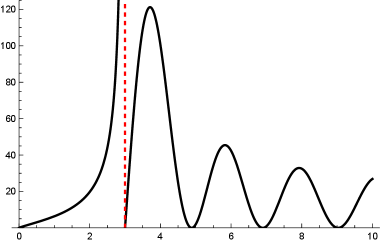
Resurgent analysis and exact quantization conditions confirm a phase transition linked to 𝒩=2 super Yang-Mills theory and the Toda lattice.
Quantum tunneling, a cornerstone of quantum mechanics, can be unexpectedly suppressed in certain deformed systems, challenging conventional expectations. This is the central question addressed in ‘Thou shalt not tunnel: Complex instantons and tunneling suppression in deformed quantum mechanics’, where we investigate a deformation of one-dimensional quantum mechanics arising from the quantization of the \mathcal{N}=2 super Yang-Mills theory. We demonstrate that this deformation induces a phase transition-characterized by the emergence of complex instantons-leading to tunneling suppression at points related to the Toda lattice, and confirm this behavior through resurgent analysis. Does this suppression offer a novel window into the non-perturbative structure of super Yang-Mills and the underlying physics of wall-crossing phenomena?
The Illusion of Simplicity: When Perturbation Fails
Quantum mechanics routinely employs perturbative methods – approximations that treat interactions as small deviations from a simple, solvable system. However, this approach falters when dealing with “strongly coupled” systems, where interactions are significant and cannot be considered minor adjustments. In these scenarios, the perturbative series diverges or converges too slowly to provide reliable predictions; the approximations simply lose accuracy. Consider, for example, systems with intense electromagnetic fields or many interacting particles. The standard techniques, while elegant and often useful, become inadequate, necessitating the development of non-perturbative methods that can accurately capture the full quantum behavior without relying on small-parameter expansions. These alternative approaches are crucial for understanding phenomena where strong interactions dominate, offering a pathway to more realistic and precise modeling of complex quantum systems.
Tunneling, a uniquely quantum mechanical process where particles traverse seemingly impenetrable barriers, presents a significant challenge to traditional methods of calculation. Perturbation theory, which relies on approximating solutions based on small deviations from a known system, falters when dealing with the strong interactions inherent in tunneling events. This is because the very essence of tunneling-a particle’s non-zero probability of existing within a classically forbidden region-isn’t a small perturbation, but a fundamental aspect of the quantum state. Consequently, accurately modeling phenomena like alpha decay, scanning tunneling microscopy, and Josephson junctions demands the adoption of non-perturbative techniques. These methods, such as path integrals and lattice quantum chromodynamics, directly address the full quantum behavior without relying on approximations that break down when coupling strengths are substantial, providing a more reliable pathway to understanding and predicting these crucial physical processes.
Accurately modeling quantum systems frequently demands techniques that transcend the limitations of conventional approximations. When interactions become strong, or when phenomena like tunneling dominate, standard perturbative methods-which rely on treating interactions as small deviations-simply fail to converge on reliable solutions. Consequently, a suite of non-perturbative approaches has emerged, designed to directly tackle the full complexity of the quantum behavior without relying on small-parameter expansions. These methods, encompassing techniques like lattice quantum chromodynamics, variational Monte Carlo, and instanton calculations, aim to provide a complete description of the system, capturing subtle quantum effects that would otherwise be missed. The development and refinement of these tools are crucial for advancing understanding in areas ranging from nuclear physics and materials science to cosmology and the fundamental nature of matter itself.
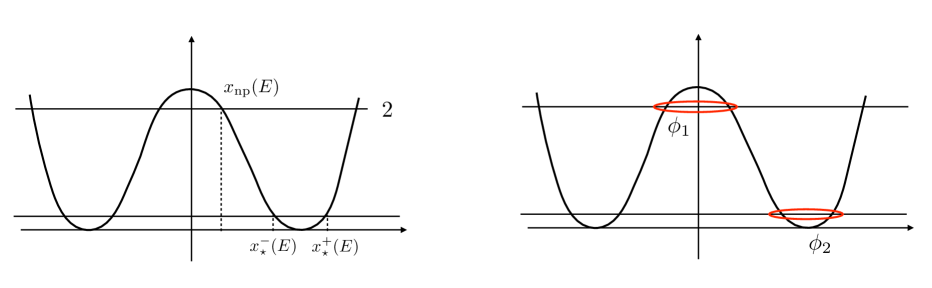
Beyond Approximation: Deforming Reality to Find Solutions
Deformed Quantum Mechanics is presented as a modification of standard quantum theory achieved through the implementation of a non-standard kinetic term in the Hamiltonian. This kinetic term alters the usual momentum operator, \hat{p} \rightarrow \hat{p}' , resulting in a modified Schrödinger equation. Critically, this modification permits a direct discretization of the equation into a finite-difference form. This finite-difference formulation replaces differential operators with algebraic differences, enabling numerical solutions without the limitations typically imposed by the continuum approximation and offering a pathway to investigate systems where conventional perturbative methods are ineffective.
The finite-difference formulation of the Schrödinger equation, achieved through deformed quantum mechanics, facilitates the study of quantum systems intractable for conventional approaches. Specifically, systems characterized by strong coupling – where the interaction potential is comparable to or larger than the kinetic energy – often present challenges for perturbative methods and require computationally expensive numerical solutions. This formulation circumvents these limitations by directly discretizing the kinetic term, enabling stable and accurate calculations even in regimes where standard techniques fail to converge or provide reliable results. This is particularly relevant for investigating phenomena like Bose-Einstein condensation in strongly interacting gases and the behavior of quantum field theories at strong coupling, allowing for the exploration of previously inaccessible parameter spaces and potentially revealing novel quantum phases.
Conventional perturbative methods in quantum mechanics rely on approximating solutions through expansions in a small parameter, which become invalid for strongly coupled systems where interactions are not weak. Deformed Quantum Mechanics, through its finite-difference formulation, offers a pathway to investigate non-perturbative phenomena – those not describable by such expansions – by directly discretizing the kinetic term of the Schrödinger equation. This allows for numerical solutions that do not depend on a small parameter and can therefore accurately model systems where g \geq 1, where ‘g’ represents the coupling constant. Consequently, this approach facilitates the study of phenomena such as confinement in quantum chromodynamics and the behavior of strongly correlated electron systems, providing insights inaccessible through traditional analytical techniques.
Resurrecting the Solution: Extracting Hidden Information
Resurgent analysis, when applied to deformed quantum mechanical systems, facilitates the investigation of perturbation series beyond the realm of conventional convergence. Standard perturbative calculations often diverge or provide inaccurate results when dealing with strong coupling or non-linear potentials. Resurgent analysis allows for the formal continuation of these series into the divergent region by utilizing the Borel resummation technique and accounting for the contributions of non-perturbative effects, specifically through the identification of instanton solutions and their associated contributions to the path integral. This process reveals that the asymptotic behavior of the perturbation series is not simply a decay to zero, but contains crucial information regarding the non-perturbative landscape of the theory, including tunneling phenomena and the quantization of classically forbidden regions. The method relies on analyzing the singularities of the Borel transform of the perturbative series to extract these non-perturbative contributions and reconstruct a more accurate representation of the physical quantities.
The Energy Quantization Condition (EQC) represents a set of integral conditions that rigorously define the permissible energy levels within the deformed quantum mechanical system under analysis. Derived through the application of Resurgent Analysis to the Borel resummation of the perturbation series, the EQC takes the form of equations relating the energy eigenvalues E_n to the parameters of the deformation. Specifically, these conditions arise from the requirement that the transseries – the asymptotic expansion including non-perturbative contributions – must be single-valued, effectively enforcing a restriction on the allowed values of E_n and ensuring a consistent physical interpretation of the quantum system. The EQC is not a dynamical equation; rather, it acts as a selection rule, filtering potential energy levels and identifying those consistent with the underlying mathematical structure of the model.
The Energy Quantization Condition (EQC) functions as a critical diagnostic for models derived through Resurgent Analysis of deformed quantum mechanical systems. Specifically, the EQC establishes constraints on permissible energy eigenvalues; deviations from these conditions signal inconsistencies within the perturbative or resurgent analysis. Validation involves comparing predicted energy levels, determined through the EQC, with independent numerical calculations or analytical results where available. Successful adherence to the EQC strengthens confidence in the non-perturbative information extracted and confirms the reliability of the analytical methods employed to determine the system’s spectral properties, including the precise locations of bound states and resonances.
Echoes of Reality: Connections to String Theory and Beyond
The Extended Quantum Calabi-Yau (EQC) system exhibits a profound connection to the Topological String/String Theory (TS/ST) Correspondence, a duality that links the mathematical realm of spectral theory with the physics of topological string theory. This correspondence suggests that calculating certain spectral properties – the energy levels and wave functions of the EQC system – can be mapped onto calculations involving topological string theory on a related geometric space. Specifically, the spectrum of the EQC system is predicted to be governed by the partition function of a topological string, implying that understanding the geometry of this string theory provides insights into the quantum mechanical behavior of the system. This remarkable duality isn’t merely an analogy; it proposes a deep mathematical equivalence, suggesting that the EQC system serves as a concrete realization of abstract concepts within topological string theory and vice-versa, opening avenues for solving problems in both fields through cross-disciplinary techniques.
The solutions to the Eigenvalue Quantum Curve (EQC) demonstrate a surprising connection to the Toda Lattice, a cornerstone of integrable systems. This lattice, originally developed to model wave propagation in a discrete chain of atoms, possesses the remarkable property of yielding exact, analytical solutions for its energy levels. Crucially, the mathematical structures underpinning these solutions directly correspond to those arising from the EQC, meaning the energy spectrum of the quantum system can be determined with precision. This isn’t merely a mathematical coincidence; the Toda Lattice provides a powerful, classical analog for understanding the quantum behavior, offering a route to circumventing the typically intractable problem of finding energy eigenvalues in complex quantum systems. The correspondence suggests that the EQC effectively maps the quantum problem onto a classically solvable one, leveraging the well-understood properties of the Toda Lattice to reveal hidden symmetries and exact solutions – a significant advancement in quantum spectral theory.
The surprising link between the Quantum Eigenvalue Curve (EQC) and topological string theory demonstrates a powerful, and previously unexpected, capacity for the latter to illuminate the fundamental characteristics of quantum mechanical systems. Traditionally, topological string theory has been a framework for exploring the geometry of spacetime and the behavior of strings, but recent research reveals its utility in predicting and understanding the discrete energy levels – the spectrum – of quantum systems. This isn’t merely a mathematical curiosity; the techniques developed within topological string theory offer a novel approach to calculating spectral properties, potentially circumventing the complexities of traditional quantum mechanical methods. The ability to leverage the tools of string theory to analyze quantum spectra suggests a deeper, underlying connection between seemingly disparate areas of physics, opening avenues for new insights into the nature of quantum reality and potentially facilitating advancements in fields like quantum computing and materials science.
Navigating the Landscape: Weak and Strong Coupling Regimes
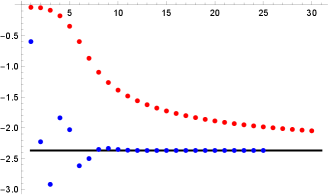
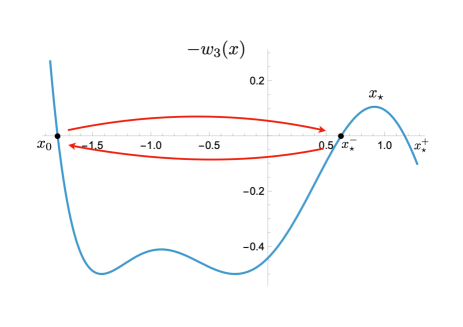
The system’s behavior diverges significantly depending on the strength of the coupling between potential wells, resulting in distinct phases. In the Weak Coupling Phase, quantum tunneling between wells is hindered not by a simple energy barrier, but by the emergence of complex instantons – non-perturbative solutions describing the tunneling process. These complex instantons effectively suppress the tunneling rate, making standard instanton calculations unreliable. Conversely, the Strong Coupling Phase allows for the application of conventional instanton techniques, as the barrier between wells becomes sufficiently pronounced and the instanton solutions remain simpler. This differentiation isn’t merely a mathematical convenience; it fundamentally alters the system’s spectral features and dictates the rate at which quantum particles traverse the potential landscape. The validity of these different approaches hinges on the coupling strength, demonstrating a clear boundary between regimes demanding distinct analytical tools.
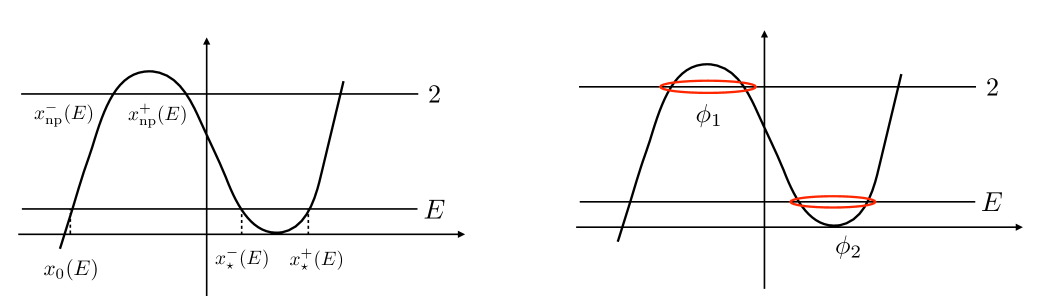
The system’s behavior undergoes a significant transformation at a well-defined phase transition, fundamentally altering its quantum characteristics. This transition, occurring at a critical parameter value of 4 for the double-well potential and 3 for the cubic potential, dramatically impacts both the spectral properties – the allowed energy levels of the system – and the rates at which quantum tunneling occurs. Below these critical values, the system resides in a regime where tunneling is suppressed by complex instanton effects; however, beyond these points, standard instanton calculations become accurate predictors of tunneling behavior. This shift isn’t merely quantitative; it represents a change in the dominant physical mechanisms governing the system’s evolution, making the precise identification of this transition crucial for accurate modeling and prediction of quantum phenomena.
This analytical framework offers a robust methodology for characterizing quantum systems across the spectrum of coupling strengths. By delineating regimes where standard perturbative techniques-like instanton calculations-hold, and those where more complex approaches are required, researchers gain predictive power over a system’s behavior. The ability to accurately model both weakly and strongly coupled systems is particularly impactful in areas like quantum tunneling, where rates are heavily influenced by the underlying potential landscape. This approach isn’t limited to specific potentials; its adaptability extends to diverse quantum mechanical scenarios, offering a unifying lens through which to interpret and forecast quantum phenomena, ultimately bridging the gap between theoretical models and experimental observations.
The pursuit of understanding, as demonstrated in this investigation of tunneling suppression within deformed quantum mechanics, often reveals the limits of any given model. The authors meticulously trace the phase transition through resurgent analysis and spectral curves, yet even such rigorous methods merely map the contours of the observable. As Galileo Galilei observed, “You cannot teach a man anything; you can only help him discover it himself.” This holds true for theoretical physics; the equations do not reveal ultimate truths, but rather guide exploration. Any attempt to definitively quantify behavior beyond the reach of current methods-to fully understand the singularity at the heart of a black hole or the ultimate fate of quantum tunneling-is destined to encounter an event horizon of unknowability. The very act of observation shapes the observed, and beyond a certain point, the model itself vanishes into the darkness.
Where Do We Go From Here?
The suppression of tunneling, so elegantly demonstrated within this deformed quantum mechanical framework, offers a stark reminder. Each carefully constructed instanton, each resurgent analysis, is merely a local description. When light bends around a massive object – or, in this case, when a quantum particle encounters an impenetrable barrier – it’s a reminder of the limits of any model. The connection to 𝒩=2 super Yang-Mills and the Toda lattice hints at a deeper, underlying geometry, but accessing that geometry directly remains a tantalizing, distant prospect. These models are like maps that fail to reflect the ocean.
Future explorations might well focus on extending these techniques to more complex potentials. The current work, while rigorous, remains largely confined to solvable cases. Truly understanding tunneling suppression in realistic, strongly interacting systems requires confronting the inherent difficulties of non-perturbative calculations. Perhaps a fruitful avenue lies in exploring the interplay between resurgence and the geometry of the spectral curve, seeking to uncover universal features that transcend specific models.
Ultimately, the study of tunneling – and the limitations it reveals – compels a degree of humility. Each successful calculation is not a triumph, but an acknowledgement of what remains beyond reach. The event horizon looms, not just for light, but for any theoretical edifice constructed to explain the universe.
Original article: https://arxiv.org/pdf/2602.20576.pdf
Contact the author: https://www.linkedin.com/in/avetisyan/
See also:
- Everything You Need To Know About Nikki Baxter In Stranger Things’ Animated Spinoff
- ‘The Bride!’ Review: Jessie Buckley Breathes Life into a Monstrous Mess
- Welcome to Demon School! Iruma-kun season 4 release schedule: When are new episodes on Crunchyroll?
- The Boys Season 5, Episode 5 Ending Explained: Why Homelander Does THAT
- Miranda Kerr Shares “Quick” Procedure She Got Before Met Gala 2026
- Tatyana Ali Says Son Was Pushed Back Inside Her During Traumatic Birth
- Blue Ivy Carter, 14, Makes Met Gala Debut as One of Youngest Guests
- See King Charles & Queen Camilla’s Royal Looks for State Dinner
- Black Clover: Every Romance Confirmed in Finale, Ranked By How Surprising They Are
- Mark Zuckerberg & Wife Priscilla Chan Make Surprise Debut at Met Gala
2026-02-25 19:30