Author: Denis Avetisyan
A new approach to modeling light propagation through complex materials resolves long-standing issues with energy conservation and wave superposition.
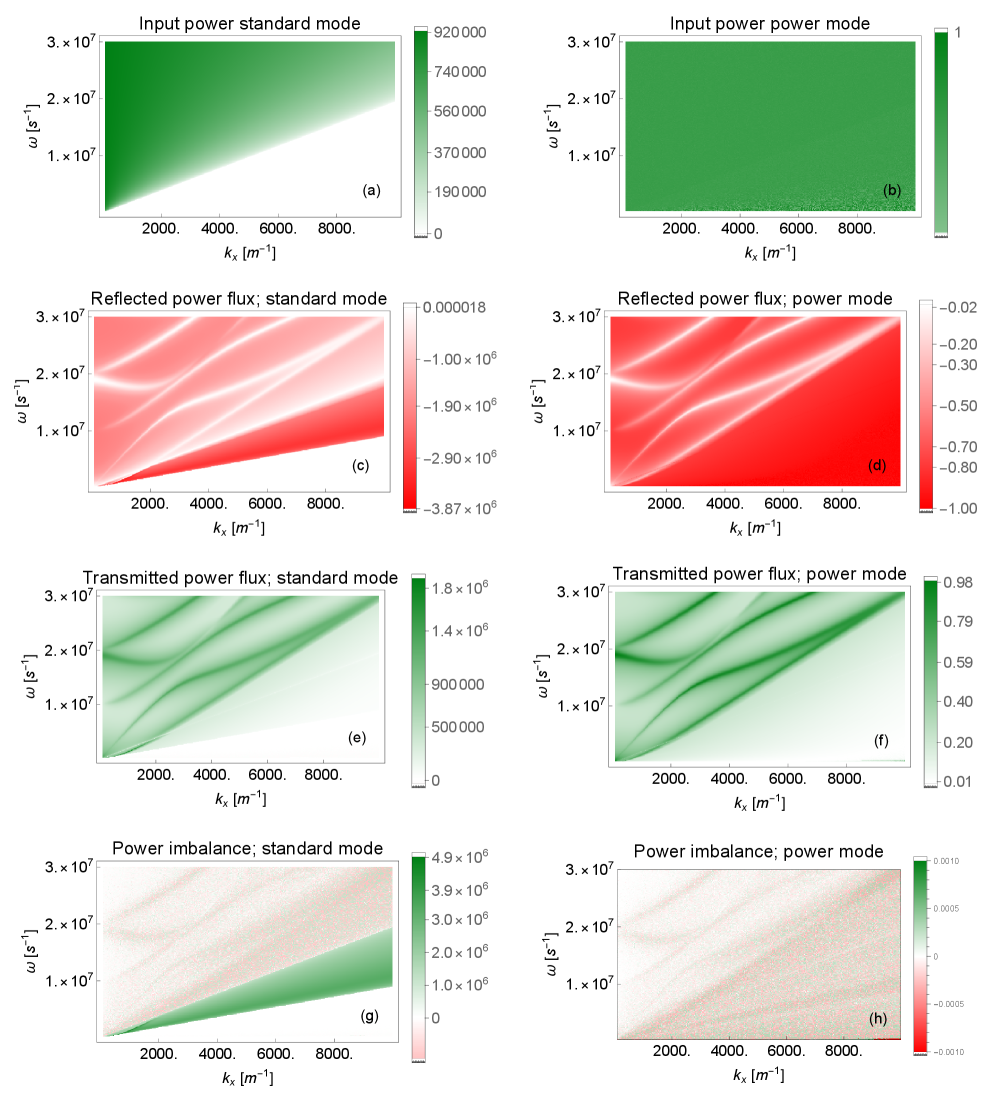
Using power-flux eigenmodes instead of plane waves ensures unitarity and correctly accounts for evanescent waves in multilayer systems.
While the superposition principle is foundational to linear wave physics, its practical application can fail in multilayered systems due to basis-dependent divergences. In ‘Representation-induced superposition breakdown in linear physics’, we demonstrate that expressing fields as infinite series involving evanescent waves leads to non-normalizable components and a breakdown of superposition, particularly with three or more interfaces. This issue is resolved by introducing a power-flux eigenmode basis, which guarantees energy conservation and restores the validity of superposition without requiring regularisation or renormalisation-ensuring unitary scattering and bounded propagation eigenvalues. Does this approach offer a pathway to more robust and accurate modelling of wave phenomena across diverse physical systems, from optics to seismology?
The Fragility of Conventional Wave Descriptions
Traditional understandings of wave behavior, rooted in Linear Wave Theory, frequently encounter limitations when applied to real-world scenarios characterized by disorder or spatial variations in material properties. This theory excels at describing simple, predictable waves traveling through uniform mediums, but struggles to accurately model waves propagating through heterogeneous environments like turbulent fluids, fractured rock, or biological tissues. The core issue lies in the assumption of a perfectly consistent medium; when faced with irregularities, the simplifying mathematical framework breaks down, leading to discrepancies between theoretical predictions and observed phenomena. Consequently, researchers often find that classical models fail to capture crucial effects such as scattering, diffraction, and attenuation, necessitating more sophisticated approaches to fully describe wave propagation in complex systems.
Accurate depiction of wave phenomena in disordered or inhomogeneous environments necessitates a departure from the idealized concept of plane waves. Instead, a comprehensive understanding requires embracing the power of complex wavevectors. These aren’t merely directional indicators; the complex component represents the wave’s exponential growth or decay as it propagates through the medium. A wavevector, mathematically expressed as \mathbf{k} = k_r + i k_i , where k_r defines the real spatial frequency and k_i governs the attenuation or amplification rate, effectively encodes both the oscillatory and the amplitude modulation of the wave. By utilizing complex wavevectors, researchers can model phenomena like wave scattering, tunneling, and the formation of localized waves, providing insights unattainable through traditional, simplified wave descriptions.
Wave propagation through non-uniform media necessitates accounting for both attenuation and growth, phenomena absent in idealized, homogeneous scenarios. As waves traverse regions with varying properties – changes in density, temperature, or composition – energy loss due to scattering and absorption, represented by attenuation, competes with potential amplification through constructive interference or external energy input, manifesting as growth. This interplay fundamentally alters wave behavior; simple sinusoidal wave solutions are insufficient to describe these complex interactions. Instead, models must incorporate spatially dependent parameters to accurately predict how waves diminish or intensify as they propagate, requiring sophisticated mathematical frameworks that move beyond the limitations of constant-coefficient equations and acknowledging that the wave’s amplitude is no longer solely determined by initial conditions but also by the local characteristics of the medium itself.
Navigating Complexity: A Multi-Scattering Approach
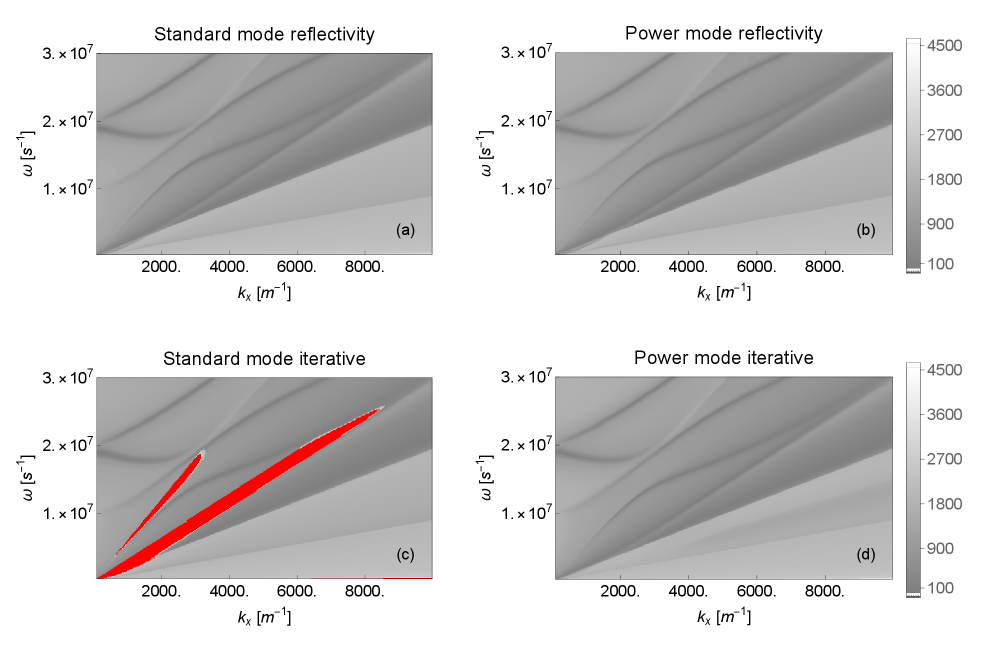
The Multiple Scattering Framework addresses wave propagation challenges in media lacking simple, predictable structures, such as dense foliage, rough surfaces, or biological tissues. Unlike single-scattering approximations which assume waves interact only once with the medium, this framework accounts for repeated scattering events – where a wave is redirected multiple times before reaching a receiver. This is achieved through iterative or recursive calculations that track the amplitude and phase of waves as they propagate through the complex medium. The robustness of the framework stems from its ability to model scenarios where the wave field is highly diffuse and conventional ray tracing or direct transmission calculations are inaccurate. It is applicable to a variety of wave phenomena, including electromagnetic, acoustic, and seismic waves, and forms the basis for advanced simulations in fields like radar imaging, medical imaging, and non-destructive testing.
The Transfer Matrix Method (TMM) and Scattering Matrix Method (SMM) are computational techniques used within the Multiple Scattering Framework to determine a system’s transmission and reflection characteristics. TMM recursively propagates the wave function through layered media, applying boundary conditions at each interface to establish a transfer matrix relating input and output fields; this allows calculation of overall transmission and reflection coefficients. Conversely, SMM focuses on directly calculating the scattering matrix, which describes the amplitudes of waves scattered from individual inhomogeneities; these matrices are then combined to determine the total reflected and transmitted waves. Both methods rely on solving systems of linear equations derived from applying appropriate boundary conditions and are particularly effective when dealing with multiple scattering events and complex geometries where analytical solutions are intractable.
The Transfer Matrix Method and Scattering Matrix Method facilitate accurate wave behavior prediction in complex media by iteratively calculating the effect of each interface or scattering center on the wave’s amplitude and phase. These methods account for both forward and backward propagating waves, effectively modeling multiple scattering events; the total transmission and reflection coefficients are determined through matrix multiplication or concatenation, respectively. This approach differs from single-scattering approximations which become inaccurate when the density of scatterers increases, as these methods explicitly consider the interference effects arising from waves scattered multiple times throughout the medium. Consequently, these techniques provide reliable results for a wide range of scenarios involving heterogeneous materials and complex geometries.
Beyond Simplification: The Necessary Inclusion of Evanescent Waves
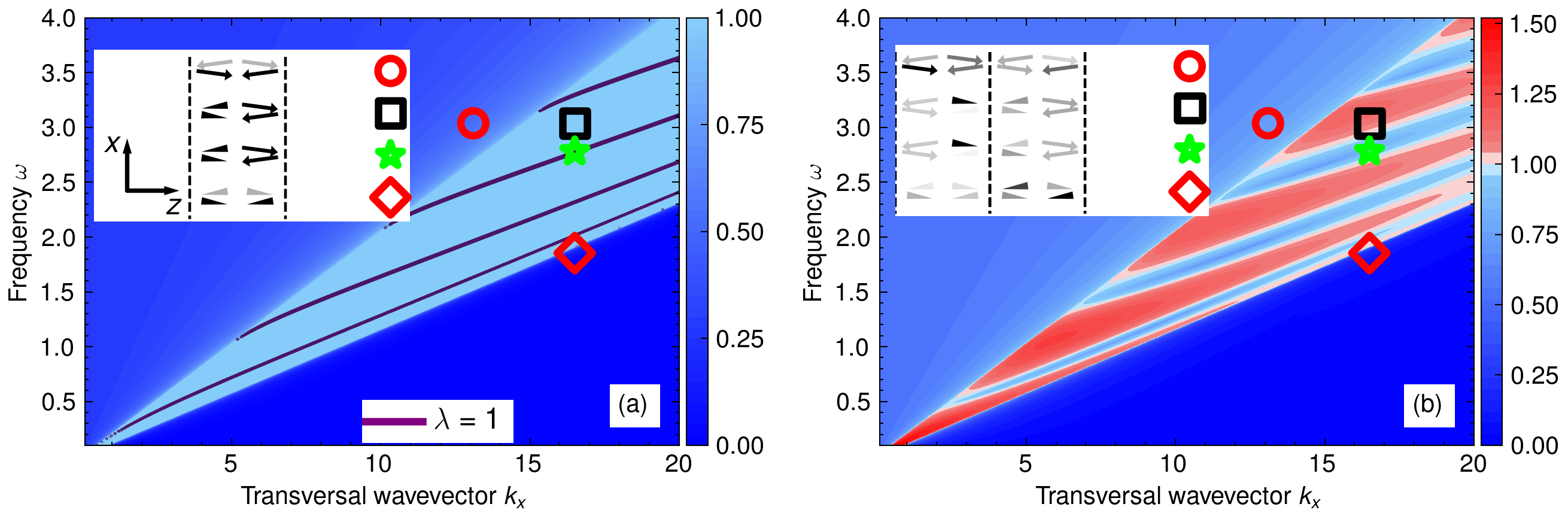
The Airy formula provides a complete solution to the problem of wave transmission and reflection at an interface between two media, fundamentally differing from simpler Fresnel equations by explicitly including terms that describe evanescent waves. These waves arise when total internal reflection occurs, or when light interacts with structures possessing spatial frequencies higher than the wavelength in a given medium, resulting in a decaying exponential field e^{-kx} where k is the transverse wavenumber. While these waves do not propagate energy in the traditional sense, the Airy formula accurately models their contribution to the overall electromagnetic field and, consequently, to the energy transfer between the transmitting and receiving regions. This complete description is essential for accurate modeling of near-field phenomena and the behavior of structures with dimensions comparable to or smaller than the wavelength of incident radiation.
Evanescent waves, though characterized by exponential decay and thus appearing non-propagating, are not purely virtual energy constructs; they demonstrably contribute to the net energy transfer at an interface. This contribution arises because the energy associated with these waves, while decaying rapidly with distance, is not zero at the interface itself. Consequently, ignoring evanescent waves in modeling leads to inaccuracies in calculating total transmission and reflection coefficients. Accurate modeling requires accounting for the energy carried by these waves, particularly in scenarios involving closely spaced objects or high-resolution imaging where the decay length of the evanescent wave is significant relative to the separation distance. Failure to do so violates energy conservation principles and produces physically unrealistic results.
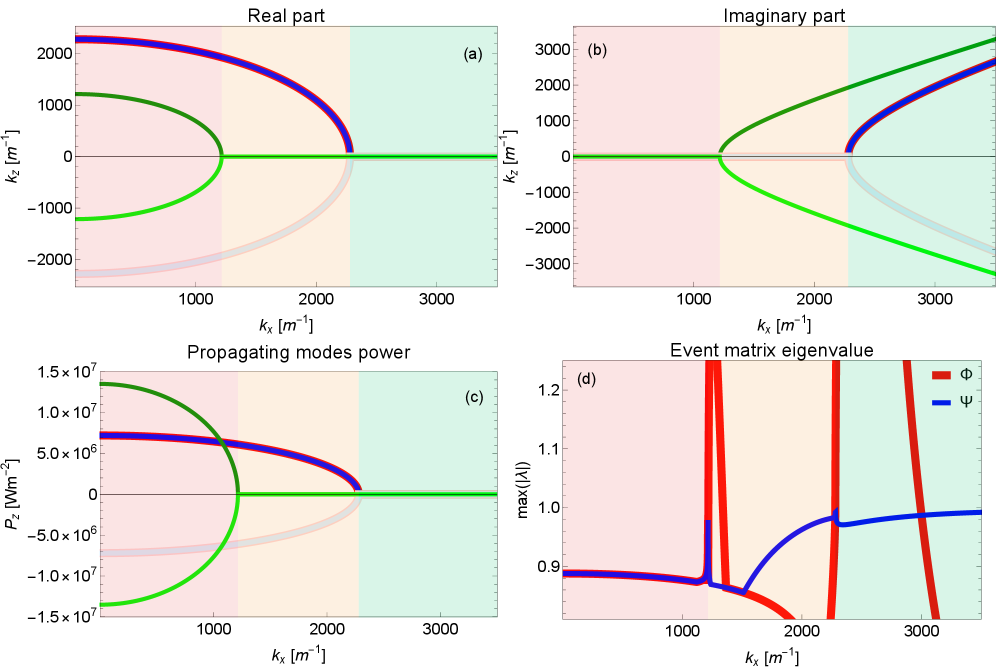
Power-Flux Eigenmodes provide a mathematically rigorous framework for analyzing electromagnetic wave propagation by defining a complete, orthonormal basis that inherently includes the contributions of evanescent waves. Traditional modal expansions often struggle with unbounded energy or mathematical inconsistencies when dealing with evanescent fields; Power-Flux Eigenmodes address this by constructing modes that satisfy the power-flux orthogonality condition, ensuring finite and physically meaningful energy contributions. This approach results in a bounded eigenvalue magnitude |\lambda| \le 1 for all modes, a demonstrable improvement over conventional methods which can exhibit eigenvalues with arbitrarily large magnitudes and thus fail to accurately represent energy distribution in systems involving evanescent waves.
The Imperative of Consistency: Upholding the Laws of Wave Behavior
The fundamental principle of unitarity dictates that the total probability of all possible outcomes of a wave’s propagation must remain constant; equivalently, energy cannot be created or destroyed during the process. This conservation law is not merely a mathematical nicety, but a cornerstone of physically realistic wave models, spanning optics, acoustics, and quantum mechanics. Any deviation from unitarity introduces unphysical results, such as waves that grow or diminish without external sources, or signals traveling faster than light. Consequently, rigorous adherence to unitarity is paramount when developing and applying wave propagation techniques, demanding careful consideration of boundary conditions, material properties, and the approximations employed in solving complex wave equations. Maintaining this principle ensures the model accurately reflects the behavior of physical waves and yields reliable predictions.
The fundamental principle of unitarity, which dictates the conservation of probability in wave propagation, is surprisingly fragile when dealing with certain types of waves. Evanescent waves, those that decay exponentially with distance, and inhomogeneous waves, which exhibit spatially varying properties, pose particular challenges. If these waves aren’t accounted for with meticulous precision in modeling, energy can appear to be created or destroyed – a clear indication of unphysical results. This arises because standard calculations often assume waves extend infinitely, or that the medium is uniform, conditions not met by evanescent or inhomogeneous phenomena. Consequently, approximations can break down, leading to spurious oscillations or divergences in calculations, and ultimately, a loss of confidence in the model’s predictive power. Careful treatment, often involving specialized mathematical techniques, is therefore essential to ensure that these waves contribute to the total energy balance without violating the core tenets of quantum or classical wave mechanics.
Maintaining the integrity of wave propagation models often requires sophisticated mathematical tools, particularly when dealing with complex, disordered media. The Foldy-Lax criteria offer a robust framework for ensuring both the convergence of approximations and the fundamental principle of unitarity – the conservation of probability or energy. This is especially critical in scenarios like Anderson Localization, where energy can become trapped within the disordered system, seemingly violating conservation laws. Utilizing power-flux eigenmodes – a refined basis for describing wave propagation – effectively restores the convergence of series expansions used to model these systems. This approach elegantly bypasses the need for artificial, ad hoc regularization techniques frequently employed to salvage otherwise divergent calculations, offering a physically grounded and mathematically rigorous solution for accurately simulating wave behavior in challenging environments.
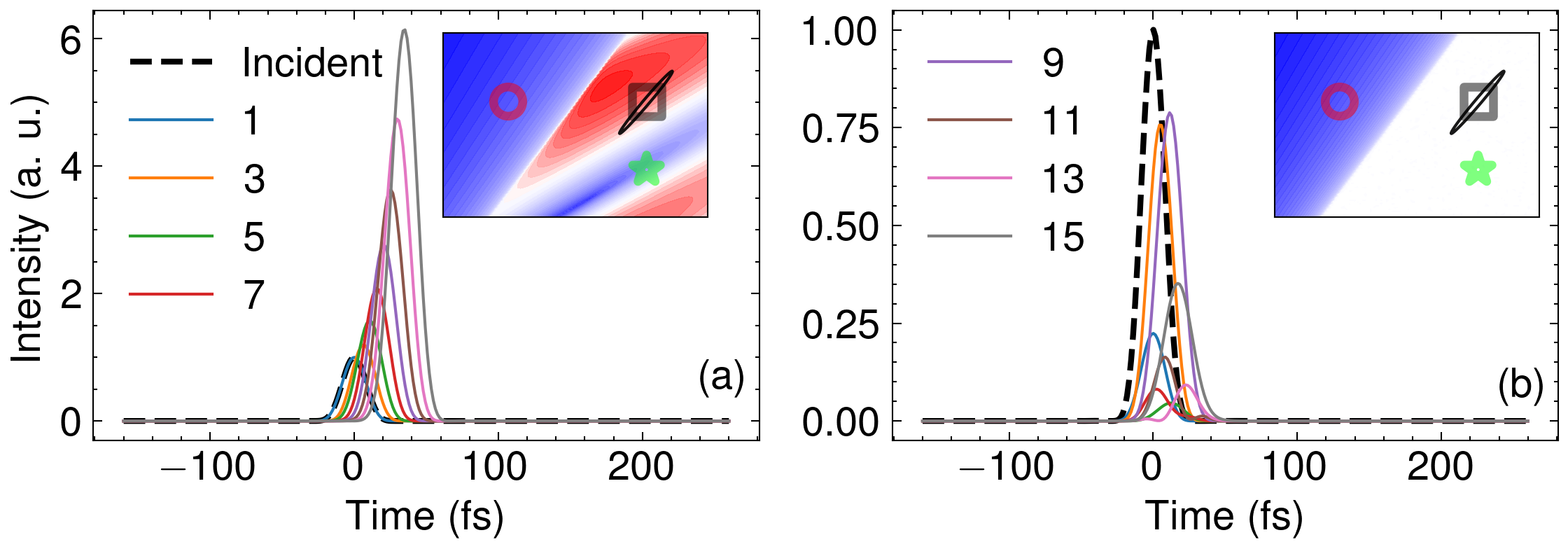
The pursuit of accurate representation in physics often encounters inherent limitations, as demonstrated by this work on multilayer optics. The conventional approach, relying on plane waves, falters when confronted with evanescent waves and the complexities of multilayer systems, leading to divergence issues. This research offers a solution by shifting the foundational basis to power-flux eigenmodes, effectively restoring the superposition principle and ensuring energy conservation. It echoes Niels Bohr’s sentiment: “It is wrong to think that the task of physics is to find how Nature works, but rather how to describe it.” The study doesn’t necessarily reveal a new law of nature, but rather a more robust method of description-a means to model wave behavior with greater fidelity and address the decaying accuracy of older techniques. Like all models, this too will eventually face limitations, but its current strength lies in its ability to gracefully age within the confines of its mathematical framework.
The Long View
The restoration of superposition, as demonstrated by this work, isn’t merely a technical correction; it’s an acknowledgement that the chronicle of a system – here, the logging of wave behavior – is fundamentally dependent on the chosen frame of reference. Conventional plane waves, while historically convenient, proved to be a decaying basis for description when confronted with the full complexity of multilayer optics. The power-flux eigenmode approach, by prioritizing energy conservation, offers a more graceful aging process for the model, but it is not immortality.
The immediate horizon involves extending this formalism beyond linear regimes. The current work offers a stabilized snapshot, but real-world systems are rarely static. Nonlinear interactions, material inhomogeneities, and temporal dynamics will inevitably introduce new divergences, new points of fracture along the timeline. The question becomes not whether the superposition will again break down, but when, and how effectively the system can adapt its descriptive basis before doing so.
Ultimately, this research highlights a perennial truth: any mathematical representation is an imperfect approximation, a transient structure built upon assumptions. The pursuit of ‘correctness’ is, therefore, less about achieving a final, immutable form, and more about constructing models that exhibit resilience – that can absorb entropy and continue to yield meaningful predictions, even as the system itself inexorably evolves.
Original article: https://arxiv.org/pdf/2602.20179.pdf
Contact the author: https://www.linkedin.com/in/avetisyan/
See also:
- Marvel Officially Confirms Deadpool’s Most Brutal Redesign
- Gold Rate Forecast
- Welcome to Demon School! Iruma-kun season 4 release schedule: When are new episodes on Crunchyroll?
- 10 Movies That Were Banned in Different Countries For Random Reasons
- Nintendo Switch 2 Reportedly Getting Remake of One of the Best PS3 and Xbox 360 Games
- Crunchyroll Confirms New Isekai Anime Releases for 2026 and Beyond (With Major Returns)
- Michael Jackson Biopic’s Record-Breaking Debut Unseats 2026’s Biggest Box Office Hit On U.S. Chart
- 9 Great Supernatural Characters Everyone Forgot About
- Taylor Sheridan’s Gritty 5-Part Crime Show Reveals New Final Season Villain
- All 61 Episodes 90s Cult Classic Sci-Fi TV Show That Was Famously Canceled Twice Were Just Added to Tubi
2026-02-26 03:52