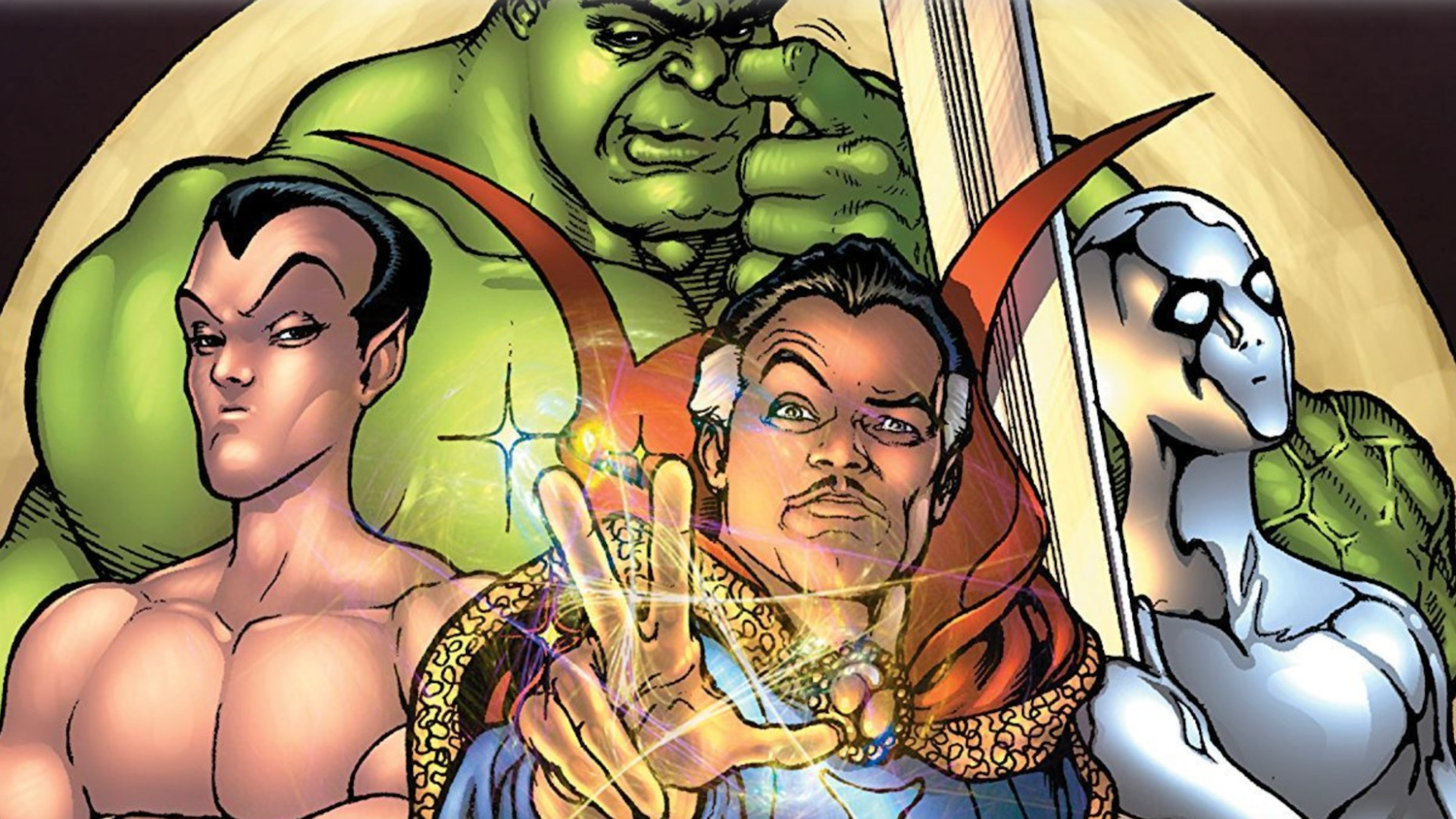
The Ultimate Universe is coming to an end as Earth’s heroes launch a last stand against the villainous Maker and his controlling council. The Maker built a twisted world where many famous heroes never rose to power, and he’s been imprisoned in his fortress, the City, for two years. Now that the City’s defenses are down, it’s up to the superheroes and the resistance group, the Ultimates, to defeat the Maker and dismantle his rule. Simultaneously, a new team of Avengers, led by Luke Cage, is fighting the Maker’s Council outside the City. This version of Earth’s Mightiest Heroes will face off against the Defenders, who represent the dangers of unchecked corporate power.
In Ultimates #21, the battle against the Maker’s Council continues as the Avengers lead the charge against their oppressive rule. This version of the Avengers, from Marvel’s Ultimate Universe, is a group of imprisoned heroes freed by Luke Cage, who formed them as a resistance force. Now that they’ve broken free, they’re ready to confront the Council directly. However, the Council isn’t backing down, and member Emmanuel Da Costa, known as Black King, introduces a new team called the Defenders, whose mission is to crush the Avengers and anyone else who challenges their authority.
The Defenders Are the Ultimate Avengers’ Polar Opposites
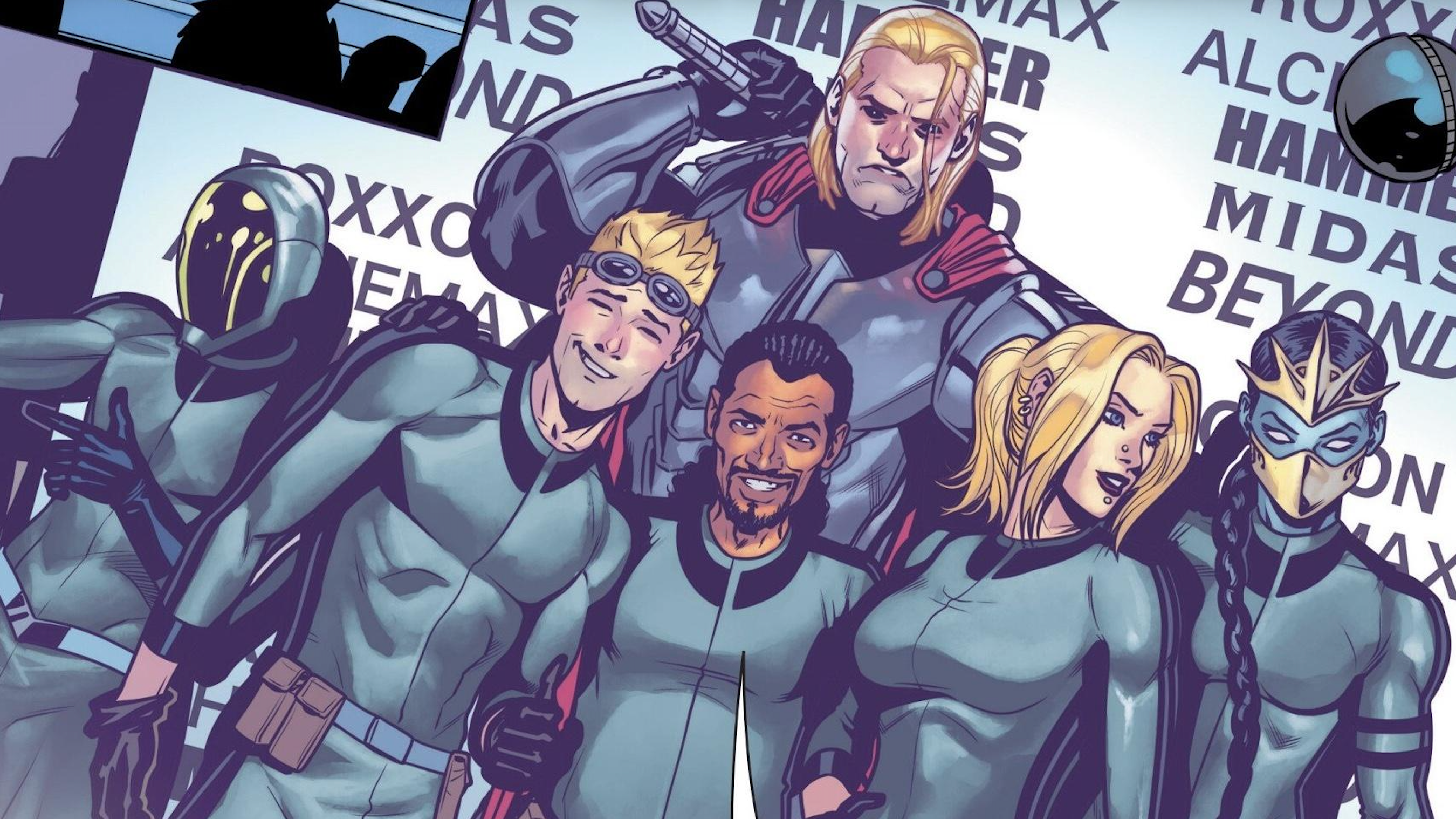
The Defenders, in the primary Marvel universe (Earth-616), are usually a group of independent heroes who reluctantly team up to face shared threats. Despite their frequent disagreements, they consistently risk their lives to protect people. However, the Defenders from another universe (Earth-6160) are drastically different. They’re a team of ruthless villains sponsored by a corporation, wearing identical costumes plastered with brand logos. They’ll kill anyone – even innocent civilians – to protect their brand and suppress any opposition. This creates a stark contrast with the Avengers from the Ultimate Universe, setting up a classic battle between those who support and oppose the established order.
The Defenders are a team of villains who are dark reflections of Marvel’s heroes. They include Thora, Cannonball, Proctor, Marvel Boy, and Decay’s Beautiful Daughter, and their goal is to destroy the Avengers and anyone who supports them. Just as the Avengers were capturing enemy soldiers and preparing to bring them to justice, the Defenders launched a surprise attack. In a cruel twist, the Defenders killed the prisoners and made it look like the Avengers were responsible, broadcasting the scene as if the Avengers were ruthless terrorists. With their immense power, the Defenders aimed to publicly ruin the Avengers’ reputation and orchestrate their downfall.
Despite their powers, funding, and public image, the Defenders are ultimately outmatched by the will of the people. When the Avengers are almost defeated, ordinary citizens involved in the Ultimates movement bravely attack the Defenders with weapons like machine guns and rocket launchers. Though many sacrifice their lives, this distraction allows the Avengers to regroup and counterattack. Unlike the Defenders, who are new to hero work and motivated by profit, the Avengers are driven by a genuine desire for freedom and justice. This stronger purpose allows them to defeat the Defenders. Meanwhile, the Council, displeased with his failure to suppress the uprising, eliminates the Black King.
Though short-lived, lasting only one comic book issue, the Defenders powerfully illustrated how revolutions can be hijacked by corporations and governments. These entities often distort the original ideals of a movement, turning them into marketable products. Beyond that, the Defenders served as a clever critique of the comic book industry itself, highlighting how corporate interests often control creative expression and suggesting a need for change.
The Defenders of the Status Quo
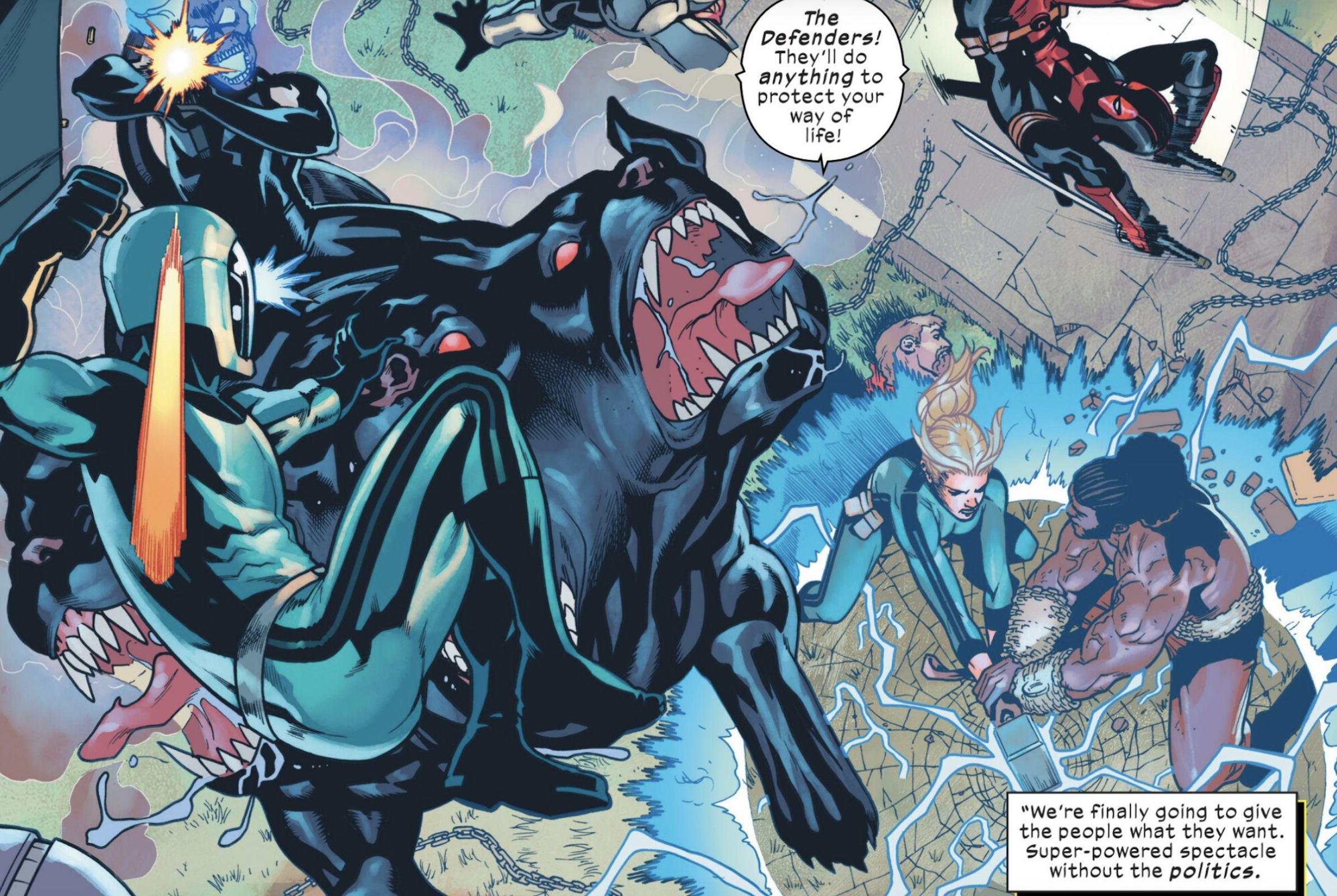
In Ultimates #21, it’s obvious the Defenders are a commentary on the entertainment and superhero worlds. The comic shows them as the focus of a massive marketing push – movies, TV shows, toys, and all – designed to make a lot of money for the corporations in charge. They’re portrayed as deliberately avoiding politics, championing generic ideas of truth and justice that lack real substance. Every detail, from their outfits to their dialogue, is tested by focus groups and created using AI to appeal to as many people as possible. These “heroes” aren’t genuine, and they actually hinder real progress and compelling storytelling.
Throughout the history of comic books and their movie/TV adaptations, there’s always been strong disagreement about the topics they explore. The rise of the internet and social media has only made these debates more intense. When comics address important social issues like race or gender, some people accuse them of being “too political.” Black King points out that some audiences don’t want to be preached to, a sentiment often expressed online. However, despite claims to the contrary, the Defenders are clearly a government group designed to suppress anyone challenging unfair systems.
The Black King argues that audiences supposedly prefer simple, action-packed superhero stories over complex narratives. Sadly, many studio executives agree, prioritizing profits over originality and challenging content. This leads to uninspired entertainment created by committees and market research, rather than passionate artists with meaningful messages. Companies often stick to what’s safe and familiar, repeating the same formulas to maintain the status quo, and the growing use of AI in content creation is making this problem even worse. With Ultimates #21, the writers are making a statement: it’s time for a change.
From the very beginning, when comic books featured heroes battling Nazis before the U.S. entered World War II, they’ve consistently conveyed political messages advocating for fairness and equality. Marvel Comics often led the way, tackling difficult topics like gender, race, identity, and economic hardship in its stories – even when those choices drew criticism for being “too political.” The recent issue, Ultimates #21, continues this tradition, with creators boldly expressing their values through their work. This issue, and stories like it—such as the Ultimates and Avengers inspiring rebellion against the Maker’s Council—demonstrate how comics and art can motivate future generations to fight for a more just world.
Superheroes aren’t simply disposable entertainment created for profit. For almost a century, they’ve stayed relevant by changing with the times, tackling modern problems, and inspiring people to be heroes in their own lives – not by supporting flawed systems, but by protecting the vulnerable. The Avengers in the Ultimate Universe embody this idea, and the fact that the Defenders were allowed to fail proves that creative storytelling is still valued.
What do you think? Leave a Comment below and join the conversation in the ComicBook Forum!
https://comicbook.com/comics/list/marvels-first-10-superhero-teams-ranked-by-legacy/embed/#
Read More
- Marvel Officially Confirms Deadpool’s Most Brutal Redesign
- Nintendo Switch 2 Reportedly Getting Remake of One of the Best PS3 and Xbox 360 Games
- The Boys Season 5, Episode 5 Ending Explained: Why Homelander Does THAT
- Crunchyroll Confirms New Isekai Anime Releases for 2026 and Beyond (With Major Returns)
- The Boys Season 5, Episode 2’s Soldier Boy Ending Twist Changes Everything for Homelander & Butcher
- Invincible Creators Offer Promising Update on Season 5 Release Date
- 5 Best Open-World Games You Can Beat In A Weekend
- All 61 Episodes 90s Cult Classic Sci-Fi TV Show That Was Famously Canceled Twice Were Just Added to Tubi
- Gold Rate Forecast
- 9 Great Supernatural Characters Everyone Forgot About
2026-02-28 22:16