When people think of popular Westerns today, especially on television, Yellowstone is usually the first show that comes to mind. Thanks to its five seasons and spin-offs like 1923, The Marshals, and the upcoming Dutton Ranch, Taylor Sheridan’s series has successfully brought the genre back to life for a new generation. However, despite how good Yellowstone is, Prime Video has another Western series that deserves just as much recognition.
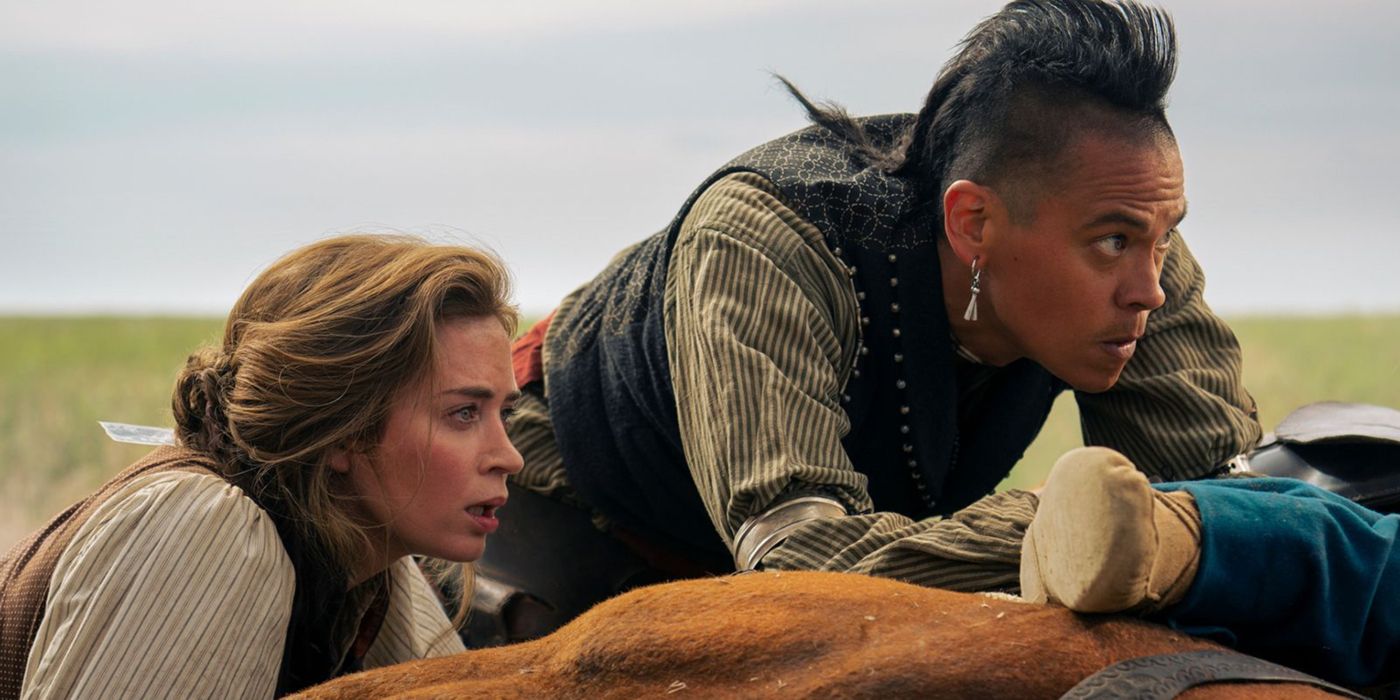
Hugo Blick’s The English is a powerful and unconventional Western miniseries set in the 1890s American frontier. It shares a similar raw style with films like Unforgiven. Emily Blunt leads this gritty series, which stands out in the Western genre thanks to its concise story, realistic visuals, and inventive approach to familiar themes. In an age of lengthy streaming shows, The English proves that a focused, well-told Western can be incredibly effective.
The English Is a Thoughtful Revisionist Western
The story centers on Lady Cornelia Locke (Blunt), who journeys to America determined to find justice for her son’s murder. Shortly after her arrival, she encounters Sergeant Eli Whipp (Chaske Spencer), a Pawnee man heading to Nebraska to request land promised to him for his military service – land he suspects the government won’t actually deliver. Recognizing a shared purpose, they decide to team up and work together.
In the 1970s, a new wave of Westerns offered a more realistic and complex portrayal of the American West. Instead of celebrating traditional ideas like American superiority and westward expansion, these films questioned them. Movies such as and The Wild Bunch were key in changing how Westerns were made and perceived.
Later films, including McCabe and Mrs. Miller and Jeremiah Johnson, moved away from the strong patriotic themes of older Westerns. This paved the way for critically acclaimed movies like Tombstone and others, which began to address the problematic and often racist history of the genre.
The Western genre has sometimes reverted to problematic tropes, especially in how it portrays women and Indigenous people. Some films have focused on white viewpoints of events like Osage history, either minimizing Native characters or focusing solely on their experiences with violence and hardship. While these portrayals might be explained by the historical setting, these productions often miss opportunities to offer fresh, more nuanced perspectives. The English revitalizes a previously promising trend of thoughtful Westerns.
Instead of ignoring or portraying Native Americans negatively, the show The English offers a nuanced perspective through its character Whipp. The first episode introduces Whipp as a Native American man working with the US Patrol, which challenges the typical depictions found in Westerns.
Whipp assists in the search for a wanted Cheyenne leader, Running Hawk, and then plans to retire and claim the land he earned through his service. Faced with few options, Native Americans often had to pledge loyalty to the people who had taken their land simply to survive. Throughout the series, Whipp wrestles with a compelling internal conflict – balancing his commitment to the US Patrol with his loyalty to his own people, creating a nuanced and engaging character journey.
Locke stands out in this type of story as a strong, independent woman who takes matters into her own hands. Driven by a desire to avenge her son, she relentlessly pursues his killer, and it quickly becomes clear she recognizes her own worth. She faces immediate challenges but proves remarkably adaptable, and her growth throughout the story adds a welcome layer of complexity.
The English portrays the hardships experienced by Indigenous people and women during this period, especially the deceit, pain, and impossible decisions they were forced to make. The show examines the impact of oppression and how even those who seem vulnerable can find power through their dedication to fairness.
The English Outshines Yellowstone With Its Miniseries Structure
This show is often praised as one of the best Westerns made recently, and many believe it helped bring the genre back to life. While Westerns have remained popular in film for decades—with iconic movies starring John Wayne and Clint Eastwood, and more recent hits like Tombstone and The Power of the Dog—the genre hasn’t had the same level of success on television.
Early Western shows were often self-contained episodes, like those in Gunsmoke. While enjoyable and action-packed, they weren’t considered groundbreaking. Yellowstone revitalized the Western genre by offering a contemporary approach and a complex, ongoing storyline.
While Yellowstone’s first season was reasonably popular with audiences, critics weren’t overly impressed, giving it a 58% rating on Rotten Tomatoes. However, the show’s renewal for multiple seasons allowed it to grow and improve, eventually becoming a huge success with consistently high critical ratings, often in the 90s.
What truly sets The English apart is its complete and satisfying storytelling. At 5 hours and 14 minutes long, the series feels like one seamless movie, avoiding frustrating cliffhangers or incomplete storylines. It successfully delivers on all its promises within just six episodes.
These days, streaming shows aren’t guaranteed to continue, particularly those in less popular genres like Westerns. The show was recently canceled after only one season because not enough people watched it. Other series, such as Outer Range on Prime Video and Damnation on USA Network, also faced cancellation after just two seasons.
As a big TV fan, it’s so frustrating when a show gets cancelled before it can properly finish its story. We saw this happen with The Abandons, and it really highlighted a problem with these kinds of serialized dramas – they’re often planned to run for many seasons. When Netflix cut The Abandons, viewers were left hanging with a story that will probably never get a conclusion. Honestly, if Yellowstone had faced the same fate, we’d have been in the same boat – a fantastic show with an unresolved ending.
The series finale involves the kidnapping of Dan Jenkins and continued danger to the ranch, a pattern seen in previous seasons. Though the show ultimately had a natural conclusion after five seasons, it could easily have been cut short. Declining ratings in its fifth season put the story at risk of an unfinished ending.
The way The English was structured as a limited series was a smart choice, and it’s likely its biggest advantage over other shows. Because it didn’t need multiple seasons, it avoided the pitfalls of dragging on or losing focus. Unlike shows like Yellowstone, which saw declining viewership and ended with a disappointing 40% audience score in its final season, The English will always be remembered as a complete and satisfying story.
Found an error? Send it so it can be corrected.
Read More
- 10 Greatest Manga Endings of All Time
- Review: Final Fantasy Tactics: The Ivalice Chronicles (PS5) – Still the Benchmark for Turn-Based Tactics
- Mark Zuckerberg & Wife Priscilla Chan Make Surprise Debut at Met Gala
- GBP CNY PREDICTION
- Elon Musk’s Mom Maye Musk Shares Her Parenting Philosophy
- Forza Horizon 6 Car List So Far: Confirmed Highlights, Cover Cars, DLC, and Rewards
- Miranda Kerr Shares “Quick” Procedure She Got Before Met Gala 2026
- The WONDERfools ending explained: What happened to the Child of Eternity?
- Ranking the 5 Best Spring 2026 Anime So Far (Mid-Season Update)
- Sony Plans to Start Shooting Horizon Movie in 2026, with 2027 Release Planned
2026-03-20 19:12