
In 2026, a feel-good movie about hope, understanding, working together, and science feels like a real gamble. It’s hard to picture a science fiction film that seems less relevant to how people are feeling right now than Project Hail Mary, which features an ordinary teacher using math and problem-solving skills to try and save the world. But perhaps that’s exactly what makes the movie so effective, even though it sometimes moves slowly. It doesn’t just transport you to another planet for a couple of hours; it genuinely offers a sense of hope and suggests that there are still things worth protecting, and capable people who could step up if given the chance.
A refreshing aspect of the movie Project Hail Mary, adapted from Andy Weir’s popular novel, is its relatable main character. Instead of a typical, distant genius, Ryan Gosling plays Dr. Ryland Grace as charming and down-to-earth, even sporting impressively messy hair. The story begins with Dr. Grace waking up on a spaceship, lost in deep space, with no recollection of his mission or how he arrived.
He discovers the rest of the crew dead, still in the cryogenic pods used for long-distance space travel. Without their help, Grace doesn’t know how to fly the ship or operate its systems. He aimlessly wanders through the vessel, drinking pre-mixed vodka and fumbling with things. While intelligent, he comes across as somewhat clumsy and foolish, especially at the beginning – a deliberate choice by the filmmakers to make this brilliant scientist more relatable.
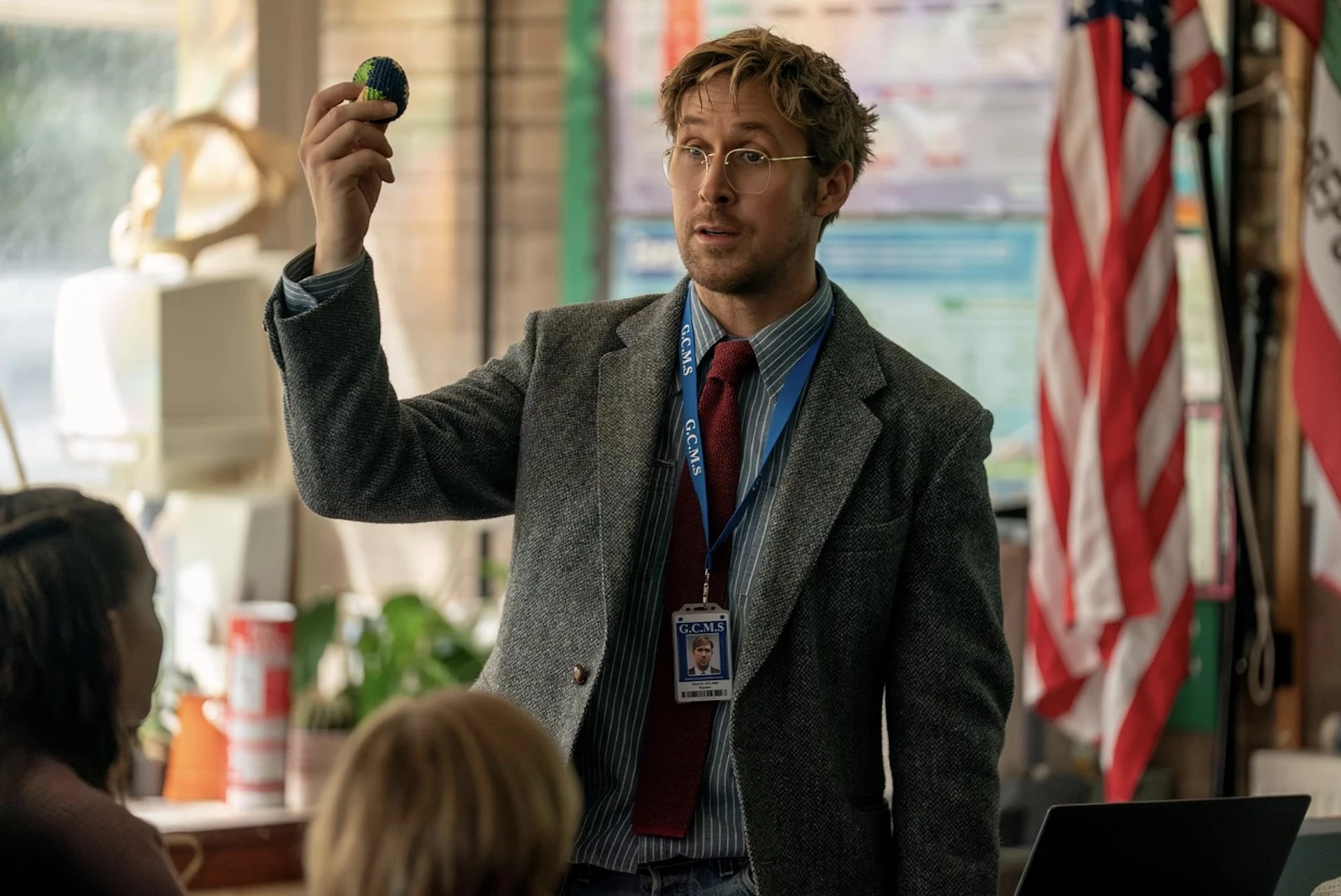
Through flashbacks, we learn how this astronaut, despite lacking the usual qualifications, ended up in this unusual situation. He used to be a highly skilled middle school science teacher, but he lost his academic position due to his challenging and controversial ideas. This leads to an offer from Eva Stratt (Sandra Hüller), who leads a global project to solve a mysterious problem: the “Petrova line,” which is slowly causing the Sun to fade. If the Petrova line continues to worsen over the next few decades, it could cause massive global cooling and the extinction of half of all life on Earth.
On Earth, Grace becomes part of the team that discovers Astrophage, an alien microorganism responsible for the Petrova phenomenon. Then, while in space, Grace needs to regain his memories, find where Astrophage came from, and develop a solution to stop the Petrova line. It’s a long shot, but his chances get a little better when he reaches his destination and meets an alien refugee, nicknamed “Rocky” because of his rock-like, spider-shaped body, who is facing the same problem. If Grace and Rocky can learn to communicate, they might be able to collaborate and save both their planets.
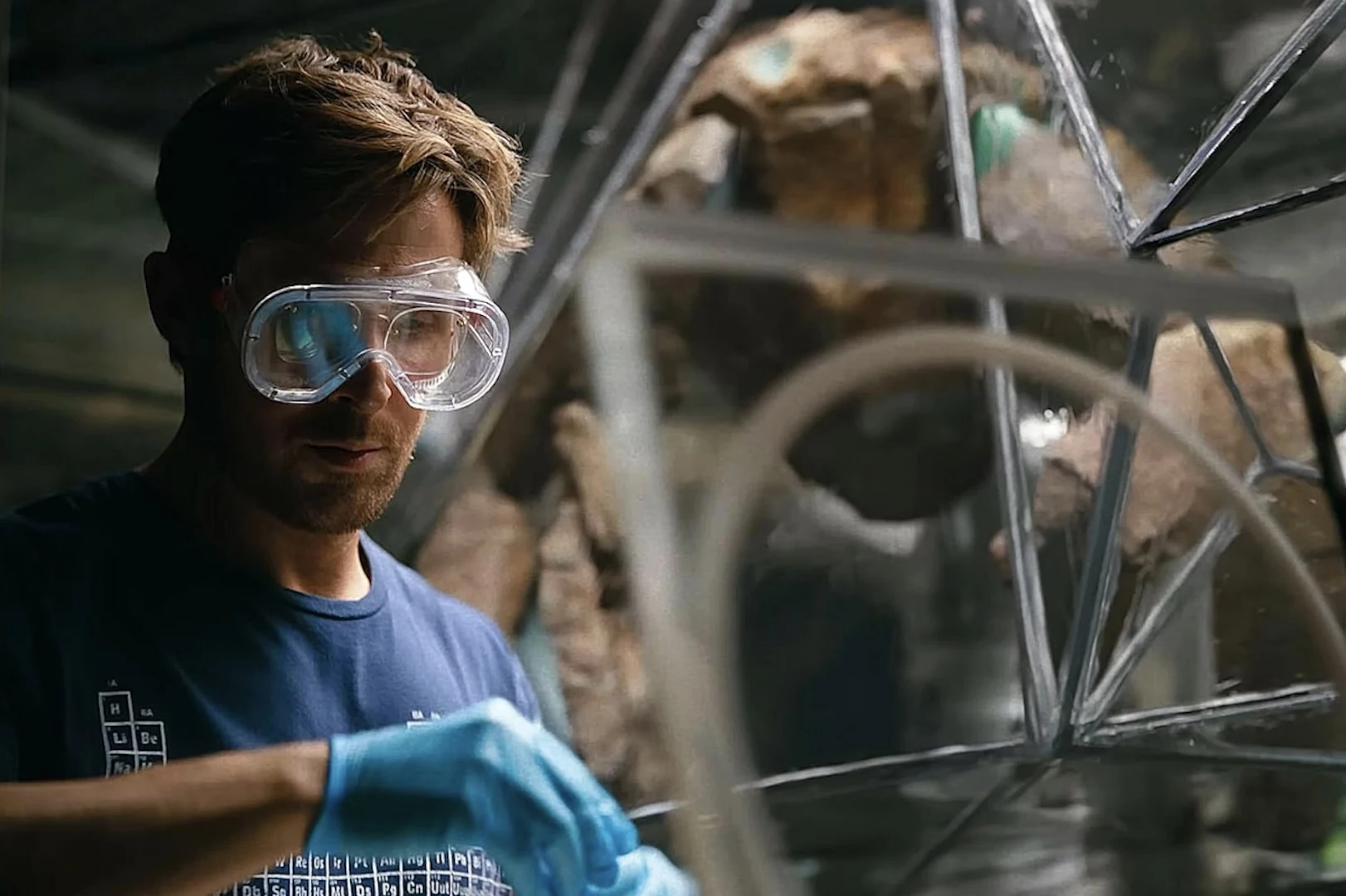
At its core, this science fiction film is a touching story about the connection between Grace and Rocky. Like Weir’s The Martian, the movie features clever scientists constantly facing impossible challenges that they must overcome with their ingenuity. To balance all the complex scientific discussions, the script (also by The Martian’s Drew Goddard) creates a charming dynamic between the characters, reminiscent of The Odd Couple. Ryan Gosling plays the neat and particular one, while a uniquely textured alien creature fills the role of his more laid-back counterpart.
Communicating with each other surprisingly wasn’t a big challenge in the film – it quickly skips over what would have been a long process of learning each other’s languages. However, figuring out how to live together on the small spaceship, the Grace, leads to several funny scenes highlighting how different their habits are. These differences aren’t just minor – Rocky, for example, could die if he breathes Earth’s air!
The idea of two very different creatures finding a connection in space is a heartwarming and important theme in Project Hail Mary, highlighting the power of teamwork and friendship. However, the constant jokes sometimes pull you away from the main story, and frequent flashbacks further slow things down. For much of the movie, Project Hail Mary feels lost and directionless, much like the spaceship it’s named after. And when the story finally reaches a climax, it happens repeatedly – this movie has so many endings, it rivals The Return of the King!
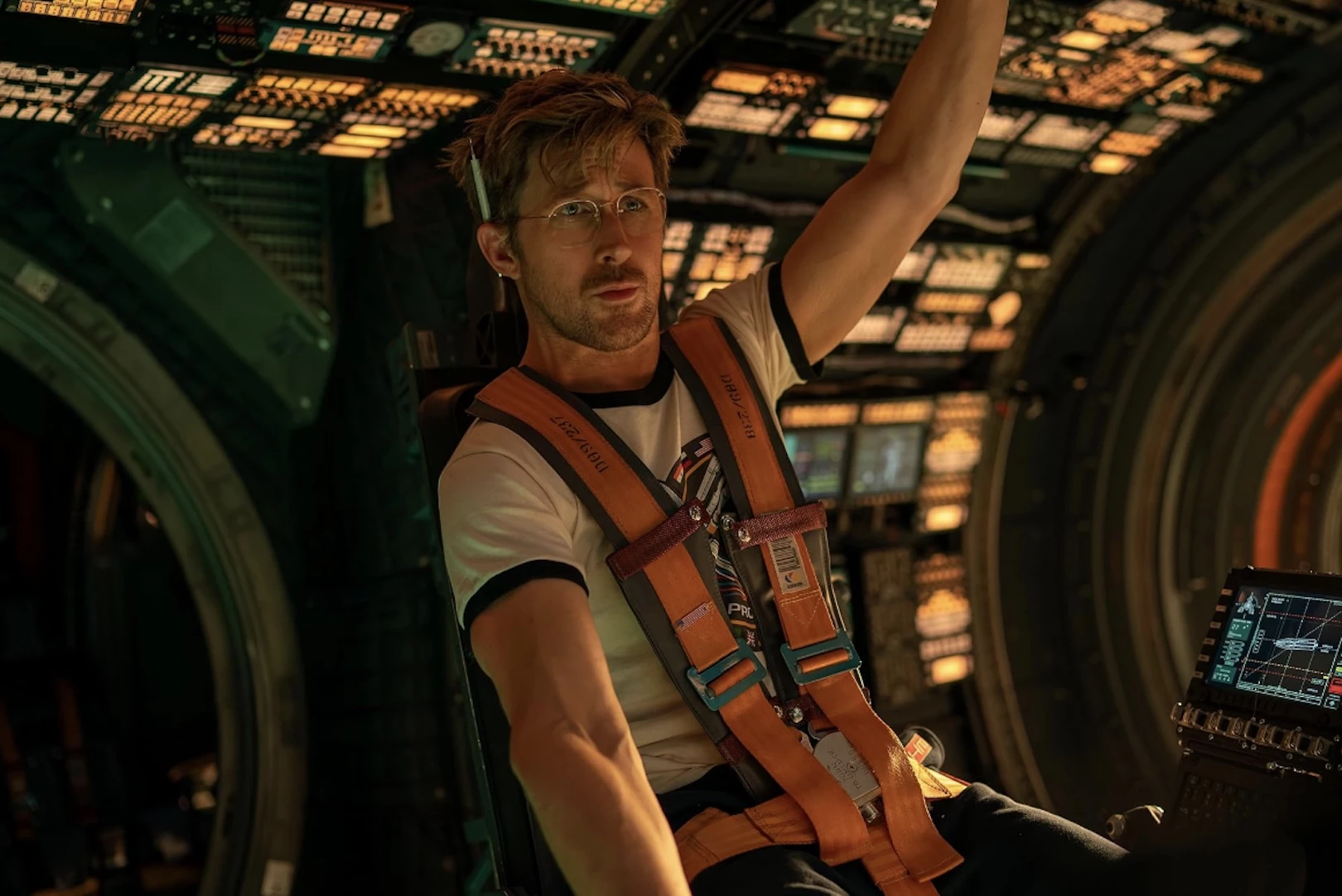
The success of the film, and the entire Project Mary, largely depends on Ryan Gosling’s performance. While the movie could become a story about two contrasting scientists, one of them is a non-human character, and Gosling is the only visible actor for a significant portion of the film. The fact that he keeps the audience engaged – and even makes them laugh or feel emotional – despite often having no one to interact with, really highlights his talent and captivating presence.
The film’s directors, Phil Lord and Chris Miller, use a style similar to their Spider-Verse movies, often mixing heartfelt scenes with playful humor. However, this balance feels more natural in Into the Spider-Verse. Here, the emotional and funny moments sometimes feel a bit strained, and Ryan Gosling’s character frequently cracks jokes, even when a quiet moment might be more effective.
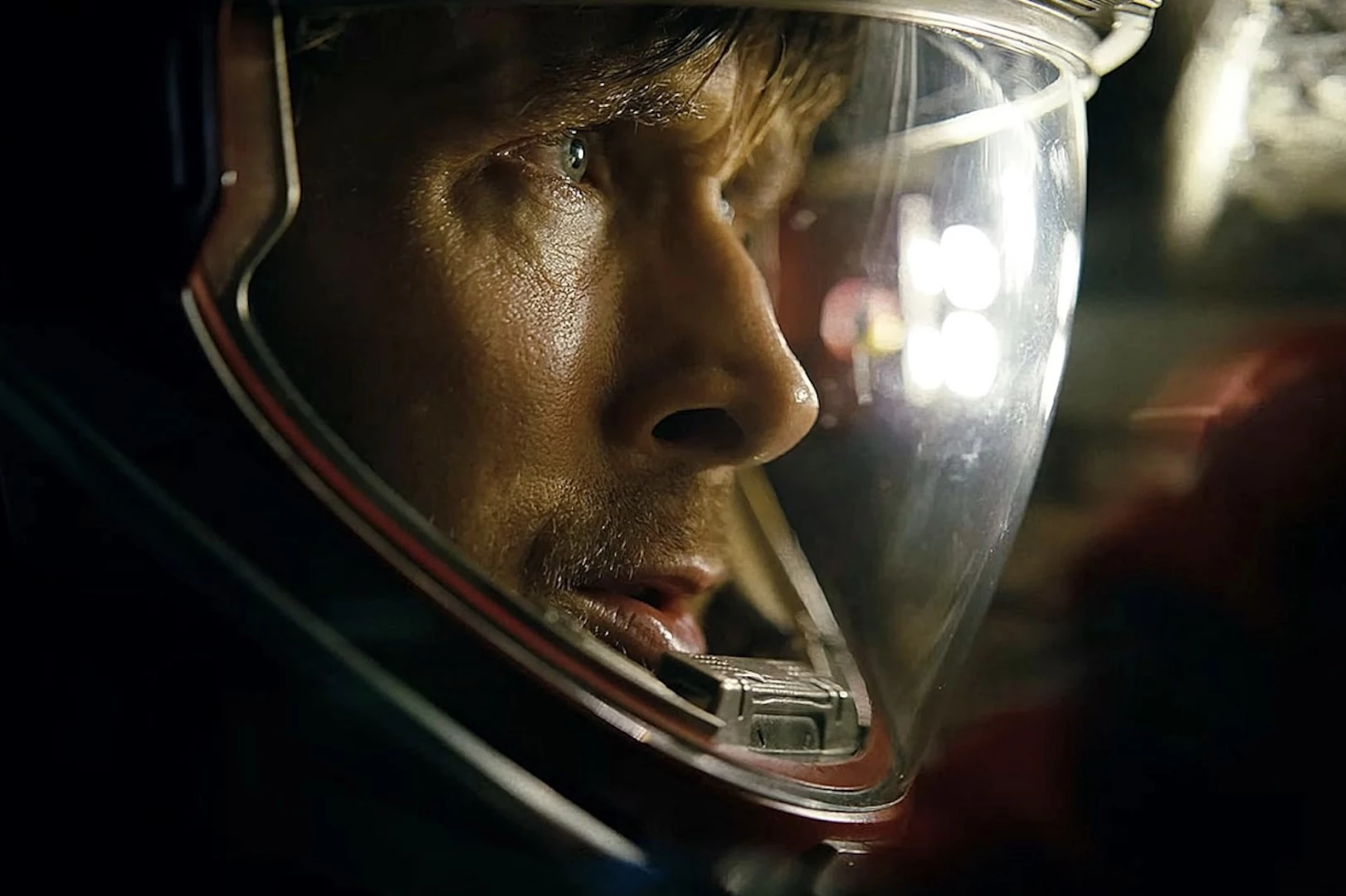
He’s working incredibly hard, which isn’t surprising considering he’s eleven light-years from Earth and his only companion is a thinking collection of rocks. Honestly, just caring about something – anything at all – feels like a brave thing to do these days, so you have to appreciate his effort, even if the results aren’t perfect.
Additional Thoughts:
Many viewers have drawn comparisons between this film and Christopher Nolan’s Interstellar, but with a more emotional feel similar to the work of Steven Spielberg. The film itself references Spielberg’s Close Encounters of the Third Kind, making those comparisons understandable. Interestingly, Spielberg has a new alien-themed movie coming out soon that appears much less hopeful about international collaboration and first contact. It will be fascinating to see this film alongside Disclosure Day as a pair – they’ll offer very different perspectives on the subject.
It’s interesting that after leaving the major Lucasfilm project, Lord and Miller eventually got the chance to create their own Star Wars story, seven years later.
RATING: 7/10
The Best Sci-Fi Films of the Last 10 Years (2015-2024)

10. Guardians of the Galaxy Vol. 3 (2023)
James Gunn successfully concluded his Guardians of the Galaxy trilogy with a film that delivers everything a blockbuster should: exciting action, imaginative visuals, and characters you genuinely care about. Volume 3 especially elevated Rocket, voiced by Bradley Cooper, from a minor Marvel character to a truly compelling and tragic hero. At a time when many Marvel movies have been underwhelming, Gunn made it look effortless, bringing a heartfelt human touch to a wild sci-fi story about talking raccoons.

9. The Wild Robot (2024)
I honestly don’t know how any parent could watch The Wild Robot and not cry – I definitely did, multiple times! It’s a stunning animated movie from DreamWorks about a super-advanced robot, voiced by Lupita Nyong’o, who ends up on an island full of animals. The robot’s main goal is to follow its programming, which unexpectedly leads to it becoming a mother figure to a little orphaned gosling. It’s just beautiful to watch, with gorgeous scenery and a surprisingly funny tone. But beyond all that, The Wild Robot really hit me with a powerful message about appreciating all life on our planet, no matter how big or small.

8. The Substance (2024)
Coralie Fargeat’s new film is a darkly funny and disturbing sci-fi horror about a TV star (Demi Moore, giving one of her best performances in years) who takes an experimental drug called “The Substance.” The drug transforms her into a younger version of herself (Margaret Qualley), offering a chance to revive her career. While it’s enjoyable to watch at home, the film truly shines when experienced with an audience. Seeing the collective reaction to Fargeat’s bold exploration of unrealistic beauty standards in the entertainment industry – and just how far she pushes the boundaries – is a remarkable experience. Be warned: it goes to extremes.

7. Godzilla Minus One (2023)
Okay, let me tell you, this prequel works. Not only does it make sense, but it’s a genuinely brilliant move to put Godzilla back in post-World War II Japan. It instantly re-establishes him as the terrifying symbol of atomic fear and the psychological scars of war that he always was. And this Godzilla is scary – truly enormous, visibly unwell, and his atomic breath is legitimately frightening. But Godzilla Minus One isn’t just mindless spectacle. It centers on a really compelling, flawed protagonist (Ryunosuke Kamiki) and subtly explores the difficult themes surrounding kamikaze pilots, building to a powerfully emotional climax. There’s even a stretch that feels like a classic Howard Hawks film, with a crew of tough sailors battling a gigantic, nuclear-powered dinosaur – and believe me, it’s as amazing as that sounds.

6. Ex Machina (2015)
Alex Garland has become a major force in modern science fiction, having written films like Sunshine and Dredd and directing the acclaimed Ex Machina. This film explores the blurring lines between humans and technology, centering on a programmer (Oscar Isaac) who creates the world’s first true artificial intelligence, giving it a human-like female form (Alicia Vikander). He then asks a trusting employee (Domhnall Gleeson) to evaluate its capabilities. While it initially appears to be a straightforward test of wills, the characters and Garland’s clever writing reveal hidden depths. The film constantly challenges viewers to question who the hero and villain truly are, with the answer changing throughout the story and even upon repeat viewings. Garland suggests that robots eventually surpassing humanity isn’t just possible, but perhaps even inevitable.

5. Blade Runner 2049 (2017)
Blade Runner 2049 successfully continued the story of the classic science fiction film without losing the mystery that made the original so popular. Director Denis Villeneuve created a visually stunning and expansive sequel that updated the futuristic technology while maintaining the original film’s distinctive style. Harrison Ford delivered a particularly touching performance as Rick Deckard, arguably his best in years. His return to the role feels fitting, echoing the film’s central idea that even in dark times, positive change is always possible.

4. Annihilation (2018)
When people describe a sci-fi movie as unsettling, it’s rarely a physical reaction. But that’s exactly what happened to me while watching Annihilation. The film, based on Jeff VanderMeer’s novel, follows a military team investigating “The Shimmer” – a bizarre zone in Florida altered by a mysterious meteor impact three years prior. Like his previous film, Ex Machina, writer/director Alex Garland uses science fiction to explore what it means to be human, a theme he directly addresses in Annihilation‘s chilling climax. The movie itself feels like the strange, almost-human forms Natalie Portman and her team discover within The Shimmer – both repulsive and beautiful at the same time.

3. Nope (2022)
Jordan Peele’s films stand out today because original stories are rare. While he’s not the first to blend beautiful visuals with unsettling horror or use sci-fi to explore real-world problems, his work feels especially unique in a landscape dominated by sequels, remakes, and loud action movies. He collaborates with cinematographer Hoyte van Hoytema to create a striking contrast between stunning Western scenery and truly terrifying imagery – and sound – that will stay with audiences long after the credits roll.

2. Dune (2021)
I became a huge fan of Dune after seeing Denis Villeneuve’s incredible adaptation of Frank Herbert’s sci-fi novel. Villeneuve’s film captures the epic scope that book fans have always talked about, and it finally made me understand why the story has captivated readers for generations. He took a notoriously difficult novel to adapt and crafted something visually stunning, cohesive, and powerfully atmospheric. (And Dune: Part Two, released in 2024, was excellent too.)

1. Mad Max: Fury Road (2015)
As a total film fanatic, I genuinely believe Mad Max: Fury Road is the best sci-fi movie we’ve had in a decade, and possibly even the whole century. The action is incredible, that’s for sure, but what really struck me is how deeply spiritual it is. It feels like a modern retelling of the Exodus story – a desperate journey out of a ruined world, searching for a promised land. Charlize Theron as Furiosa leads this incredible group of women, and Tom Hardy’s Max acts as this kind of reluctant, mumbling Moses, guiding them towards safety but unable to find peace himself. George Miller really proved that big-budget sci-fi can be both wildly exciting and genuinely intelligent. Seriously, if anyone tries to tell you it’s just mindless explosions, don’t even bother arguing – just tell them they’re wrong!
Read More
- 10 Greatest Manga Endings of All Time
- Review: Final Fantasy Tactics: The Ivalice Chronicles (PS5) – Still the Benchmark for Turn-Based Tactics
- Mark Zuckerberg & Wife Priscilla Chan Make Surprise Debut at Met Gala
- GBP CNY PREDICTION
- Elon Musk’s Mom Maye Musk Shares Her Parenting Philosophy
- Forza Horizon 6 Car List So Far: Confirmed Highlights, Cover Cars, DLC, and Rewards
- Miranda Kerr Shares “Quick” Procedure She Got Before Met Gala 2026
- The WONDERfools ending explained: What happened to the Child of Eternity?
- Ranking the 5 Best Spring 2026 Anime So Far (Mid-Season Update)
- Sony Plans to Start Shooting Horizon Movie in 2026, with 2027 Release Planned
2026-03-20 19:59