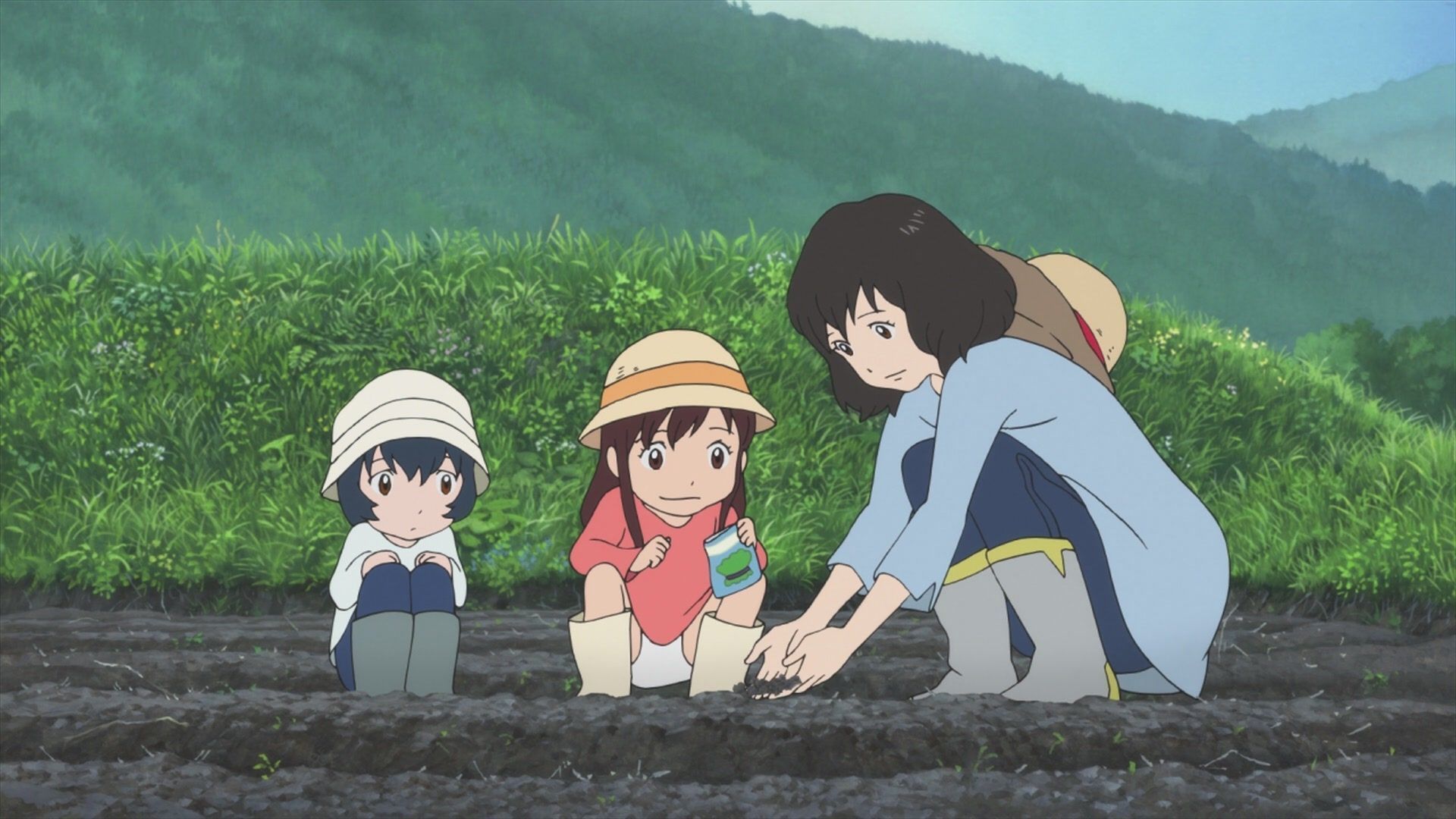
Few films portray family, love, and growing up as beautifully as Wolf Children. Though subtle and gentle, Mamoru Hosoda’s film is deeply moving. It’s a wonderful story about becoming an adult, a touching look at motherhood, and a thoughtful exploration of allowing children to find their own paths.
That’s why Wolf Children is a great movie to watch with other anime films. It especially pairs well with stories that explore big emotional changes, like growing up, dealing with loss, or the meaning of family. Seeing Wolf Children alongside a film that focuses on similar themes really makes its strengths stand out.
My Neighbor Totoro Matches Wolf Children’s Love for Rural Childhood
Few anime films pair as well with Wolf Children as My Neighbor Totoro. Both beautifully capture the wonder and magic of childhood. The natural settings – fields, forests, and old homes – are crucial to the stories, reflecting the characters’ feelings and how they change. It’s this similar, enchanting atmosphere that makes watching them together so enjoyable.
Both My Neighbor Totoro and Wolf Children beautifully capture the experience of growing up, blending everyday life with a touch of magic. Totoro is warm and comforting, perfectly evoking the joys of childhood. Wolf Children, while also lovely, takes a more bittersweet look at how children inevitably grow and change, especially as Hana realizes her children won’t stay young forever. Together, these films offer a touching portrayal of childhood and maturity.
The Boy and the Beast Is the Perfect Fantasy Adventure Companion for Wolf Children
While The Boy and the Beast has more action and a bigger sound than Wolf Children, it’s still easy to feel the strong connection between the characters. Both films explore what it means to raise children who don’t quite fit into a single world, and how to do it without a clear roadmap. For example, in Wolf Children, the mother, Hana, is raising children who are part wolf.
Both The Boy and the Beast and Wolf Children beautifully explore the themes of found family and the challenges of growing up, though they do so in different ways. The Boy and the Beast blends the human world with a fantastical realm, creating a unique dynamic, while Wolf Children focuses on a more gentle, heartwarming story of family life. One film examines these themes through the lens of motherhood and country living, and the other through fantasy adventures and the bond between a mentor and a student.
A Letter to Momo Brings the Same Warmth to Grief and Family Healing
Both A Letter to Momo and Wolf Children are quiet, thoughtful films that share common ground. They center on families and young characters navigating change and loss, and both incorporate fantastical elements that enhance their emotional truth. This blend of reality and fantasy is key, as it allows the films to express deep sadness in a way that feels genuine. What makes these two films particularly strong is their ability to remain heartwarming and hopeful, even while exploring difficult emotions.
Both Wolf Children and A Letter to Momo are deeply compassionate stories, offering gentle support to their main characters even when facing difficult times. While both films include humor, it never detracts from the underlying sadness. Together, they make a powerful combination, exploring themes of grief, adapting to change, and the ways families reconnect after loss.
The Girl Who Leapt Through Time Makes a Great Mamoru Hosoda Companion Piece
Watching any movie is a unique experience, but The Girl Who Leapt Through Time and Wolf Children actually have a lot in common, perhaps more than you’d initially think. While one is a teen story about time travel and its complications, and the other focuses on family, motherhood, and finding yourself, both films share a core theme: the sadness and inevitability of change. They both beautifully explore the pain of accepting that some things are simply beyond our control.
Both The Girl Who Leapt Through Time and Wolf Children explore how we deal with growing up and change, but in opposite ways. The Girl Who Leapt Through Time focuses on a character who tries to avoid the inevitable, while Wolf Children shows a mother accepting that her children will grow and change. This contrast in how they approach youth and change makes watching both films a richer experience.
Maquia: When the Promised Flower Blooms Is the Perfect Pick for Maximum Emotional Damage
While Wolf Children is often praised for its touching portrayal of motherhood, Maquia: When the Promised Flower Blooms is equally moving. Both films beautifully explore the challenges of raising children and acknowledge that love can’t prevent the passage of time. The main difference is that Wolf Children stays grounded in reality, whereas Maquia expands into a grand fantasy world.
Both films explore the bittersweet experience of parenthood – the joy of raising a child and the inevitable pain of watching them grow and change. ‘Maquia’ shows this through the lens of immortality, where the mother lives to see generations pass, while ‘Hana’ portrays a more relatable scenario of children becoming independent. Ultimately, these movies make us consider what it truly means to love and raise a child, knowing that letting go is an essential part of the process, and the emotional impact is quite powerful.
Only Yesterday Deepens Everything Wolf Children Loves About Rural Life and Self-Discovery
Both Only Yesterday and Wolf Children are thoughtful, emotionally resonant films that explore what it means to leave city life behind. They share a common theme: moving to the countryside isn’t just about changing location, it’s about finding yourself and living life on your own terms. In both movies, the rural setting allows characters to discover who they are and break free from societal expectations, creating a particularly strong emotional impact. Wolf Children, in particular, focuses on building a new life and defining your own path, regardless of what others think.
Both Only Yesterday and its companion piece focus on characters facing who they are and what they truly want. These films aren’t about grand gestures; instead, they rely on subtle moments and everyday settings to convey deep emotions. One explores change through the lens of becoming a mother and family life, while the other examines it through memories and the challenges of adulthood. Ultimately, both films gently suggest that a fulfilling life often develops gradually and in unassuming ways.
Mirai Is the Best Anime Movie to Watch With Wolf Children
As a huge fan of heartwarming anime, I think Mirai and Wolf Children are a perfect pairing! They might seem totally different at first glance, but they feel like they come from the same beautiful place. Wolf Children is this epic story about a mom navigating raising two kids who are struggling to figure out who they are, while Mirai is a bit more focused – it really dives into the feelings of one family and how a little boy learns about love and connecting with others. Both are just incredibly touching!
These two films complement each other beautifully. Wolf Children focuses on a mother’s love and understanding of her children, while Mirai shows family life from a young boy’s innocent, and sometimes confused, perspective. Together, they offer a complete and touching portrayal of family. One film highlights the challenges and emotional weight of parenthood, and the other captures the joy and excitement of childhood within a loving family.
Found an error? Send it so it can be corrected.
Read More
- Trails in the Sky 2nd Chapter launches September 17
- Paradox codes (April 2026): Full list of codes and how to redeem them
- HBO Max Just Added the Final Episodes of a Modern Adult Swim Classic
- PRAGMATA ‘Eight’ trailer
- Pragmata Shows Off Even More Gorgeous RTX Path Tracing Ahead of Launch
- Crimson Desert’s Momentum Continues With 10 Incredible New Changes
- How Could We Forget About SOL Shogunate, the PS5 Action RPG About Samurai on the Moon?
- Solo Leveling’s New Character Gets a New Story Amid Season 3 Delay
- Hulu Just Added One of the Most Quotable Movies Ever Made (But It’s Sequel Is Impossible To Stream)
- Dragon Quest Smash/Grow launches April 21
2026-04-18 23:45