It’s easy to assume every well-known story has already been made into a movie, but that’s not true. Surprisingly, older stories are often the most difficult to adapt, especially those that blend realistic events with fantasy and religious themes. Hollywood used to frequently draw on ancient history, myths, and legends for large-scale films like The Ten Commandments, Spartacus, Ben-Hur, and Antony and Cleopatra. However, despite the availability of huge budgets, studios are now hesitant to take on such projects.
Universal Pictures is making a big bet on director Christopher Nolan, who is releasing a $250 million movie based on Homer’s The Odyssey this summer. Nolan’s project seems to have sparked a trend in Hollywood, as another famously difficult-to-adapt ancient story is now being made into a film. What’s made this possible? Advances in artificial intelligence.
Paradise Lost Is Getting An (AI) Screen Adaptation
Roger Avary has a history of adapting challenging material – from the classic poem Beowulf to the novel The Rules of Attraction (which he also directed), and even the video game Silent Hill. He also co-wrote Pulp Fiction with Quentin Tarantino. Now, he’s taking on John Milton’s epic poem Paradise Lost. This adaptation is unique, though, as it will be produced by Ex Machina Studios, a new company that uses its own Artificial Intelligence system to guide filmmaking. Marco Weber, co-founder and CEO of Ex Machina, is a veteran producer with credits dating back to the 1990s, including films like The Thirteenth Floor and Brooklyn’s Finest. Kirk Petruccelli, an experienced production designer who has worked on films like Geostorm and Blade, will serve as executive producer.
The upcoming movie adaptation of Paradise Lost promises an epic, faith-based story of good versus evil. It depicts the dramatic conflict between God and the rebellious archangel Lucifer, who is cast into Hell and seeks revenge by tempting Adam and Eve in the Garden of Eden. This leads to humanity’s fall from grace and the loss of Paradise. Ultimately, the film explores a timeless question: when facing difficult times, do we choose obedience, rebellion, or redemption?
John Milton’s Paradise Lost is a long, narrative poem split into ten books. It tells the story of what happened after Lucifer (also known as Satan) and his angels rebelled against God and were cast out of Heaven. Banished to Hell, Satan plots to destroy God’s new creation: humanity and the beautiful planet Earth. The poem explores both Satan’s journey – including flashbacks to the war in Heaven – and the story of Adam and Eve living in the Garden of Eden. It reaches its climax when Satan, disguised as a serpent, tempts Eve into eating the forbidden fruit from the tree of knowledge. Adam then joins her, choosing to share her fate. As a result, they are expelled from Eden, losing their direct connection with God, and Adam receives a terrifying vision of the future destruction of humankind through the Great Flood. As punishment for corrupting innocence, Satan and his followers are cursed to live as snakes.
Will Paradise Lost Become the Next Beowulf?
It’s easy to see why it’s taken Hollywood so long to make a movie based on Paradise Lost. Creating the poem’s fantastical settings – like Heaven and Hell – and its creatures, such as angels and demons, presents a huge challenge, especially when you also need to accurately portray Adam and Eve and the Garden of Eden. Interestingly, this kind of epic, imaginative story seems perfect for a film made with the help of artificial intelligence. In fact, the company Ex Machina aims to create large-scale worlds affordably, while still prioritizing real actors, original stories, and fair labor practices.
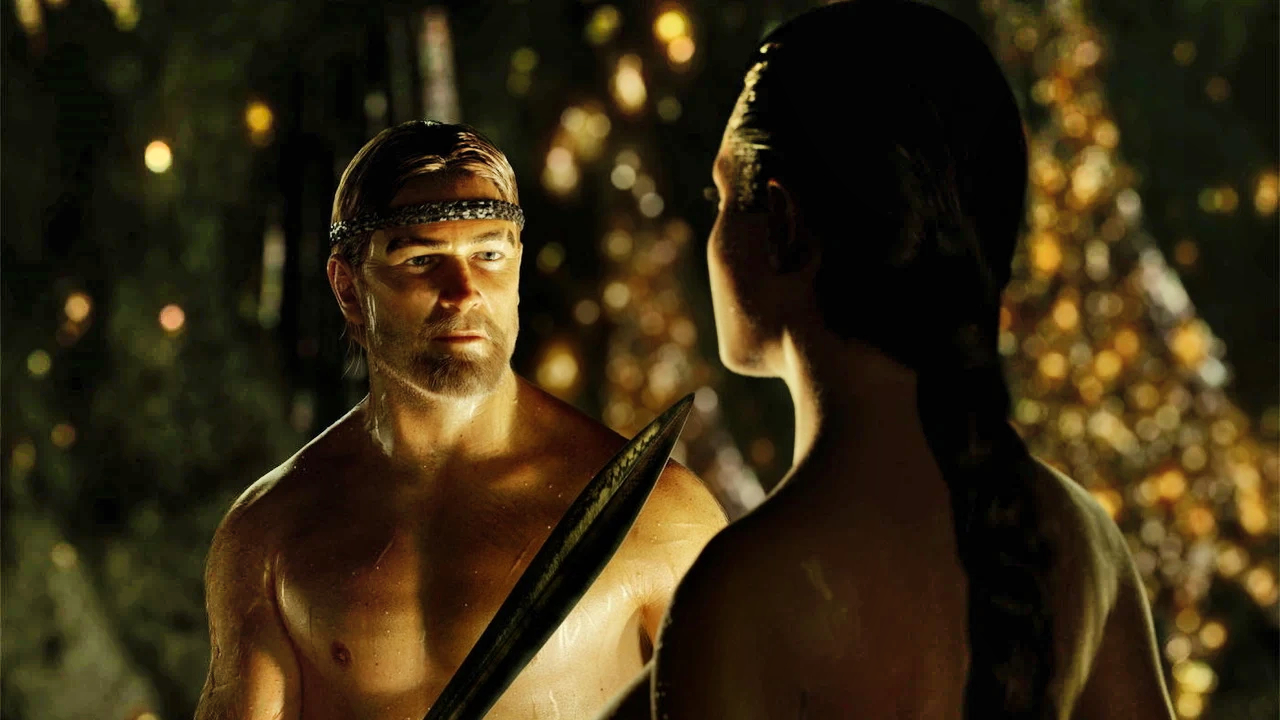
As a film buff, I always think back to Roger Avary’s work with Robert Zemeckis on the 2007 film Beowulf. It was a really ambitious project, honestly – they were pushing the boundaries of motion-capture technology with real actors way before Avatar made it commonplace. But the final product was… unsettling. It kind of introduced a lot of viewers to this idea of the “Uncanny Valley” – that feeling you get when CGI tries to look real but ends up feeling creepy and unnatural.
Avary believes film technology has improved enough to avoid the mistakes made with the movie Beowulf. Unlike Beowulf, which was a costly and reimagined version of the original story, Avary’s Paradise Lost will be a more faithful adaptation, created at a much lower cost using new generative AI technology. He explains that this project represents everything he’s learned as a filmmaker, demonstrating that compelling stories don’t need huge budgets – just the right technology and team. Working with Ex Machina and Marco Weber, Avary hopes to create a film that resonates with viewers, encourages discussion, and reminds us of the core purpose of storytelling: exploring what it means to be human when faced with the divine. He is excited to share this vision with the world.
The movie Paradise Lost is currently being made. Join the conversation about the future of AI in filmmaking on the ComicBook Forum!
Via: Deadline
Read More
- Marvel Officially Confirms Deadpool’s Most Brutal Redesign
- 10 Movies That Were Banned in Different Countries For Random Reasons
- Welcome to Demon School! Iruma-kun season 4 release schedule: When are new episodes on Crunchyroll?
- Nintendo Switch 2 Reportedly Getting Remake of One of the Best PS3 and Xbox 360 Games
- Crunchyroll Confirms New Isekai Anime Releases for 2026 and Beyond (With Major Returns)
- Gold Rate Forecast
- Michael Jackson Biopic’s Record-Breaking Debut Unseats 2026’s Biggest Box Office Hit On U.S. Chart
- 9 Great Supernatural Characters Everyone Forgot About
- All 61 Episodes 90s Cult Classic Sci-Fi TV Show That Was Famously Canceled Twice Were Just Added to Tubi
- The Boys Season 5, Episode 2’s Soldier Boy Ending Twist Changes Everything for Homelander & Butcher
2026-04-30 22:18