Something is off with gamers these days. It’s not that they’re bad, but they seem drawn to games that erase your progress when you fail. They actively want that frustration. They’re choosing to repeatedly put themselves through difficult experiences in a genre known for its unpredictable challenges and harsh penalties, hoping each new attempt will finally be successful.
The most compelling roguelike games actually embrace the challenge of repeated failure. They hook you after just a few attempts and keep you playing for hundreds of hours, not because you’re trying to win, but because each loss feels like a lesson – a chance to learn and improve your strategy for the next run.
Rogue Invented the Template That Still Haunts Every Game on This List
People don’t play Rogue in 2026 for simple enjoyment. It’s more like visiting a landmark building designed by a celebrated architect – you experience it with reverence, a desire to understand its importance, and a recognition that you’re witnessing something truly groundbreaking.
The game Rogue, released in 1980, essentially created the roguelike genre. It introduced many of the core elements we still see today, including randomly generated levels, the risk of permanent character death, and simple, text-based monster graphics. Every key feature of Rogue remains central to the modern roguelike experience.
It’s amazing that Rogue not only lasted, but actually defined a whole new type of game. Back then, players didn’t have a name for what made it special – the fact that each dungeon was unique and that every death felt meaningful. While most games simply become fondly remembered, Rogue became a foundation for others to build upon.
NetHack Is So Deep It Has Unapologetically Eaten Years of Peoples’ Lives
NetHack, first released in 1987, is still updated and remains remarkably challenging to learn, making it one of the oldest and most difficult games to truly master.
This game is full of surprising and often hilarious ways to die – you could drown in a fountain, be killed by your own pet, or even accidentally wipe out everyone with a wrong prayer. People are still finding new things happening in it after all these years, which is why it remains so popular.
NetHack doesn’t follow a typical story format. Instead, each game creates a unique tale – like the time a player turned into a dragon only to get stuck in a doorway, or when their strongest character fell to a surprisingly tough newt after reaching floor 17. These stories aren’t pre-written; they’re created by the players and happen with every new game.
Spelunky and Its Sequel Represent the Gold Standard of Roguelike Platform Design
Derek Yu’s Spelunky proves that games made with random, generated levels don’t have to feel unfinished or poorly made. It shows that a game built from randomly assembled pieces can be just as polished and well-designed as one created entirely by hand. This cave-exploring platformer creates levels using a clever system that results in surprising and unique environments, and importantly, it always gives players a fair warning before a trap can harm them.
Even when facing surprising enemy combinations, their behavior follows a clear pattern. If you die, it’s because of something you did – the game isn’t unfair. By the ten-hour mark, players should realize the system is consistent and any failures are due to their own actions.
Spelunky 2 built upon the original game by expanding in almost every way. It introduced new areas like Moon Worlds, elements of cosmic horror, multiplayer functionality, and a deeper storyline for players who seek out its hidden secrets.
The Binding of Isaac Is Disturbing, Brilliant, and Almost Offensively Replayable
I still can’t believe how amazing The Binding of Isaac is! Edmund McMillen made it back in 2011 as a simple Flash game, but it’s so much more than that. It’s a really dark, strange, and surprisingly personal game about a kid running away from his mom and ending up in a basement filled with terrifying, biblical stuff. Honestly, it shouldn’t have been as good as it turned out, but it totally is!
The game’s visuals are intentionally harsh, its story is filled with dark themes inspired by the Old Testament and explores difficult experiences, and the way items interact with each other is incredibly complex – so much so that fans have created entire online resources to document all the possible combinations. Despite all this, the game became…
Isaac excels at creating powerful combinations. It’s that amazing feeling when items unexpectedly work together, resulting in something broken, wonderful, and totally unplanned – like a character suddenly shooting spiraling, explosive tears while moving at incredible speed, and you’re not even sure how it happened.
Every run of Isaac feels unique because of the huge number of items and unpredictable events. With expansions like Afterbirth+, Repentance, and continuous updates, the game has grown to feel like many different games all crammed into one dark and chaotic world.
FTL: Faster Than Light Makes You the Captain of a Ship You Will Repeatedly Watch Die
In FTL: Faster Than Light, you take command of a spaceship desperately trying to escape a powerful enemy fleet. The game gives you a crew with different skills and then guides you through a constantly changing galaxy of sectors.
The game features text-based encounters that are created on the fly, ensuring that even experienced players will face unique and unexpected situations. You might come across a pirate with a shady offer, a distress signal that leads to danger, or a nebula that hides a massive object on your scanners.
The peak of dramatic tension in this game – when a ship is critically damaged (around 20% hull integrity), two crew members are ablaze, and the oxygen is escaping – stands out as a brilliant design achievement for its time. Subset Games proved that compelling narrative tension doesn’t need a pre-written story; it simply requires…
Slay the Spire Invented a Deck-Building Subgenre and Remains the Standard-Bearer
Slay the Spire cleverly combines the challenging, replayable structure of roguelike games with the strategic deck-building of collectible card games. Each playthrough, players create a unique deck and battle their way through randomly generated levels. Enemies have predictable attacks, turning each fight into a puzzle to solve as much as a test of skill.
The game started with three playable characters, then added a fourth, and each one offers a distinctly different experience. This essentially makes it four separate roguelike games built on the same engine. Even with newer games like Monster Train and many others appearing since its release, Slay the Spire remains popular because it’s fair. While randomness is a key part of the gameplay, the game rewards players for understanding those random elements, adapting their strategy, and building decks that can handle anything unexpected.
This immediately set a high bar for the sequel, which now includes a cooperative mode. In this mode, two players can build and share a single deck together, and the result is delightfully chaotic. Playing in co-op creates card combinations and strategies you just can’t find when playing alone.
When one player draws a card, it creates a shared element that both players need to consider and sometimes use to their advantage. It’s still early on, but MegaCrit seems to be innovating Slay the Spire in the same way Slay the Spire revolutionized the deck-building genre – pushing the boundaries and making other games feel behind.
Balatro Is the Most Dangerous Game to Install on Any Device Owned by a Functioning Adult
LocalThunk created Balatro all by themselves, and it’s become a huge hit. The game starts with a regular deck of 52 cards, but adds Jokers that change how points are calculated in increasingly complex and interesting ways.
The game then presents this all within a roguelike framework inspired by poker, challenging players to reach increasingly difficult chip goals with the unpredictable combinations they’ve created. While the core elements are easy to understand, that’s precisely what makes it so engrossing – you can easily spend hours playing without realizing how much time has passed.
What makes Balatro special is its ability to create runs that feel incredibly lucky and in your favor – something few games achieve. The game’s structure, built around roguelike elements, is well-designed and keeps a good pace. It gradually gets more challenging without feeling unfair.
Dead Cells Is a Roguelike That Hits Like an Action Game
Okay, so Dead Cells? It totally takes what I love about metroidvanias – exploring a big, interconnected world – and mashes it up with the replayability of a roguelike. Honestly, I was worried it wouldn’t work, but it does. It feels really solid and well-put-together, not like two separate games awkwardly stuck together.
Battles are quick and rely on close-quarters fighting. While character upgrades aren’t as extensive as in some games, it’s still possible to beat the game purely based on skill. Less experienced players can also improve their character through gameplay, and both playstyles are equally viable.
Each area in the game is carefully designed to feel unique and memorable, avoiding the sense that they’re just slightly different versions of each other. Since its release, Dead Cells has received consistent updates, including free areas, paid expansions, a surprisingly effective feature that shouldn’t work, and improvements that have polished away any initial rough edges.
Hades II Is the Best Roguelike Ever Made, and the Original Set an Almost Impossible Bar to Clear
Supergiant’s Hades cleverly turned the common video game mechanic of dying and restarting into the heart of its story. As Zagreus tries to escape the underworld ruled by his father, each failed attempt actually deepens his relationships with other characters. The game makes repeating sections feel purposeful and engaging, rather than simply repetitive.
Despite facing games with bigger budgets, Hades II still had to prove itself after its predecessor surprisingly won game of the year. The original Hades succeeded because it made players feel invested in every attempt, even when they didn’t win, and Hades II needed to reach that same emotional level.
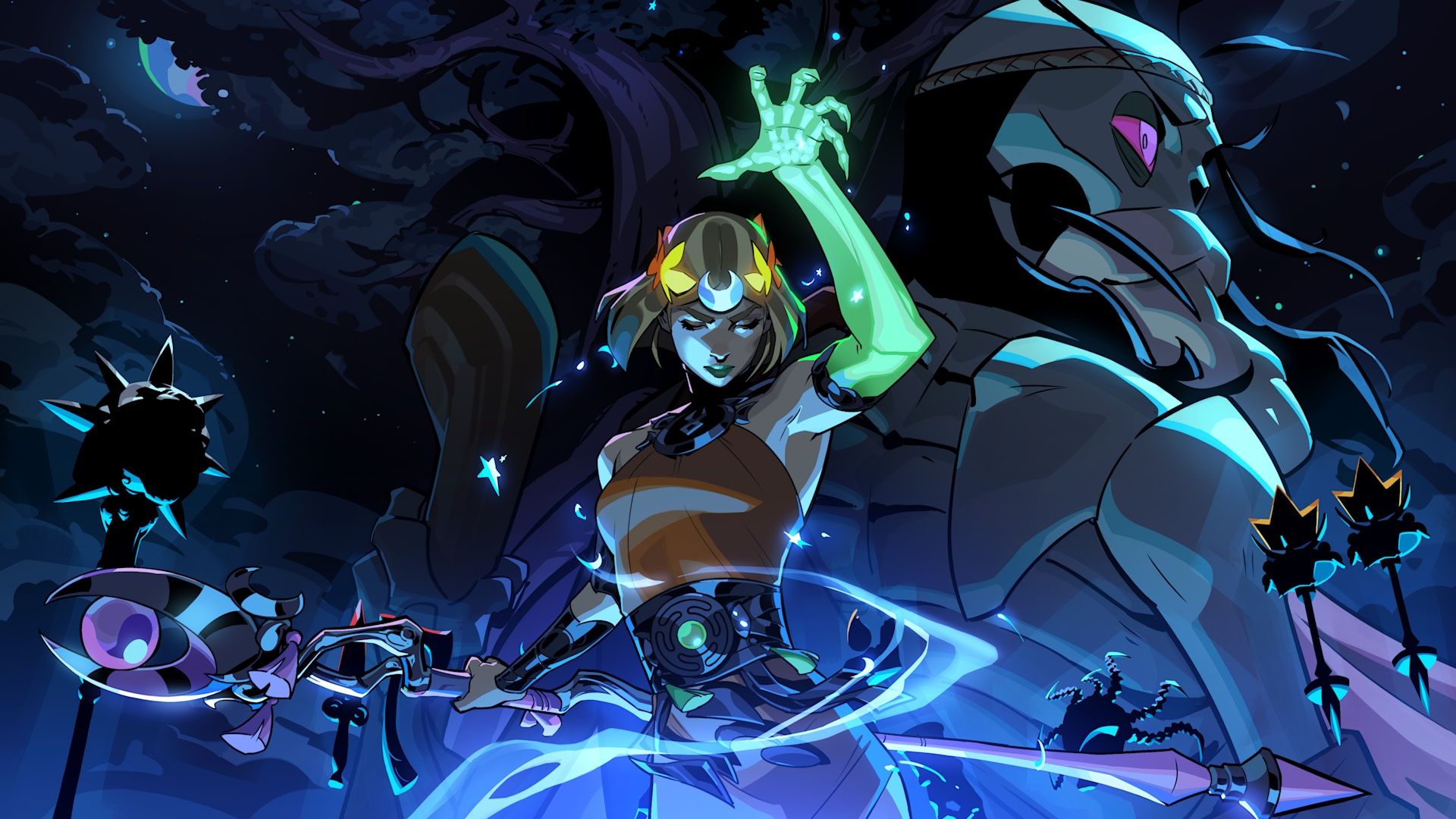
Hades 2 proves the original game wasn’t a one-hit wonder, but a strong base to build upon. The introduction of Melinoë, Zagreus’s sister, expands the story with a rich new setting – the underworld ruled by Chronos – a magic system woven into the game’s power-ups, and a surface world that becomes accessible halfway through, creating a larger and more complex narrative.
This game stands out as the best in its genre because it skillfully builds upon its predecessor while also introducing significant improvements. It features more seamless integration of helpful elements, greater variety in how players can build and customize, and a more inventive use of its core time-loop mechanic. Unlike many sequels that simply rely on the success of the original, this one surpasses it in nearly every important aspect.
PokeRogue Is the Roguelike Pokémon Fans Didn’t Know They Needed
Okay, so PokeRogue might not be a household name, but trust me, it’s something special. I’ve been waiting ages for a game that combines the fun of collecting creatures like in Pokémon with the exciting, replayable structure of a roguelike where your choices really matter. Basically, it takes the classic Pokémon battles and throws you into a roguelike adventure – it’s super addictive!
Every playthrough offers a unique challenge with random battles, environments, and choices. The risk of losing your progress permanently creates constant excitement that you don’t typically find in other games in the series. It cuts out any unnecessary filler or forced story moments, focusing solely on a series of increasingly difficult fights that require you to constantly rethink your team’s strategy.
Because each playthrough is different, no two games of PokeRogue feel the same. The game also offers ongoing progression for returning players, giving them goals to work towards without making each run feel scripted. If you’ve ever wanted a more challenging Pokémon-style battle system – one that treats losses as learning opportunities instead of frustrating roadblocks – PokeRogue delivers.
Read More
- Best Controller Settings for ARC Raiders
- The Boys Season 5 Officially Ends An Era For Jensen Ackles’ Soldier Boy
- Review: Final Fantasy Tactics: The Ivalice Chronicles (PS5) – Still the Benchmark for Turn-Based Tactics
- Nippon Sangoku Is The Best New Post-Apocalyptic Anime of Spring 2026
- Mark Zuckerberg & Wife Priscilla Chan Make Surprise Debut at Met Gala
- Elon Musk’s Mom Maye Musk Shares Her Parenting Philosophy
- 10 Greatest Manga Endings of All Time
- The Witcher 3 Officially Reveals Stunning New Ciri Figure Coming 2026
- The WONDERfools ending explained: What happened to the Child of Eternity?
- 7 Great Marvel Villains Who Are Currently Dead
2026-05-20 06:43