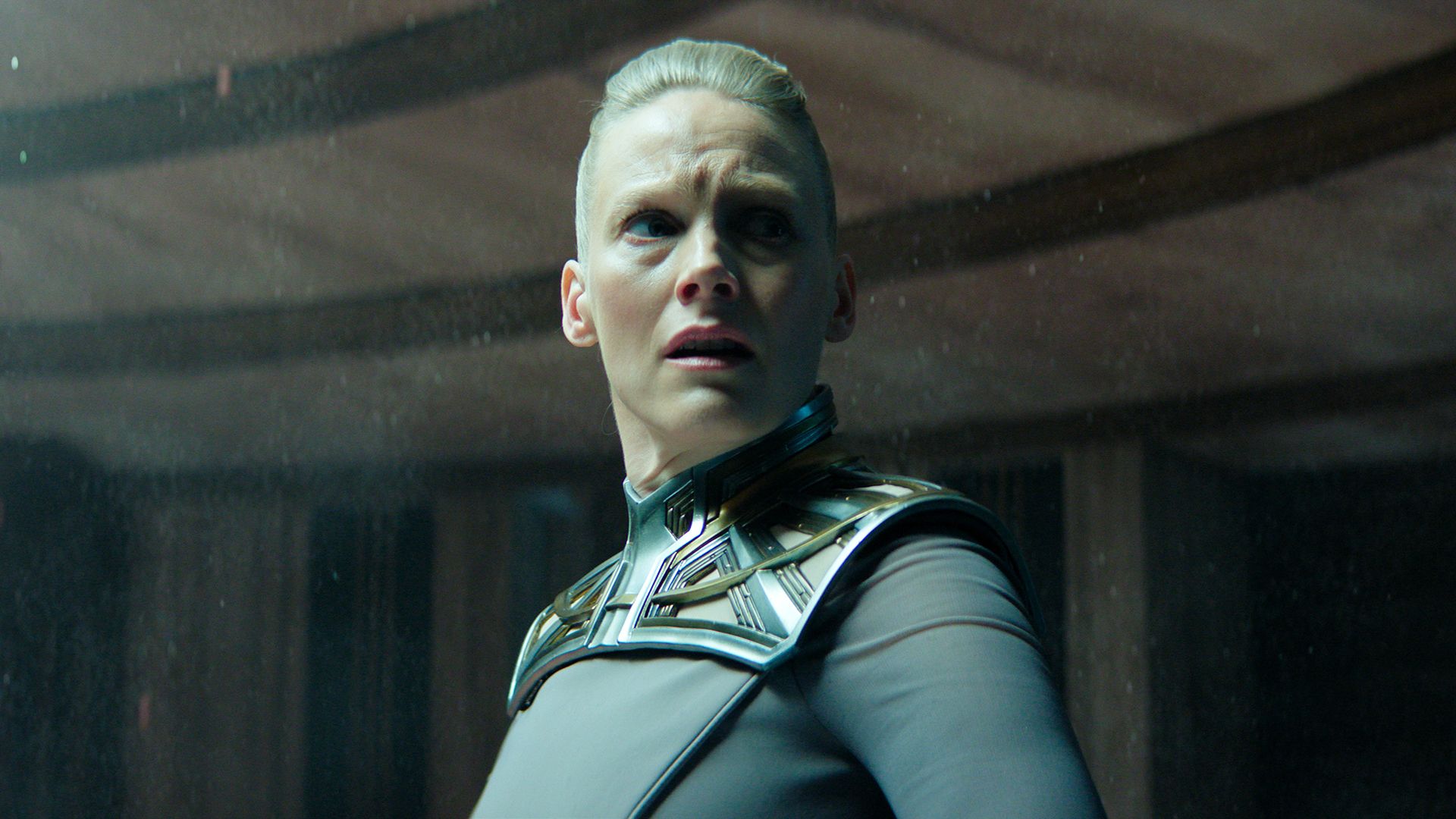
Isaac Asimov’s science fiction work remains incredibly influential, and his Foundation series is a classic. Many have tried to bring this sprawling story—filled with numerous characters and interwoven plots—to the screen. For years, it was thought to be too complicated to adapt into a film or TV show, but Apple TV+ recently commissioned a ten-episode series.
The Apple TV+ series has become a hit, with its second and third seasons receiving widespread acclaim. The first season was particularly important because it reimagined the original story. Isaac Asimov’s stories prioritized ideas over character development, but the show focused more on the characters themselves. This success demonstrates how to overcome a common challenge in science fiction television: turning complicated concepts into stories people can connect with.
Asimov’s Foundation Resisted Early Adaptation
Isaac Asimov’s Foundation series began with a trilogy of novels published between 1951 and 1953, but it grew much larger due to its popularity. Asimov later added prequels and sequels, expanding the story significantly. The series has consistently been recognized as one of the best science fiction series ever written, even earning awards decades after its initial release. In 2012, both the original trilogy and the first book were honored with awards for the best 20th-century science fiction novel and novelette.
For a long time, adapting classic science fiction stories to film proved difficult. Much of the sci-fi from the 1940s and 50s first appeared in inexpensive pulp magazines, which weren’t considered serious literature. While stories like Flash Gordon and those in Amazing Stories were popular, they often used science fiction mainly as a backdrop rather than exploring complex scientific ideas.
Isaac Asimov followed, bringing incredibly detailed ideas that helped establish science fiction as a major literary force. What would eventually become his famous Foundation series actually began as shorter stories and novellas, originally published in the inexpensive magazine Astounding Science-Fiction. Publishers recognized the potential, and Asimov developed his concept into the full-length novels we know today, not including the additions he wrote much later in his career.
The story was first adapted for radio in 1973 as an eight-part BBC drama, though some changes to the original timeline were necessary for the format. In 1998, New Line Cinema started developing a film adaptation, investing over a million dollars, but the project was abandoned when the studio focused on The Lord of the Rings. The rights to adapt Foundation for the screen changed ownership several times before landing with Skydance Television in 2017.
Adapting the Foundation story had been difficult for years, but the early 21st century finally felt like the right time for a TV series. This was because high-quality, character-driven television allowed the complex story to unfold naturally, at a realistic pace. Audiences, having enjoyed shows like Minority Report, The Martian, Arrival, and the initial seasons of Westworld, were also ready for stories with strong scientific foundations and thoughtful exploration of ideas.
What always struck me about adapting Asimov’s Foundation wasn’t simply the incredibly detailed science—it was the unbelievably complex math behind psychohistory. Asimov himself later felt ‘psychosociology’ would have been a more accurate name, though the core idea stayed the same. The brilliance of psychohistory is its ability to predict the broad sweep of human events, but it breaks down when you try to apply it to individuals. And that’s where the challenge lies for a visual medium like TV or film – stories need compelling characters making meaningful choices, and psychohistory doesn’t easily account for that.
One of the biggest challenges in telling psychohistorical stories is how quickly the focus shifts between different groups of characters. We see entire groups of people dramatically influencing history, but then those characters are gone, replaced by entirely new ones over time.
Asimov’s Foundation doesn’t center around one main character, and most of the people in the story aren’t particularly easy to connect with emotionally. While the prequel novels explore Hari Seldon’s life more fully, they seem designed to show Asimov’s own ideas and personality through the character.
Asimov’s characters primarily exist to explore his big ideas – things like science, war, government, economics, and culture – all of which connect to the unfolding of Seldon’s Plan. While good storytelling requires characters to be well-developed with interesting histories, and their conversations shouldn’t only focus on complex concepts, the lack of strong dramatic moments and a shift away from action made adapting Foundation into a compelling story quite difficult.
Thanks to the growing popularity of complex, ongoing TV shows and viewers’ openness to new takes on familiar stories, Apple TV was perfectly positioned to create a program that consistently impresses critics and audiences alike.
Apple TV Reframed Foundation into Character-Driven Drama
The series skillfully turned Asimov’s complex ideas into a compelling story. Because psychohistory only works with large populations, the show focused on families and organizations that could last for many generations. This approach kept the author’s grand scope of history intact while making the story relatable through familiar characters and groups.
The Cleonic Dynasty, featured in the Foundation series, offers a compelling contrast to the decaying Galactic Empire previously depicted. While Asimov’s original Empire crumbled due to faceless bureaucracy and unremarkable rulers, the Foundation universe introduces a powerful, unified imperium. This is achieved through the Cleonic Dynasty – Emperor Cleon I’s cloned descendants, Brother Day, Brother Dusk, and Brother Dawn – who rule as a single entity and become central to the unfolding of psychohistory.
The show needed characters viewers could root for, so it focused on a few key individuals. While Hari Seldon and Gaal Dornick weren’t originally meant to be the central emotional core of the story, the creators realized they needed to be. This led to significant development and changes for both characters. Like the books, other important characters appear and disappear, and the show also adds some new ones.
The Foundation series delved deeply into the complexities of human feelings and also became much more scientifically sound than Asimov initially intended. While Asimov was more interested in how societies and politics change, he didn’t focus heavily on technology in the books. The primary energy source throughout the galaxy relied on controlling atoms, a concept inspired by the fascination with atomic power in the 1950s.
Apple TV+’s Foundation stays true to the core ideas of psychohistory and Isaac Asimov’s original vision, but it understandably modernizes the technology. The series frequently features genetic cloning, a concept widely discussed today, and explores its potential dangers – particularly the thought of a modern dictator wielding such power. This serves as a narrative illustration of the societal stagnation that Hari Seldon predicted.
Recently, there’s been a lot of discussion about uploading our minds to computers, with many tech leaders and experts speculating about its possibilities. Similarly, cryonics – preserving bodies at extremely low temperatures – has gained attention, and some well-known people have even signed up for these services. However, it’s still uncertain if either of these methods can actually extend life, and we have no way of knowing what it would be like to exist as a digital consciousness.
In Foundation, ideas about progress and innovation stand in contrast to the ruling dynasty. As long as a member of the Cleon family remains in power, the personalities of Hari Seldon and Gaal Dornick will continue to exist. The exact nature of Hari Seldon is a mystery—he began as a powerful artificial intelligence that somehow developed a physical form.
Both characters have survived by using cryosleep, a technology that’s just one of many advanced concepts featured in this expensive sci-fi film. The movie also explores ideas like faster-than-light travel, personal force fields, and even the ability to reshape entire planets.
Asimov Would Have Likely Praised the Foundation TV Series
Today’s sci-fi fans often get very enthusiastic about their favorite stories, but Isaac Asimov didn’t treat his Foundation series as a perfect, unchanging work. He continued to revise and expand the story in later books, even pointing out earlier inconsistencies himself. Asimov saw storytelling as a process of constant improvement, not a set-in-stone rulebook, and the new show reflects that same approach.
The Foundation series cleverly connected with Asimov’s Galactic Empire and Robot stories, bringing together many different ideas into one unified universe. It appears Apple TV+ is also drawing from other Asimov works. The show, from characters like Demerzel (who is revealed to be R. Daneel Olivaw) to the robots themselves, is a tribute to Asimov’s broader creative vision.
Instead of trying to perfectly copy the original story, the show proves that it’s possible to reimagine complex material while still keeping its important ideas. It’s set a new standard for science fiction adaptations, focusing on both thoughtful exploration and genuine emotion. And, overall, science fiction is currently experiencing a golden age.
Read More
- 10 Greatest Manga Endings of All Time
- Review: Final Fantasy Tactics: The Ivalice Chronicles (PS5) – Still the Benchmark for Turn-Based Tactics
- Mark Zuckerberg & Wife Priscilla Chan Make Surprise Debut at Met Gala
- GBP CNY PREDICTION
- Elon Musk’s Mom Maye Musk Shares Her Parenting Philosophy
- Forza Horizon 6 Car List So Far: Confirmed Highlights, Cover Cars, DLC, and Rewards
- Miranda Kerr Shares “Quick” Procedure She Got Before Met Gala 2026
- The WONDERfools ending explained: What happened to the Child of Eternity?
- Ranking the 5 Best Spring 2026 Anime So Far (Mid-Season Update)
- Sony Plans to Start Shooting Horizon Movie in 2026, with 2027 Release Planned
2026-05-22 03:38