trading platforms swelled to $24 billion, up from a pittance months prior. It was like watching a prairie fire devour a dry field-fast, hungry, and leaving nothing untouched.
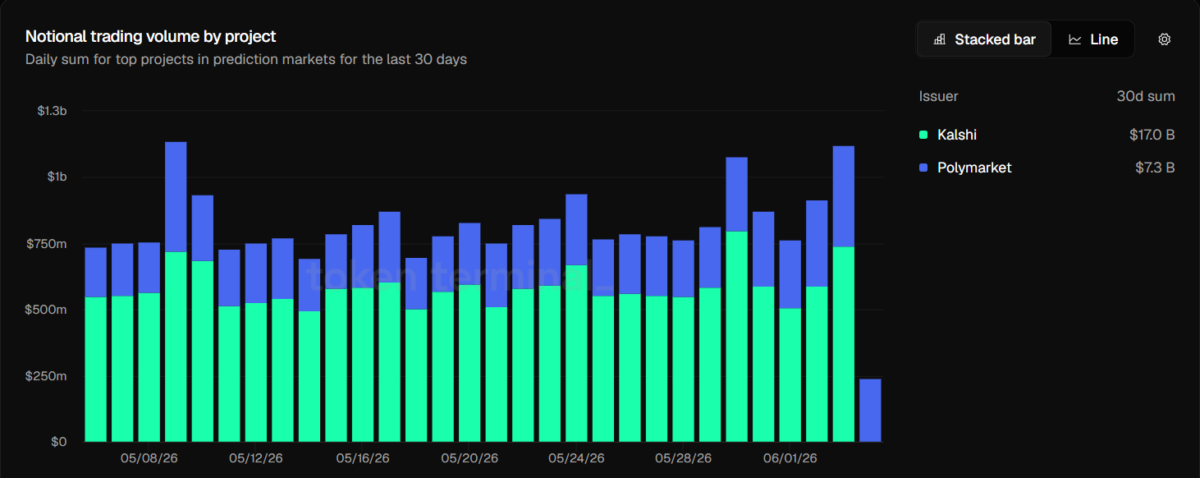
Pew Research chimed in, their charts wagging fingers at the old guard. Decentralized and centralized markets now outpaced the “legal” bookies, whose $14 billion average suddenly seemed as quaint as a rotary phone. The future had arrived, and it was trading futures.
As the tournament sprawled across three nations, it became a bonfire for the betting world. The house was no longer a house-it was a stock exchange, and everyone had a seat.
The scale of the tournament prediction market boom
Imagine betting not with a bookie in a back alley, but on a stock ticker that paid out if your team didn’t choke. That’s the prediction market-a Wall Street floor meets a pub quiz, where contracts traded like gossip. Win the event? Contract hits $1. Lose? It’s worth less than a cold pretzel. Simple, if you ignore the fine print.
This system, slicker than a greased pig at a county fair, offered liquidity so deep it could drown a banker. Prices shifted faster than a referee’s decision after a VAR review. Fans didn’t have to wait for the final whistle; they could cash out mid-match, like selling a rumor before the truth ruins the fun.
Market velocity and liquidity milestones
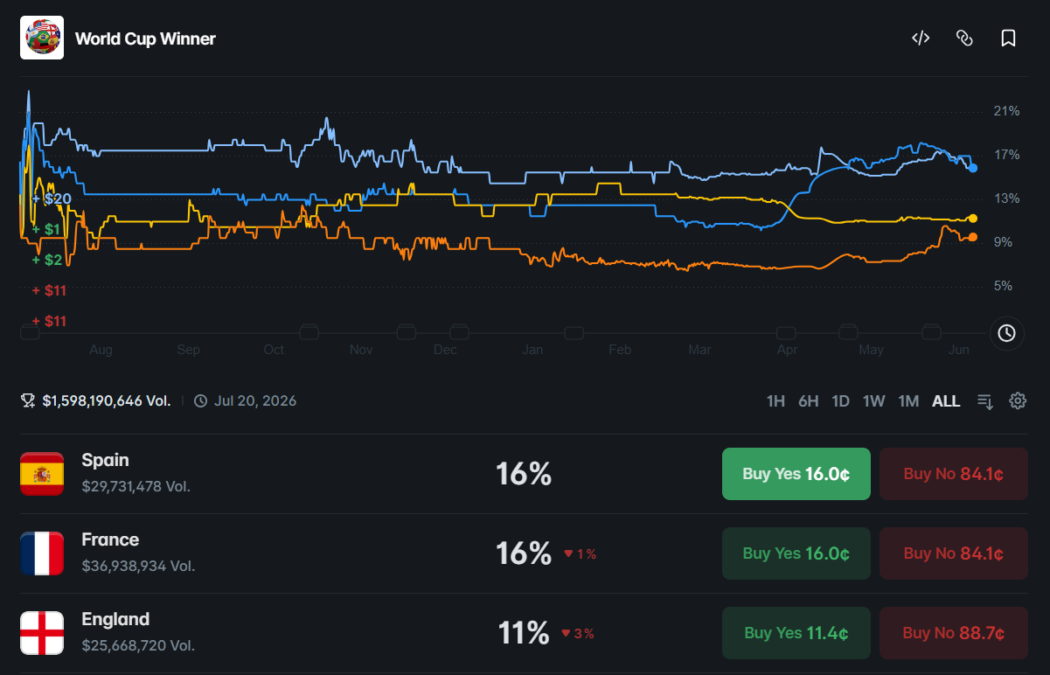
Polymarket, the digital poker table of the crypto crowd, saw its “outright winner” contract balloon to $1.6 billion. That’s $280 million sitting in the pot, taunting traders like a jackpot in a slot machine. Daily trades? Routinely $30 million, enough to make Vegas blush.
Bitget Wallet, with 90 million users, decided to play matchmaker. They hooked Polymarket up with the masses, letting Joe Sixpack bet on soccer without needing a PhD in blockchain. It was like giving a toddler a chainsaw-thrilling, but maybe not wise.
Traditional sportsbooks face the tectonic shift
Old-school bookies still raked in cash, but their golden goose looked more like a plucked chicken. Global bets might hit $50 billion, but the kids were fleeing the farm. Pew’s charts told the tale: prediction markets were the new sheriff, and their fees were lower than a limbo bar at a retirement home.
| Metric | Prediction Markets (Global Monthly Peak) | U.S. Legal Sportsbooks (Monthly Avg.) |
|---|---|---|
| Trading / Handle Volume | $24 Billion | ~$14 Billion |
| Market Structure | Peer-to-Peer Order Book (Exchange) | Peer-to-House (Fixed Odds / Variable Vig) |
| Primary Fee Mechanism | Drastically lower exchange fees / Zero fee sweepstakes | Embedded “Vig” or “Juice” (Typically 4% to 10%) |
| Position Flexibility | Real-time contract trading & continuous exit options | Restrictive, house-controlled “Cash Out” features |
Why prediction markets are challenging traditional sportsbooks
Kalshi and Polymarket weren’t just stealing customers; they were robbing the cradle. DraftKings and FanDuel? Suddenly relics, like payphones in an iPhone world.
1. The House Always Wins (Unless It Doesn’t)
Bookies used to hide their edge in the odds-a sneaky 10% tax that made breaking even harder than splitting an atom. Prediction markets? They cut the middleman, offering spreads tighter than a new pair of jeans. Suddenly, the odds were fairer than a county fair bake sale.
2. Cash Out or Cash In?
Old-school bettors were stuck like gum on a shoe-win or lose, they waited. Prediction markets? They let traders exit early, like selling a hot potato before it burns. Buy a contract at $0.40, sell at $0.75, and laugh all the way to the bank.
3. Rules? We Make Our Own Rules
While states bickered over legality, prediction markets slipped through federal loopholes. Kalshi danced under CFTC oversight like a kid skipping school. Minnesota tried to shut the door, but the feds sued faster than a cat chasing a laser dot.
Trump enters prediction market debate
When Trump backed the CFTC, it was less about policy and more about keeping his family’s crypto piggy bank full. Donald Jr. moonlighted as a “strategic advisor” for Kalshi, while Truth Predict prepped to launch-a product as transparent as a swamp in fog.
Demographics of the boom: Millennials and Gen Z take over
Youngsters who traded GameStop memes now bet on soccer like Wall Street pros. SEON’s survey showed 36% of Millennials would rather trade contracts than hit a sportsbook. Boomers? They’d rather watch grass grow.
Macro context: The scale of the expanded tournament
48 teams, 104 matches, 39 days of chaos-every injury, every penalty, every bad haircut became a tradable commodity. France vs. Spain odds were tighter than a drumhead, and the U.S. kickoff times? Perfect for West Coast traders nursing a hangover.
Systemic risks, security obstacles, and fraud challenges
With billions swirling, security teams sweated like sinners in church. New users looked identical to bots, and KYC checks felt slower than a sloth on sedatives. Platforms juggled fraudsters and rookies while users hopped between apps like hyperactive grasshoppers.
The road ahead: A structural shift in sports media
This wasn’t just a betting boom-it was a revolution. Kalshi and Polymarket weren’t bookies; they were fortune-tellers, reading the tea leaves of global fandom. The World Cup became a ledger, and every goal, every tackle, every dive was a line item in capitalism’s next chapter.
Read More
- USD CHF PREDICTION
- UNI PREDICTION. UNI cryptocurrency
- USD HKD PREDICTION
- SUI PREDICTION. SUI cryptocurrency
- Savage House review: A devilish Richard E Grant excels in this entertaining period farce
- Star Wars: 5 Things That Still Make No Sense About Yoda, Grogu & Their Species
- Sony’s Latest State of Play is Its Highest Viewed Yet at Over 3 Million Live Viewers
- DEXE PREDICTION. DEXE cryptocurrency
- Crunchyroll Manga Adds 24 Titles in Latest June 2026 Update
- The Witness true story: How was Rachel Nickell’s killer eventually caught?
2026-06-07 07:41