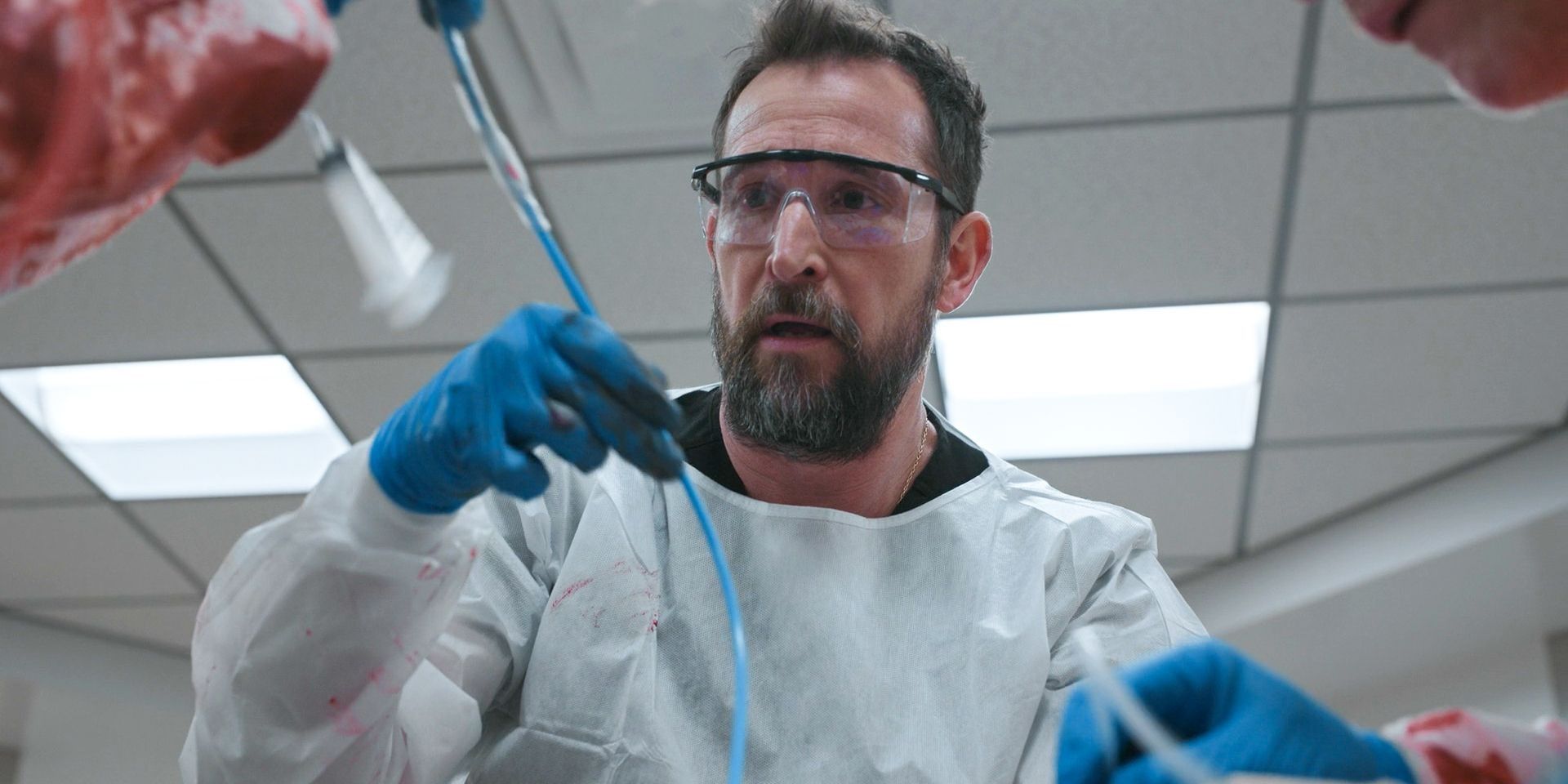
Since premiering on HBO Max in January 2025, the show has quickly become a massive success. It’s been so well-received by both viewers and critics that it was renewed for a third season even before the second season began. The series has revitalized the career of Noah Wyle, known for his roles in ER and Falling Skies, and fans are thrilled to see him return to the medical drama genre that made him famous.
Much of The Pitt‘s popularity comes from its dedication to showing medical situations as realistically as possible. The show captures the chaotic energy of a busy emergency room with a documentary-like feel, making every scene intense, emotional, and believable. If you love that realistic portrayal and are looking for something similar to watch, here are 10 brutally honest medical movies perfect for fans of The Pitt.
Contagion is a Bleak Account of the Medical Response to a Global Pandemic
The first season of The Pitt features Dr. Michael “Robby” Robinavitch, played by Noah Wyle, grappling with painful memories resurfaced by the fourth anniversary of his mentor’s death during the 2020 COVID-19 pandemic. This storyline deeply resonated with—and sometimes upset—many viewers and healthcare workers who had also experienced loss during that difficult period. Despite being emotionally challenging, the story was powerfully acted and handled with great sensitivity, making it a meaningful watch.
As a huge movie fan, I was really struck by this film – it’s a surprisingly calm and realistic look at a global pandemic. If you enjoyed the detailed, almost case-study feel of The Pitt, you’ll probably appreciate this too. Director Steven Soderbergh approaches the medical side of things like a detective would a crime scene, diving into things like how quickly a virus spreads, the science behind vaccines, and the frankly terrifying possibility of society falling apart when a deadly virus hits.
There Won’t Be a Dry Eye in the House After Watching Awakenings
Since it first aired, The Pitt has received high praise from both critics and medical professionals for its honest and realistic portrayal of emergency room life. While the show features a high volume of challenging cases, it focuses on portraying each one with accuracy and excels at depicting the subtle, heartbreaking consequences that often arise from these situations. It avoids overly dramatic resolutions or simplified storylines.
The 1990 film Awakenings beautifully portrays quiet sadness, particularly when Dr. Malcolm Sayer, played by Robin Williams, realizes the promising drug he’s using to help catatonic patients only offers a temporary improvement. It’s a deeply moving story and rightfully received three Academy Award nominations.
The Doctor Flips the Script on the Institutional Coldness The Pitt Often Critiques
The show skillfully portrays the delicate balance healthcare professionals – doctors, nurses, and surgeons – face when connecting with patients. They work extremely long hours under intense pressure and are often required to maintain a degree of emotional detachment to perform their jobs effectively. Yet, they’re also expected to be understanding and compassionate, which can be challenging in difficult situations.
The constant tension between providing skilled medical care and offering genuine compassion—a challenge doctors still face today—is powerfully depicted in the 1991 film The Doctor. Starring William Hurt, the movie follows a brilliant but detached surgeon who experiences a personal transformation when he becomes a cancer patient at the hospital where he works. It emphasizes the gap between medical expertise and understanding, ultimately suggesting that empathy actually improves a doctor’s ability to heal.
Bringing Out the Dead Dives Into the Burnout Experienced By Many Paramedics
Each episode of The Pitt shows characters stretched to their emotional and physical limits as they struggle to care for a constant stream of patients with limited resources. In one particular episode, a medical student makes a different choice – she leaves work when her shift is over, refusing to take on extra hours. She then highlights to a senior doctor that a significant number – 60% – of emergency room doctors across the US report feeling burned out.
The feeling of constant, unfulfilled exhaustion drives Nicolas Cage’s performance in the 1999 film, Bringing Out the Dead. He plays a burned-out New York City paramedic, tormented by those he couldn’t help. The movie follows him through three grueling night shifts with different partners. While it uses some dreamlike imagery, unlike the more grounded ER, the film powerfully shows the emotional damage caused by the intense pressure of working in a fast-paced, life-or-death job.
Something the Lord Made is an Infuriating Exploration of Racial Bias in Medicine
The first season of The Pitt’s second episode features a Black woman arriving at the emergency room in severe pain. While the paramedics suspect she’s faking symptoms to get opioid drugs, Dr. Mohan takes the time to listen and correctly diagnoses her with sickle cell disease – a very painful genetic condition that disproportionately affects Black Americans. This case highlights how The Pitt explores the ongoing problem of racial bias within the healthcare system, showing how assumptions can lead to overlooking a serious medical condition.
For a film that powerfully addresses racial inequality within the medical field, consider 2004’s Something the Lord Made. It tells the story of Dr. Alfred Blalock, a white surgeon who revolutionized heart surgery in the 1940s, and Vivien Thomas, the Black lab technician whose crucial contributions to Blalock’s success went largely unrecognized for decades. They worked together for 34 years, but Thomas didn’t receive proper credit until 1976, long after Blalock’s death. While a difficult and frustrating film to watch, it features wonderfully nuanced performances by Alan Rickman and Mos Def.
The Diving Bell and the Butterfly is a Masterclass in Patient Perspective
The Pitt excels at helping viewers connect with patients who are seriously ill, often showing them bedridden and facing death. While the show doesn’t tell stories directly from the patients’ perspectives, it consistently strives to make their experiences feel immediate and relatable, which is a strong point for a medical drama. If you’re looking for a film that fully immerses you in a patient’s inner world, though, Julian Schnabel’s French film, The Diving Bell and the Butterfly, is a must-see.
The movie opens with Jean-Dominique Bauby, played by Mathieu Amalric, waking up from a coma. He’s learned he had a severe stroke and now has locked-in syndrome, meaning he’s fully aware but unable to move or speak. For the first part of the film, we experience everything solely from Bauby’s point of view, hearing his thoughts as he tries to communicate, though he’s completely paralyzed and unable to make a sound. It’s a creatively bold film, but also quite difficult to watch.
4 Months, 3 Weeks, and 2 Days is a Minimalist Real-Time Horror Show
What sets The Pitt apart from medical dramas like ER, Grey’s Anatomy, and House is its unique approach to time. Each season unfolds during a single 15-hour shift at a Pittsburgh hospital’s emergency room, and each episode shows events happening in real-time. This technique has been used before, but The Pitt executes it exceptionally well, building incredible tension and emotional impact with every minute as the shift becomes more and more critical.
The 2007 film 4 Months, 3 Weeks, and 2 Days portrays the difficult story of two college roommates in communist Romania desperately seeking an illegal abortion. Like The Pitt, it unfolds in something close to real-time, but with some key differences. While The Pitt covers two continuous hours, this film jumps between scenes, then plays out in real-time using long, unbroken shots and no music. The entire film takes place over a single day, offering a stark and honest depiction of the desperation and health risks women face when they are denied control over their own bodies.
Tlatelolco, Summer of ’68 Captures the Panic and Desperation of Battlefield Medicine
As a film buff who loves historical dramas, I recently watched Tlatelolco, Summer of ’68, and it really stuck with me. It’s about the tragic events of 1968 in Mexico City, where the army opened fire on student protestors just before the Olympics. Officially, the U.S. says around 44 people died, but people who were actually there believe the number was much, much higher – somewhere between 300 and 400. The movie doesn’t shy away from showing the brutal reality of the massacre, especially the desperate attempts students made to help each other with hardly any medical supplies. It’s a tough watch, but a really powerful one.
While The Pitt isn’t a historical or political story like Tlatelolco, it shares a common thread with the film’s depiction of emergency medical care. The second season of The Pitt, set on the Fourth of July, vividly portrays the harsh realities of working in a busy, underfunded emergency room, particularly for the nurses. They face physical danger and overwhelming responsibility, highlighting the difficult conditions they work in.
Philadelphia Interrogates the Uncomfortable Social Stigmas Surrounding Care
The show The Pitt doesn’t hesitate to depict graphic injuries and serious illnesses. This is done to ensure the medical scenarios feel as realistic as possible, and it’s never done for shock value. In fact, the show goes above and beyond in its commitment to realism, and it directly addresses difficult social issues that still impact healthcare in 2026. For example, one episode features Dr. McKay initially misdiagnosing an overweight patient, attributing her stomach pain to a simple bladder infection, when she’s actually suffering from a much more serious and dangerous endometrial infection.
McKay is shocked when Dr. Collins suggests she has an unconscious bias against patients based on their weight – a prejudice that research shows is unfortunately common. This storyline is bold because it portrays a main character with flaws, but it feels realistic and truthful. This willingness to tackle difficult social issues affecting healthcare is reminiscent of the film Philadelphia, which dealt with discrimination against a lawyer who was gay and had AIDS.
Wit is a Grim Depiction of the Oncology Experience
Most people avoid thinking about terminal illness because it’s frightening and, sadly, quite common. That’s why many films and TV shows about cancer often focus on hopeful recoveries or patients who handle their illness with unrealistic grace. However, the movie Wit takes a different approach. It stars Emma Thompson as a poetry professor battling stage IV ovarian cancer, and it portrays the realities of cancer treatment in a raw and unflinching way.
I was really struck by how honestly Wit portrayed the physical side of cancer treatment – the nausea, pain, everything. It showed me how quickly someone battling the disease can feel alone and like just a case study. It reminded me a lot of a story I saw on The Pitt about a woman named Roxie Hamler. She was in hospice for lung cancer and ended up in the ER after a seizure. Like the character in Wit, she handled things with a lot of grace, but you couldn’t ignore how much pain she was in, and how fragile she was. Both stories really showed the raw reality of facing a terminal illness.
Read More
- Gold Rate Forecast
- 10 Most Powerful Versions of Superman, Ranked
- GBP CNY PREDICTION
- 10 Best Free Games on Steam in 2026, Ranked
- 007 First Light: Release Date, Story, Gameplay, Cast, Editions, and Platforms
- Superman’s 7 Best Power-Ups, Ranked
- Forza Horizon 6 Car List So Far: Confirmed Highlights, Cover Cars, DLC, and Rewards
- 10 Greatest Manga Endings of All Time
- DOGE PREDICTION. DOGE cryptocurrency
- The Boys Officially Sets Up 4 Supes for Jensen Ackles’ Soldier Boy Spinoff
2026-04-16 23:42