I’ve noticed most stories stumble a bit at the end. Writers either hurry to wrap things up, leaving loose ends, or they try so hard to tie everything neatly that it feels like the whole story was just building to that one predictable moment. But a truly great ending is different. It doesn’t just feel good – it makes you look back at everything that happened before and realize it all had to lead to this, that every small detail and difficult choice was essential to reaching that final, satisfying note.
It’s incredibly rare for an anime to have an ending that truly honors everything that happened throughout the series. Some finales completely change how you view the whole story, while others provide such a perfect conclusion for a character that it feels like you experienced their journey in reverse.
FMA: Brotherhood Earns its Finale by Upholding Equivalent Exchange
The core idea behind Fullmetal Alchemist: Brotherhood is that everything has a price – to gain something, you must lose something of equal value. This principle is powerfully demonstrated in the ending when Edward Elric gives up his ability to perform alchemy – the very thing that defines him – in order to restore his brother Alphonse’s body. This rule affects Edward just as deeply as it does the series’ main antagonist, who…
What truly elevates the ending of Fullmetal Alchemist: Brotherhood is Edward’s decision to give up his alchemical abilities and embrace a normal life. For sixty-four episodes, alchemy defined Edward – it was both his identity and his way of atoning for the terrible mistake that resulted in Alphonse losing his physical form. But choosing to relinquish that power isn’t a defeat; it’s a sign of maturity, representing the first time Edward stops dwelling on his guilt and simply begins to live for himself.
Neon Genesis Evangelion Replaces a Robot Climax with the Finale its Protagonist Needed
Despite facing a severely limited budget and production problems, Hideaki Anno concluded Neon Genesis Evangelion with a finale now considered a brilliant choice. The final two episodes, focusing on the intense psychological state of Shinji Ikari through abstract visuals while the Human Instrumentality Project reached its conclusion in the background, perfectly captured the core themes of the series.
The heartfelt congratulations Shinji receives at the end of the series feel earned because, throughout the twenty-four episodes, Evangelion showed he consistently rejected any form of praise. Every character offering affirmation represents the first time the show allows Shinji to accept kindness without feeling shame. While the movie ending provides a visually stunning conclusion, the television ending offers Shinji the emotional resolution his story was building towards.
Mob Psycho 100 Proves Shigeo’s Emotional Courage & Psychic Power are Unrelated
The most striking moment in Mob Psycho 100 is the final confession scene, where Shigeo struggles to express his feelings to Tsubomi and ultimately doesn’t succeed. Throughout three seasons, Shigeo became an incredibly powerful psychic, yet he remained unable to tell a girl how he felt – and the show deliberately doesn’t connect these two aspects of his character.
Fans didn’t feel sadness for Mob; they felt relieved. Throughout the series, Mob only cried when facing huge psychic disasters. To cry over being turned down was normal, and that’s precisely what he’d been striving for. The true triumph of Mob Psycho 100 isn’t about Tsubomi returning his feelings. It’s that Shigeo managed to handle the rejection, allowing himself to feel sadness and still remain okay, proving his emotional strength had finally matched his incredible power.
Banana Fish Gives Ash Lynx a Death That Reads as Liberation Rather Than Defeat
Ash Lynx’s death, while reading a letter from Eiji and with a smile on his face, is powerfully symbolized by its location. Throughout Banana Fish, Ash is constantly surrounded by violence and manipulation. The peaceful library, a place where no one can control or exploit him, makes that final moment truly meaningful.
The most important thing to understand about the ending is how fully Ash directs his own departure. Throughout the series, Ash consistently prioritizes protecting others, even if it means sacrificing himself – it’s presented as an unavoidable part of who he is. The finale stays true to this pattern, bringing it to its natural conclusion instead of changing course. The feeling of sadness and the sense of closure happen simultaneously, and that’s exactly what makes the ending so powerful and effective.
Attack on Titan Follows Eren Yeager’s Transformation All the Way to its Ugliest Conclusion
The ending of Attack on Titan is striking because it fully commits to Eren Yeager becoming a perpetrator of worldwide destruction. While many similar action stories would reverse course at the last second, Attack on Titan doesn’t. The heroes ultimately kill Eren to save the world, but the story doesn’t portray either side as being in the wrong.
The ending, which shows fighting continuing even after Eren’s death, has received the most criticism, but it also feels like the most truthful conclusion the story could have reached. Eren successfully ensured a future for his friends, though what that future holds is intentionally left uncertain – a level of ambiguity that was present throughout the entire series from the very beginning.
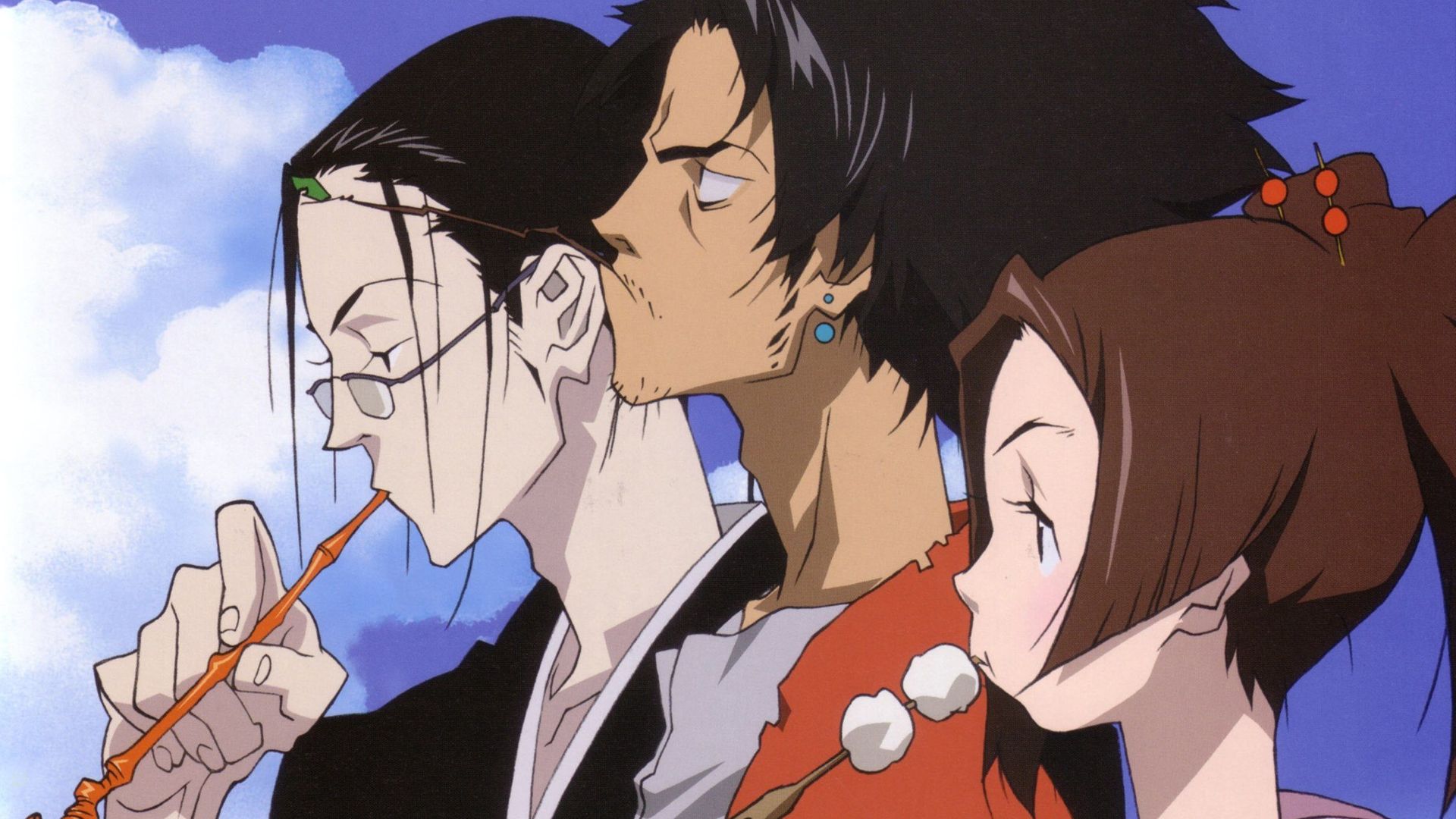
Samurai Champloo Refuses to Sentimentalize
The last scene of Samurai Champloo is very short, lasting less than a minute. Mugen, Jin, and Fuu all make it through the final challenges, but they barely say goodbye before going their separate ways. This ending works because the show understood that the three characters were too different to have a truly lasting connection, and the reasons they traveled together weren’t something any of them would openly acknowledge. A sentimental farewell wouldn’t have felt true to their journey.
One of the things that made Samurai Champloo unique was its playful disregard for traditional historical dramas, and the ending continues that trend by subverting typical heartwarming goodbyes. Mugen and Jin simply helped Fuu complete her quest, and the ending makes it clear that this was about companionship, not romantic love.
Death Note Lets Near Expose Not Just Kira but the Lie Light Yagami Told Himself
Near doesn’t outsmart Light Yagami; he simply waits for Light’s own overconfidence to cause his downfall. The story creates a particularly harsh fate for someone who consistently underestimates his opponents. Instead of being defeated by a true intellectual equal, Light is undone by a carefully laid trap of his own making.
Light meets his end on a staircase, betrayed by those who once supported him. His last thought is of L, the only person who ever truly challenged him, before arrogance led to his downfall. Ryuk casually writes Light’s name in his Death Note, highlighting the cold indifference that is the series’ most powerful message. After commanding devotion for 37 episodes, Kira’s death is treated with dismissive apathy by the shinigami who made it all possible – as if he were simply a show that had run its course.
Shouwa Genroku Rakugo Shinju Stages Yakumo’s Death as the Final Performance
From the very beginning, Shouwa Genroku Rakugo Shinju presented rakugo as a way of exploring how we all face our own mortality, and the ending didn’t shy away from that idea. Over the course of two seasons, it became clear that Yakumo could only truly be himself when he was performing. So, when he dies during a performance, it feels like the art itself finally claimed him – not through outside forces, but on its own terms.
The ending of Rakugo Shinju doesn’t offer easy comfort. It shows us that the continuation of rakugo, carried on by Yotaro, isn’t about overcoming loss, but existing alongside it. The art form lives on, even though the master performer is gone, and the story wisely avoids suggesting that one diminishes the other. This refusal to soften the blow is what makes the ending so powerful.
Your Lie in April Reframes Every Moment Kaori Shared With Kousei
I remember when Kaori Miyazono’s letter finally arrived, and it completely changed how I understood everything that had happened before. It turned out she wasn’t just acting on whims when she encouraged Kousei Arima to play the piano again. Every performance, every bit of encouragement she gave him, and every precious moment they shared was deliberate. She knew how much time she had left, and she intentionally used it to help him rediscover his passion for life.
Kousei playing in the competition where he first met Kaori brings a plan she set in motion full circle, a plan he only dimly grasped. The final moments of their performance reveal the depth of her love, showing that every shared moment was carefully considered and more meaningful than it initially seemed.
Gurren Lagann Insists That Simon’s Victory Was Always Going to Cost Him Nia
Throughout most of its run, Gurren Lagann is intensely emotional. The story concludes with Simon, once a powerful hero, as an elderly traveler who has lost his Spiral energy, his beloved Nia, and his position as a leader. Nia fades away after their wedding because her very existence was tied to the Anti-Spirals, and the show tragically upholds this fate, even when Simon’s determination isn’t enough to change it.
Gurren Lagann showed us that believing in something strongly can make the impossible happen, but it also stayed true to its core message about limits. The ending feels earned because the series consistently argued that true growth demands lasting sacrifice. The heroes achieved their incredible goal of reaching the heavens, but it came at a significant cost: Nia’s sacrifice.
Read More
- Marvel Officially Confirms Deadpool’s Most Brutal Redesign
- Nintendo Switch 2 Reportedly Getting Remake of One of the Best PS3 and Xbox 360 Games
- The Boys Season 5, Episode 5 Ending Explained: Why Homelander Does THAT
- Crunchyroll Confirms New Isekai Anime Releases for 2026 and Beyond (With Major Returns)
- Gold Rate Forecast
- The Boys Season 5, Episode 2’s Soldier Boy Ending Twist Changes Everything for Homelander & Butcher
- 10 Movies That Were Banned in Different Countries For Random Reasons
- 5 Best Open-World Games You Can Beat In A Weekend
- Invincible Creators Offer Promising Update on Season 5 Release Date
- All 61 Episodes 90s Cult Classic Sci-Fi TV Show That Was Famously Canceled Twice Were Just Added to Tubi
2026-05-02 03:11