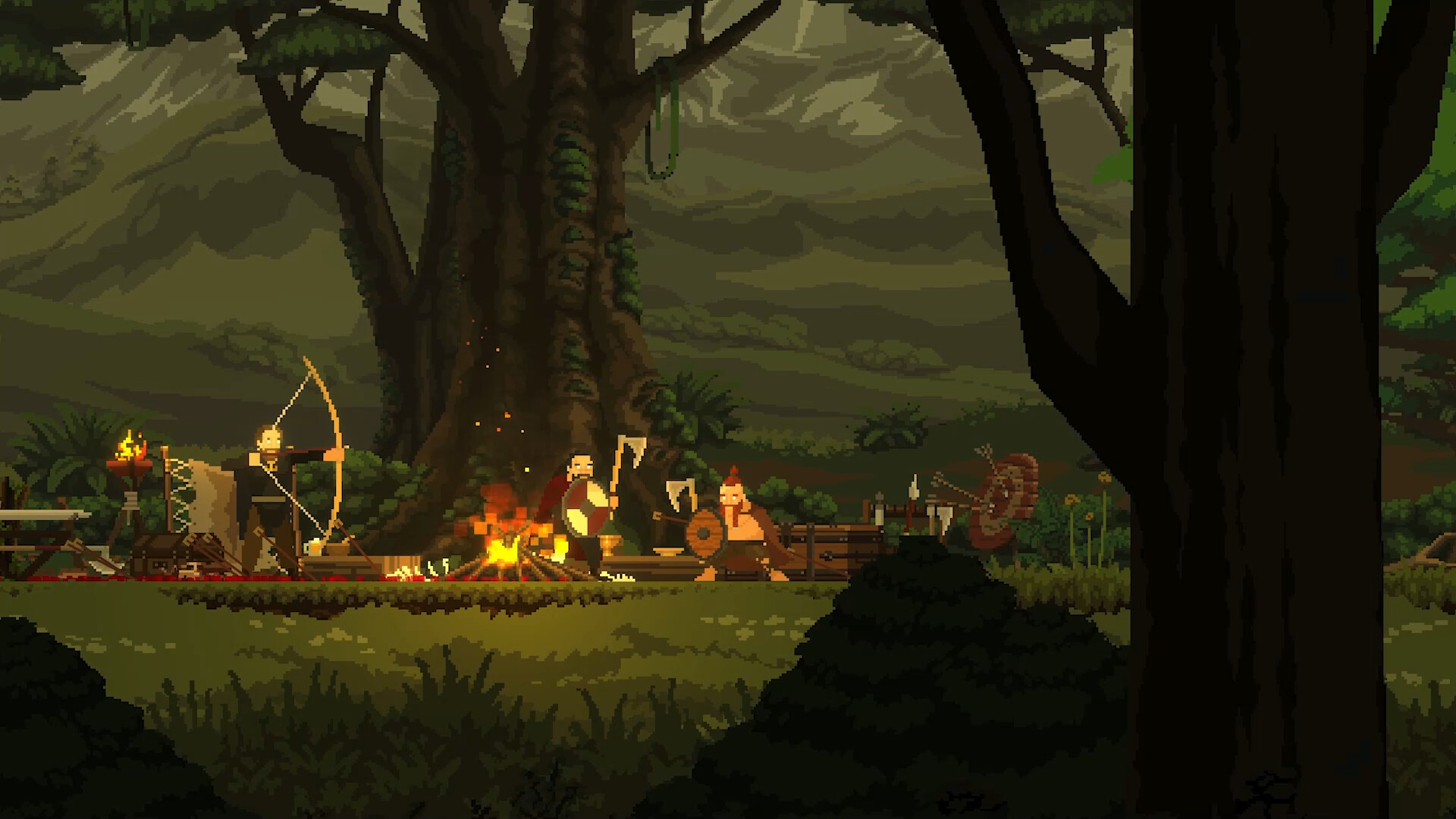
When Regions of Ruin first came out in 2020, it offered a huge amount of content. As an indie action RPG, it combined fast-paced combat with town-building, exploration across a large world (divided into levels), resource collection, crafting, and plenty of side quests. While ambitious, this meant some content wasn’t entirely original. The story, though set in an interesting world with rich background details, wasn’t particularly captivating.
Runegate feels like a refined version of its predecessor. The core concepts are much easier to understand, and the characters – including your own – are well-developed. While exploring the world still feels divided into sections with similar tasks, it now feels more natural, like you’re gradually discovering a large and interesting world filled with unique groups and characters facing their own personal challenges. It’s great to see a developer aim to improve on their previous work, but Runegate isn’t simply a remake. It’s more of a return to the world, reimagined and expanded in ways I didn’t expect to find so engaging.
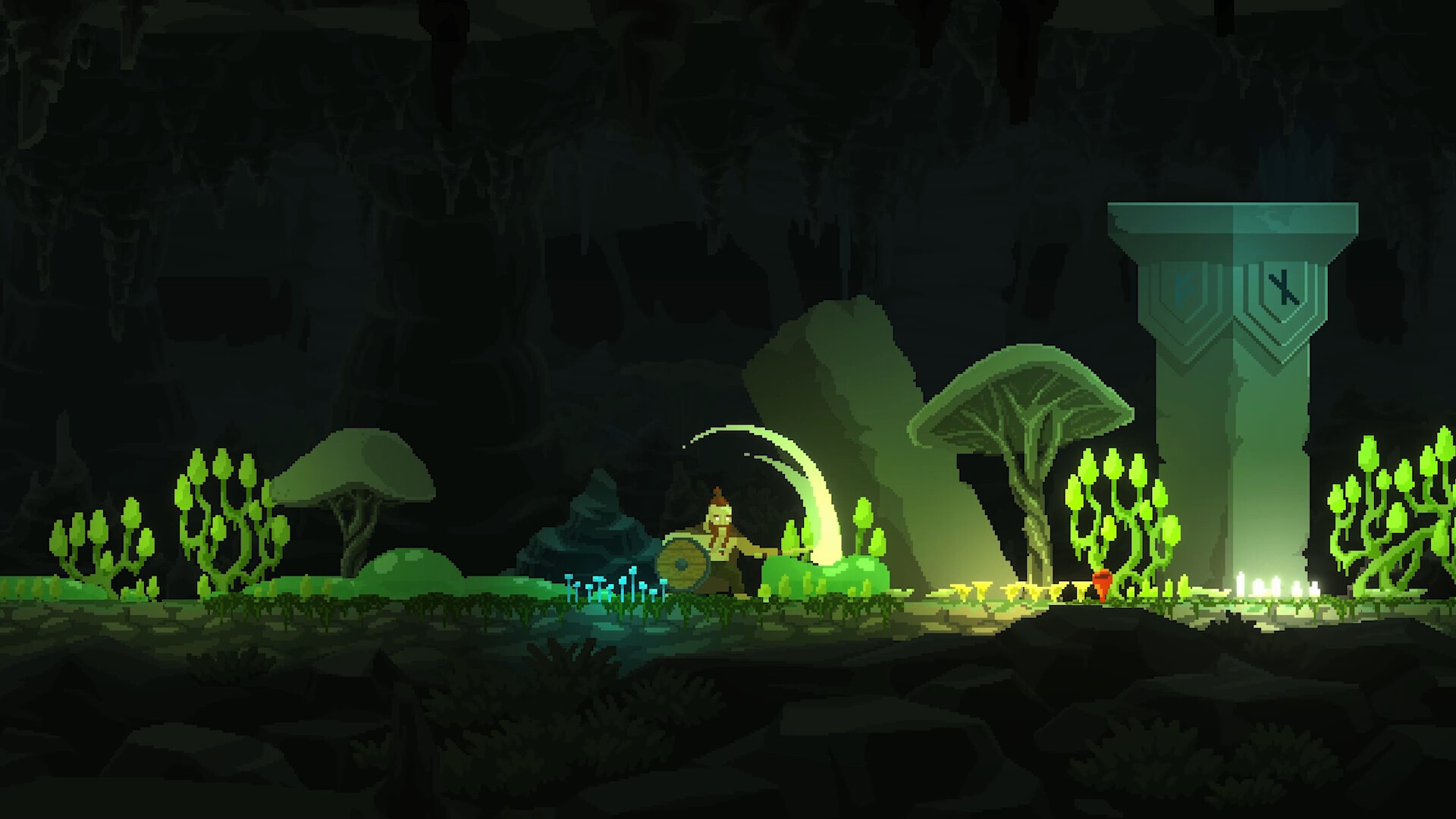
The game makes it feel natural to move between different tasks. You might be doing something straightforward like killing wolves to help someone in need, or you could meet a mercenary who joins your team – and all of it flows smoothly.
You once again play as a member of a Dwarven clan facing hostility in a dangerous world. This time, the story begins immediately after a devastating goblin ambush. Your priority is to recover, care for survivors, and assess the damage. You soon discover a strange underground structure called a Runegate, which appears to be a portal to another world. When the goblins attack again, you have no choice but to use the Runegate, which transports you to the ruins of Rivenbrook Camp. Here, you must rebuild while facing familiar threats in a new land called Otam.
Honestly, exploring in this game feels amazing because you’re literally using up your supplies just to uncover the world! You’re driving your wagon around, slowly revealing the map and stumbling onto all sorts of things. I’ve found places where people need help – like one guy whose brother is missing. Or I’ll meet a researcher digging around old ruins, and if I can figure out their puzzles, I get these ancient texts to decode. There’s even a base to the north run by the Rockwardens, and I managed to recruit two merchants for my camp there. Plus, I’ve been doing goblin-hunting quests, which led me to a cave where I helped an artifact hunter – and he gave me some cool stuff and a grey tabby cat! It’s just a constant cycle of discovery and helping people, and it’s so much fun.
The game connects its tasks and encounters smoothly, from straightforward quests like helping a family by killing wolves to meeting mercenaries who can join your team. While some locations feel a bit empty, only serving to find new allies or earn money, the game generally balances how often you come across these opportunities.
As you help people and learn more about the world and your family’s history, you’ll gain resources to improve Rivenbrook. The game doesn’t involve directly building structures; instead, you spend resources to unlock upgrades. This creates a satisfying cycle, especially as you recruit workers who automatically gather more resources. You can go on adventures – hunting goblins, exploring caves, and collecting materials – then return to camp and use your earnings to build things like a storage building or upgrade the blacksmith to enchant gear. You can also build a refinery to create better metals or a fishing spot for a steady supply of food, which you’ll need for further exploration.
The game is impressive because, even though you have a lot of freedom to make your own choices, it still manages to connect back to your clan and their recovery, all while revealing more about the game’s world and the history of the dwarves.
Despite everything else, the combat in Runegate can feel a bit clunky. The basic moves – light and heavy attacks, blocking, dodging – are easy to learn. However, controlling your direction, particularly in relation to where you’re pointing the mouse, takes some practice, and I didn’t find the alternative control scheme very helpful. While fighting a small number of enemies is manageable, things become awkward when you’re surrounded by multiple opponents or attacked from above.
While aiming feels good, character movement can be a little awkward. Landing hits and dodging attacks work well, but jumping attacks don’t feel quite as smooth, although they are more realistic. Once you build a team and get into larger fights, combat becomes much more fun, especially with the wide variety of weapons available. You can choose to fight on the front lines, blocking and stunning enemies, or hang back and use ranged weapons to slowly defeat them. Feel free to jump into the thick of it with a powerful weapon, but be aware that arrows will stick in you until you remove them!
The game offers a lot of different skills to learn, letting you customize your approach – whether you prefer building up damage over time or charging into enemies with a shield. While some fights can feel a little samey depending on the enemies, the game usually does a good job of keeping things interesting. You might find yourself escorting someone through a mine while fending off goblin ambushes, or battling a large troll alongside a group of goblins – though the latter isn’t always very difficult.
The game’s story is surprisingly well-crafted. Even though you have a lot of freedom to make your own choices, it cleverly connects back to your clan’s rebuilding efforts and reveals more about the world and the dwarves. The writing is solid, whether you’re facing a tricky character like Clip Lucky Shot who wants to use you as a shield, or simply having a playful conversation with an artifact hunter.
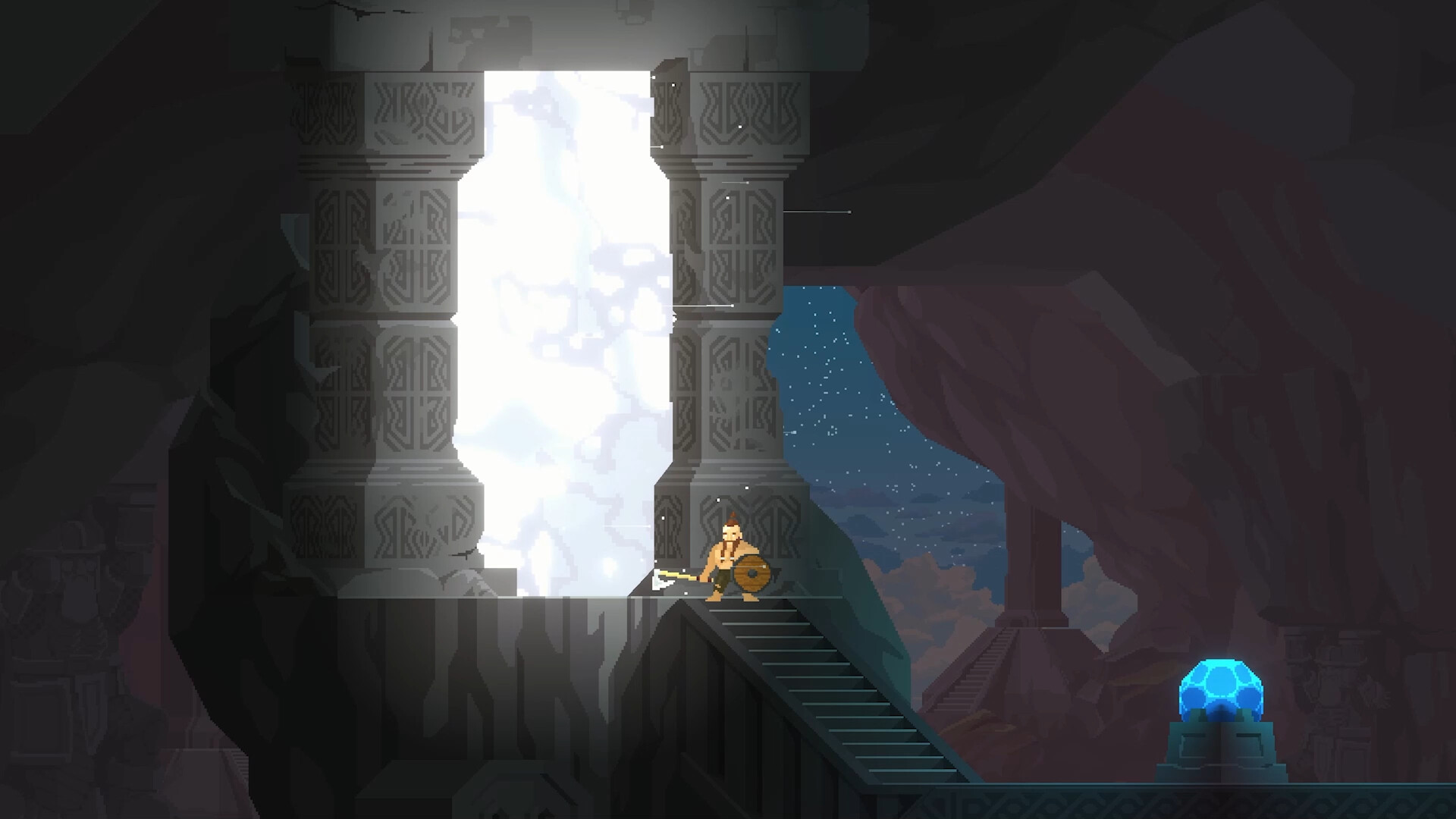
This doesn’t try to be radically new or overly complicated, but it does something really important: it takes what was good about the original and improves upon it in every way.
Okay, so visually, Runegate sticks with that classic 2D pixel art look from the first game, but everything is way more detailed. The world really feels like an old civilization that’s been through a lot – you can almost feel the harsh weather and hardship in the architecture. Even in a wrecked place like Rivenbrook, there’s a surprising amount of life and color. The day is super bright, almost blinding, and at night, the stars come out and the lanterns cast this cool, subtle glow. Plus, different rocks and pillars actually glow with their own colors. The music is really emotional, and the sound design is solid – though some of the monster hits sound a little weird, honestly.
Okay, so I’m a big fan of side-scrolling action RPGs, and even with a few flaws in the combat, Regions of Ruin: Runegate is totally worth checking out. It’s not trying to be super innovative or anything, and it doesn’t overwhelm you with complicated systems, but honestly, there’s a surprising amount of depth if you want it. What really matters is that it takes everything great about the first game and just expands on it – it’s bigger and better in every way. It might not grab you instantly if you’re new to the series, but trust me, there’s a lot of heart in this game and it really pulls you in.
This game was reviewed on PC.
Read More
- Trails in the Sky 2nd Chapter launches September 17
- Paradox codes (April 2026): Full list of codes and how to redeem them
- HBO Max Just Added the Final Episodes of a Modern Adult Swim Classic
- Pragmata Shows Off Even More Gorgeous RTX Path Tracing Ahead of Launch
- Crimson Desert’s Momentum Continues With 10 Incredible New Changes
- PRAGMATA ‘Eight’ trailer
- How Could We Forget About SOL Shogunate, the PS5 Action RPG About Samurai on the Moon?
- Hulu Just Added One of the Most Quotable Movies Ever Made (But It’s Sequel Is Impossible To Stream)
- Solo Leveling’s New Character Gets a New Story Amid Season 3 Delay
- Dragon Quest Smash/Grow launches April 21
2026-04-13 17:12