There’s nothing like a good international conspiracy to liven up your Tuesday. Enter Grinex, a crypto exchange that’s managed to be both sanctioned and suspiciously Russian, all while operating in Kyrgyzstan-because why not? It recently paused operations after a “large-scale cyberattack” siphoned off 13 million dollars’ worth of crypto. Or was it just bad security? The line between espionage and IT incompetence is thinner than a TRON wallet after a black Friday sale.
Another Hacked Crypto Exchange…Or Is It?
Grinex claims hackers stole 1 billion rubles (approximately $13 million) from its systems, forcing it to shut down like a barista who just realized they’re out of oat milk. In a press release that could double as a Cold War-era memo, Grinex blamed “special services” from “unfriendly states,” framing the hack as economic warfare. Presumably, they’ll be filing that police report with the KGB’s ghostwriters.
Blockchain sleuths have long linked Grinex to Garantex, its Moscow-based predecessor, which U.S. and EU officials politely called “illicit.” Grinex now trades A7A5, a stablecoin so Russian it’s practically a passport. This has helped users bypass sanctions like a financial game of Operation, where the buzzer is a U.S. Treasury agent with a warrant.
Grinex and its cronies are also the glue holding together a sanctions-evasion network that processes hundreds of billions. It’s like a Russian oligarch’s version of Monopoly, except the property cards are seized yachts and the get-out-of-jail-free cards are offshore shell companies.
Economic Warfare Or Convenient Cover?
Grinex claims its infrastructure was hit by a “large-scale” operation, a term that makes me think of a particularly aggressive spam bot. Blockchain investigators found the stolen funds had been swapped into TRX and Ethereum, likely to avoid stablecoin freezes. It’s the crypto equivalent of converting your ill-gotten gains into Monopoly money-just in case the bank gets suspicious.
TRM Labs and other forensic teams noted that TokenSpot, a Kyrgyzstan-based platform, shared wallets and downtime with Grinex. This suggests a coordinated attack on a sanctions-evasion network, not just a solo hacker in a basement. Or maybe it’s just a team of Russian IT guys who really hate Mondays.
Grinex insists the hack used “unprecedented resources” available only to foreign intelligence, which is a fancy way of saying, “We’re too important to fix our own security flaws.” This comes after U.S., UK, and EU authorities have already sanctioned the exchange and frozen wallets linked to Russian finance. It’s like blaming the referee for your penalty when you clearly handled the ball in the box.
What This Means For Crypto Risk
Whether state actors did it or not, Grinex’s drama highlights how crypto exchanges turn every hack into a political soap opera. Traders now have to weigh the risks of using sanctioned platforms that double as sanctions-evasion tunnels. It’s like investing in a restaurant that also runs a meth lab-maybe the food is great, but the DEA’s probably going to show up eventually.
On-chain investigators have mapped parts of this network, making it likely that more wallets will be blacklisted. If you’re on the wrong side of these flows, you might find your funds frozen faster than a TikTok star’s bank account after a copyright strike.
In practical terms, this hack means higher risk premiums for Russia-linked crypto, more wallet blacklists, and stablecoin freezes. Traders should start asking questions like, “Where’s my liquidity coming from?” and “Is this exchange a front for a Vladimir?” before they hit “buy.”
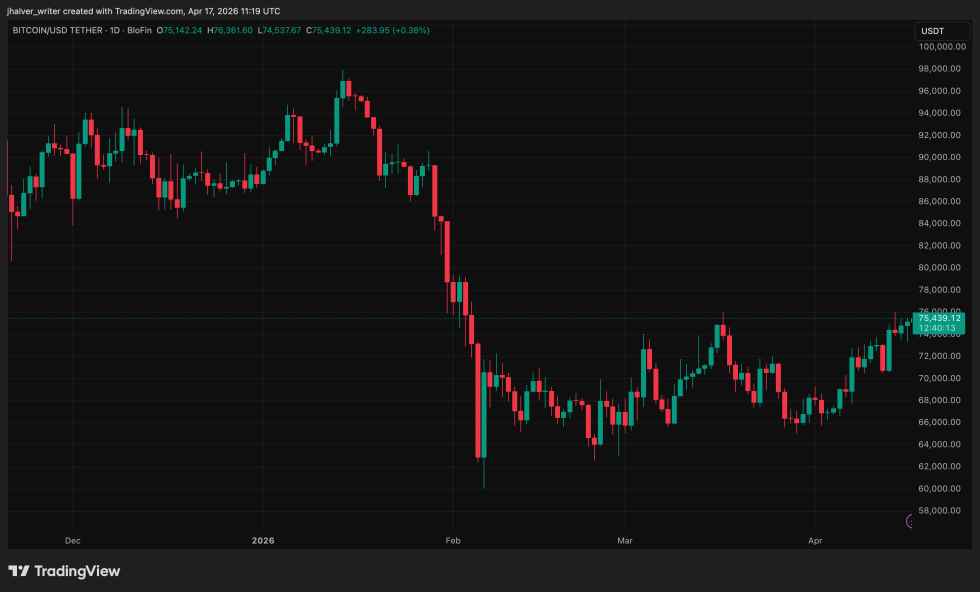
Cover image from Perplexity. BTCUSD chart from Tradingview.
Read More
- Trails in the Sky 2nd Chapter launches September 17
- Solo Leveling’s New Character Gets a New Story Amid Season 3 Delay
- HBO Max Just Added the Final Episodes of a Modern Adult Swim Classic
- All 7 New Supes In The Boys Season 5 & Their Powers Explained
- PRAGMATA ‘Eight’ trailer
- Pragmata Shows Off Even More Gorgeous RTX Path Tracing Ahead of Launch
- Crimson Desert’s Momentum Continues With 10 Incredible New Changes
- Hulu Just Added One of the Most Quotable Movies Ever Made (But It’s Sequel Is Impossible To Stream)
- Frieren: Beyond Journey’s End Gets a New Release After Season 2 Finale
- ‘Project Hail Mary’: The Biggest Differences From the Book, Explained
2026-04-17 16:13